Dancing in the dark: Evgeny Tsyganov played the Master again


The winner of two prizes at the Russian film festival "Mayak" (Sonya Raisman — for directing, Maria Karpova — for best actress), the film "Pictures of Friendly Relations" reached Russian screens six months after the premiere. During this time, the film managed to receive the most prestigious film critics award "White Elephant" as the best debut and, more importantly, the status of the most important statement of thirty-year-olds about themselves. However, this is not so much a manifesto as an alarming diagnosis, which does not happen very often in cinema. Izvestia tells how the famous actress and now director Sonya Raisman sees her peers and why the chamber and black-and-white films about the gatherings of classmates turned out to be not funny at all.
What is the film "Pictures of Friendships" about?
Former classmates gather to celebrate the departure of the main star of their theater workshop, Sasha. He's flying somewhere tomorrow morning. That's the whole plot of "Friendship Pictures", covering exactly one day.
But this particular film has been intensively watched and discussed by critics for several months. There are very serious names in their disputes: "Ilyich's Outpost" ("I'm twenty years old"), "July rain", "Long happy life", "Long send-offs", "Short meetings". A classic of thawing and "stagnant" cinema, on which several generations of viewers grew up. And there is much in the black-and-white (with a color epilogue) film that points to these roots. Even Maria Karpova here is a little Marianna Vertinskaya and Bella Akhmadulina in the image. The characters read poetry here, and there's just as much air, and chatter "about nothing," where the most important thing is hidden behind rare direct glances all the time. And there is a documentary style typical of cinema of that time.
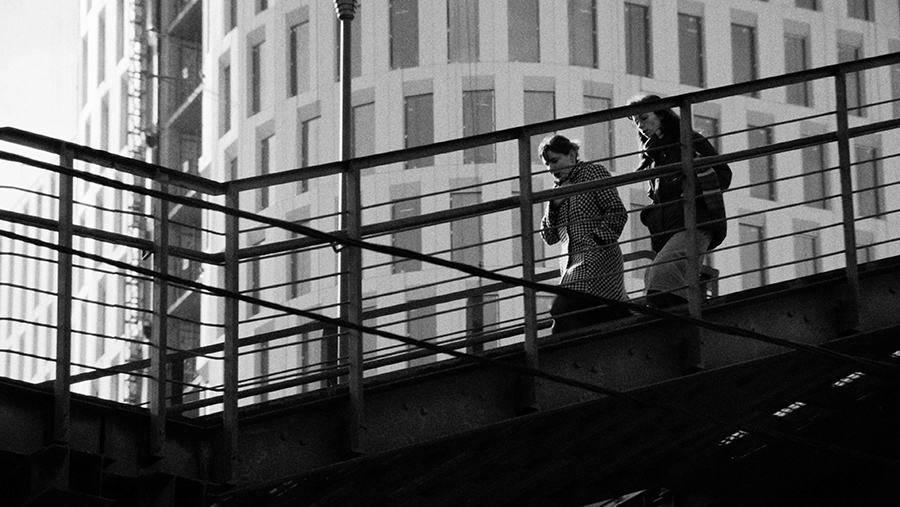
What really works is that the actors play themselves. Alexander Pal is the superstar Sasha. Evgeny Tsyganov is Oleg Igorevich, a theater teacher, but everyone just calls him "The Master," which immediately hints at the recent film adaptation of Bulgakov. Maybe for a reason. Maria Karpova plays Masha, Ruslan Bratov became Rustam, Gosha Tokayev was allowed to remain Gosha. The film begins with a large photo album, where all these guys are having fun with each other on the cards.
It is noteworthy that the cast partially coincides with another recent generational film "Happy when you are not." Only that one is more of a manifesto, and this one is an attempt to sit down and not so much have a heart—to-heart conversation as to "join hands so as not to disappear one by one," as in Okudzhava's thaw song. Well, to tighten this knot completely: although this is pure chance, but the name of the director of "Connections" also immediately takes our imagination back to the past, 60, 70, 80 years ago, when Yuli Raisman shot his best pictures.

How Sonya Raisman's film works
There is no one main character here, although most of the time we look at Masha. It's a day of loss for her. In the first scene, she puts a sick cat to sleep, and then has to say goodbye to Sasha, whom she is in love with. But still, the main character is the creative workshop of the guys, more broadly, their generation.
Not all of my classmates became artists. One works as a courier, the other became a director, and throughout the film he writes angry voice messages to the producer about the right to final editing. Another is working on the Cipollino script, removing the prison from there and cleaning up the political content of the work. Sonya Raisman ironically shows how the whole cinema is now fixated on fairy-tale films, and even her heroine Tanya comes to the casting of the scene, as healthy men broke into the house of the sleeping girl from Pushkin's "Tale of the Dead Princess". And how embarrassed she is, how uncomfortable she is with all this.
But there are things that Raisman cares about much more than the trends of the domestic film industry. She is trying to understand what is happening to her and those around her. And for this, it makes the image of sleep the key in the film. We have already said that the cat was being euthanized and the princess was asleep. Starry Pasha can't wake up for the first half hour of the movie without reacting to the alarm clock. We will also see other characters sleeping more than once, most often in clothes, in awkward poses, individually and in an embrace if there is not enough space.
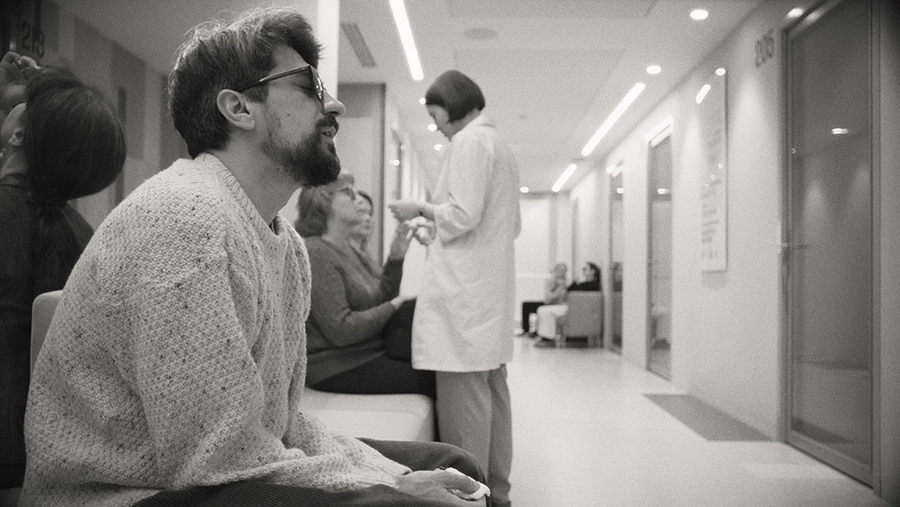
This is not a healthy sleep, but some kind of continuous somnambulistic delusion. Sasha is not the only one who always fails to overcome the painful state of being unable to stand up. The characters here lose consciousness more than once, they try to bring them to their senses, but they can not get out of their dreams. The central episode of the film is an eye operation for one of the characters, that is, an attempt to help him regain his sight. And it is clear that for the sake of this detailed metaphor, generalizing the image of thirty-year-olds, the film was shot. And the choice of a black-and-white palette also made it possible to immerse most of the picture in darkness, so that both we and the characters stumbled in this space and could not see beyond our noses. This is perceived not as an accusation or a rebuke, but as a cry for help.
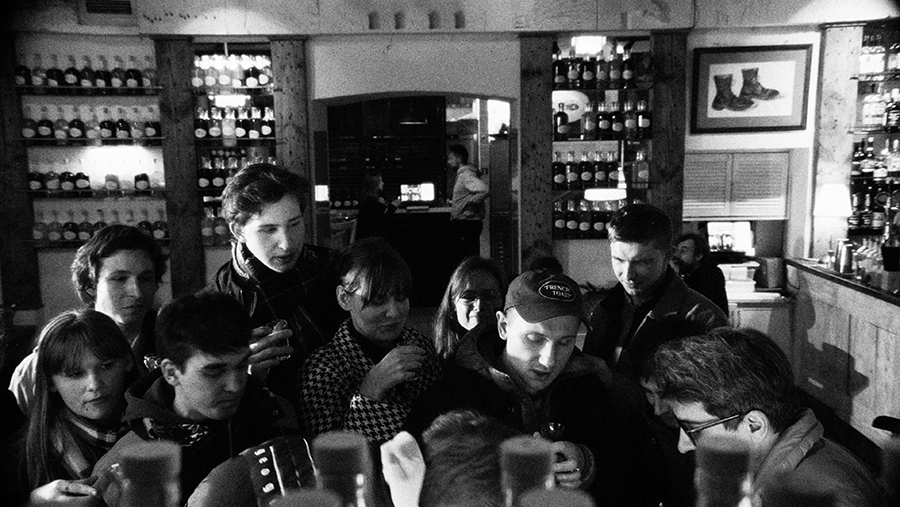
It was the same in the "Ilyich Outpost" in relation to the older generation of "commissars in dusty helmets." Only in the thaw cinema, as we remember, having discarded everyday trivia, the characters could sometimes suddenly begin to fiercely argue about ideals, dreams, principles. In Khutsiev's shot, Andrei Tarkovsky could get in the face for a provocative offer to drink "for potatoes." But no one is arguing about anything here, except for professional moments (editing, acting, directing). When you can't regain consciousness, you're constantly dozing, and there's no clarity for a serious conversation. You can only play a witty little thug on the guitar, call a friend in Paris via video link, hang out at the bar. If there are principles here, they seem like ridiculous half-witted stubbornness. Sasha doesn't take pictures with his fans, and no one can convince him.
Confused, "blind" former students are drawn to the senior, to the Master. The Gypsies are from the generation of the "new quiet ones," and they will probably be the "new sleepers." And he is ready to help them — the only thing he does. He teaches them another lesson: if the door is closed to you, jump out the window! A paraphrase of the famous Buddha's parable about the burning house. And Sasha, as the first among equals, is the only one who follows the Master's testament. He leaves for nowhere, abandons everything, goes to "study." What should I learn? Yes, to see, not to sleep, to think, to know. Everyone is trying to keep him, and we wonder if it will work. Suddenly he decides to stay with Masha in his huge Moscow apartment with expensive parquet. He will continue to shoot in blockbusters. Or he'll just oversleep his flight, and it's not for nothing that he always doesn't hear the alarm clock. But the problem is that the others, even if they hear, don't get up and walk, and he's ready, and he's saved.
"It's time to ford this river, get up!" the poet once said. Sonya Raisman shouts this to her generation, calls for help, but not everyone has a Master. The elders are broken, disappointed, or unable to tell thirty-year-olds how to deal with this dream of the mind. And the director, with sad irony, gives useful advice to one of the characters in the film — to run in compression socks so that there are no injuries. And maybe the young ones will listen and put on those damn socks, but you can't run far in the dark, which Raisman shows very convincingly.
Переведено сервисом «Яндекс Переводчик»
