
Million Dollar Idea: Are New U.S. Trade Investigations Threatening a Global Recession

The US trade war "against everyone" is gaining momentum. Washington began two proceedings against several dozen countries at once. The list includes not only the United States' geopolitical rivals, but also allies, including the EU. The actions of the American administration are an attempt to create a legal basis for the continuation of its tariff policy and the return of increased import duties, experts say. New trade restrictions may become part of the process of a global recession, which may begin due to the war in the Middle East, energy shortages and disruption of supply chains in the world. What Washington's actions threaten the global economy is in the Izvestia article.
Under one comb
Last week, the Washington administration began conducting trade proceedings against several dozen states. The list includes both geopolitical rivals like China and "like-minded" countries such as the European Union.
The first trial was announced on March 11 on the website of the US Trade Representative Office. It will affect the "structural excess of production capacity and production volumes in the manufacturing industry" in a number of states. The investigation will affect: China, the European Union, Singapore, Switzerland, Norway, Indonesia, Malaysia, Cambodia, Thailand, South Korea, Vietnam, Bangladesh, Mexico, Japan and India. Taiwan is also included in the list, although its independence has not been officially recognized by the United States.
In a statement, U.S. Trade Representative Jamison Greer clarified that the investigation will determine whether the actions, policies, and practices of these countries are unjustified or discriminatory and whether they create obstacles or restrictions to U.S. trade.

The American official claims that "the Trump administration's reindustrialization efforts continue to face significant challenges due to structural overcapacity and production in the manufacturing sectors of foreign economies." The United States sees the problem in the fact that many trading partners produce more goods than they can consume domestically.
"This overproduction displaces existing U.S. domestic production or hinders investment and expansion of the American manufacturing sector that would otherwise be launched. In many sectors, the United States has lost significant domestic production capacity or has fallen dangerously behind foreign competitors," Greer emphasizes.
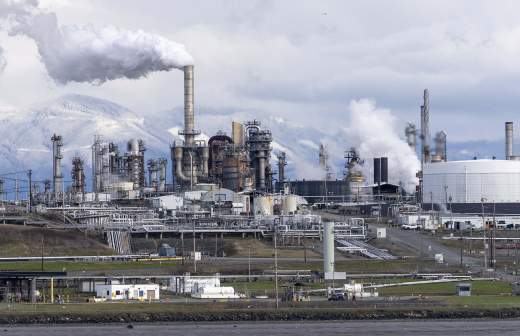
This investigation can be regarded as a refusal by the United States to "sacrifice its industrial base for the sake of other countries." The purpose of the proceedings, according to the trade representative, is to return critical supply chains to the country and create well—paying jobs for American workers in all manufacturing sectors.

A day later, on March 12, information about trade proceedings against several dozen states appeared on the website of the US Trade Mission. This time we are talking about the import of goods produced using forced labor.
"Despite the international consensus against forced labor, Governments have failed to introduce and effectively enforce measures prohibiting the importation of goods produced using forced labor into their markets. For too long, American workers and firms have been forced to compete with foreign manufacturers, who may have an artificial cost advantage gained through the horrors of forced labor," Greer said in a statement.
The investigation is intended to determine whether foreign governments are taking "sufficient steps to ban the import of goods produced using forced labor." Washington also intends to find out how "the failure to eradicate this abhorrent practice affects American workers and businesses."

The list of countries affected by the proceedings is quite extensive. It includes Algeria, Angola, Argentina, Australia, the Bahamas, Bahrain, Bangladesh, Cambodia, Canada, Chile, China, Colombia, Costa Rica, the Dominican Republic, Ecuador, Egypt, El Salvador, the EU countries, Guatemala, Guyana, Honduras, Hong Kong (Special Administrative Region of China), India, Indonesia, Iraq, Israel, Japan, Jordan, Kazakhstan, Kuwait, Qatar, Libya, Malaysia, Mexico, Morocco, New Zealand, Nicaragua, Nigeria, Norway, Oman, Pakistan, Peru, Philippines, Russia, Saudi Arabia, Singapore, South Africa, South Korea, Taiwan, Thailand, Trinidad and Tobago, Turkey, the United Arab Emirates, Great Britain, Uruguay, Venezuela and Vietnam.
The outcome of this trial may be new trade duties, the Financial Times newspaper writes. Taken together, trade measures may allow the US administration to return tariffs to the level that existed before the US Supreme Court lifted the restrictions imposed by the head of the White House, Donald Trump.

Finding loopholes
The initiated investigations are just a desperate attempt by the Trump administration to grope for technical and legal opportunities to wage a tariff war with the whole world, American political scientist Malek Dudakov believes. The cancellation of tariffs by the US Supreme Court was a painful blow for the American president.
— He still needs to return all the money that was collected to the budget through tariffs. And this is about $150-$170 billion. As a result, Trump is forced to introduce new tariffs based on other legislative mechanisms. And one of them is to conduct a large investigation against other countries," the expert explains.

Alexandra Voitolovskaya, PhD in Political Science, Senior Researcher at the Center for North American Studies of the Russian Academy of Sciences, points to a direct domestic political background in this situation.
— In response to the US Supreme Court's ban on the imposition of duties, Donald Trump immediately announced that he would seek legal opportunities to impose new restrictions, regardless of what the court ruled. And I think these investigations are one of the attempts to find such legal loopholes to continue the policy of the Trump administration," the political scientist emphasizes.

US President Donald Trump
The American president needs to create a new legal framework to continue his tariff policy and return increased import duties, confirms Evgeny Khoroshilov, head of the Economic Research Department at the Institute of the United States and Canada of the Russian Academy of Sciences, Associate Professor at the Faculty of World Politics at the National Research University.
"It was for these purposes that two trade investigations were launched concerning excess production capacity and the use of forced labor by foreign economic partners of the United States," the expert believes.

In general, Washington continues the line that was started during the first term of President Donald Trump and which was followed by President Joe Biden, Voitolovskaya notes. However, the crisis in the Middle East has a direct impact on the current situation.
— If we look at the list of countries affected by the new investigation, we will see that almost all of them are potential consumers of American oil. Accordingly, in the context of the energy crisis that we are currently seeing in connection with the aggression of the United States in the Middle East, Washington is pushing these countries to buy oil or potential agreements on energy resources, the Izvestia interlocutor believes.

There is nothing surprising in this attitude towards geopolitical partners, since the United States does not see them as equal allies, Khoroshilov argues.
— Washington considers them as dependent, subordinate actors, vassals. The only exception here is Israel, as US-Israeli relations traditionally have their own specifics," the economist draws attention.

The experience of last year, he said, showed that it is the "allies" of the United States that show the greatest compliance under the influence of increased tariffs or their threat.
— At the same time, countries such as China, India, and Brazil are in no hurry to conclude "deals" that are unprofitable for themselves and are ready to defend their own national interests. Tariffs as an element of pressure on them turned out to be significantly less effective than expected in the White House, the expert recalls.

It is also important to understand that investigations will take quite a long time, Dudakov warns. In addition, there are restrictions on the maximum size of potential tariffs and their validity period. Therefore, according to the political scientist, Trump will no longer have a surprise effect in the context of the introduction of these duties.
— We can say that he has already lost de facto in this trade and tariff war with the rest of the world. There are literally six months left before the congressional elections, which the Democrats will win. And after that, I think he probably won't impose any tariffs on other countries," the American expert expects.
Triple blow
At the same time, the new duties will affect ordinary Americans. Alexandra Voitolovskaya is convinced that the United States will not be able to replace the dropped imports with domestic production.
"Today, production in the United States is arranged in such a way that the promise of import substitution that Trump made during the election campaign is unrealistic," she believes.

However, against the background of numerous challenges in recent years, global supply chains demonstrate flexibility and adaptability, recalls Evgeny Khoroshilov. In his opinion, it is highly likely that relatively cheap goods will continue to arrive in the United States, albeit at slightly higher prices than before.
"It is more likely that prices will rise gradually rather than sharply as the customs tariff increases, businesses shift it to consumers, and imports will gradually be replaced by more expensive American products," the economist explains.

The new tariffs will also have no critical impact on the global economy. Large-scale trade restrictions alone will not trigger a global recession, but they may become part of this process, Voitolovskaya admits. According to her, the war in the Middle East, the shortage of energy resources and disruptions of supply chains in the world can also lead to a downturn in the global economy.
The probability of a global recession due to trade restrictions seems quite small to Khoroshilov. Last year, for example, the global economy managed to adapt to the trade wars that Donald Trump initiated after the start of his second term in the White House.
— Fears of a global recession did not materialize back then, although tariff turbulence did not contribute to global economic growth. However, now the backdrop for trade wars may be the global energy crisis, if one really breaks out in the foreseeable future due to the US-Israeli aggression against Iran, and a crisis in global financial markets, the possibility of which is increasingly being discussed in business circles, warns Izvestia's interlocutor.

In such circumstances, the global economy could be dealt a triple blow, he does not rule out. And in this case, it will have to go through a period of painful transformation and possibly even recession.
Pressure increase
At the same time, the continuation of the trade war may affect Russia, experts say. However, the restrictions imposed by the United States are unlikely to affect relations between the European Union and Russia, Alexandra Voitolovskaya predicts.
"There is such politicized anti—Russian hysteria that the Europeans will be ready to buy anything from anyone and for any amount, if only in no way to lock themselves back into an alliance with Russia," explains the interlocutor of Izvestia.

Only states with a more independent foreign policy can strengthen cooperation with the Russian Federation in the current conditions, the political scientist admits.
— It will have little effect on countries that have already severed relations with Russia as much as possible in political, diplomatic and commercial terms. And countries that do have some kind of relationship with Russia may strengthen them if the United States does not continue to put pressure on them in connection with the new investigation and duties, the expert says.

In general, the foreign economic policy of the current American administration does not improve US relations with the outside world and does not contribute to the willingness of other countries to follow in the wake of the White House's anti-Russian policy, emphasizes Evgeny Khoroshilov. However, according to the expert, the use of tariff policy by the United States to put pressure on traditional Russian partners outside the collective West poses a great danger to Russia.
— With the help of sanctions and "tariff weapons," the United States is trying to oust Russian exporters from world markets and restrict imports of critically important products to Russia. It seems that the efforts of the United States in these areas will only increase," the economist warns.
Переведено сервисом «Яндекс Переводчик»
