
Variable constant: how meat delicacies in restaurants change

Prosciutto, chorizo, mortadella, jamon, pastrami and many other foreign meat delicacies have already become our usual guests on restaurant menus. Recently, restaurateurs have been increasingly setting up their own production and achieving notable success in this business. There is also a growing demand for our own products, such as basturma or lard, which are more familiar to us. Many chefs go further and offer unusual versions of popular meat products, boldly changing the traditional base ingredient in them. What happens as a result of such experiments is described in the Izvestia article.
Duck jamon
The Spanish specialty hamon is deservedly distinguished from other dried meat delicacies. This product has very special organoleptic properties, interestingly revealing a bright and multifaceted meat taste with a spicy nutty aroma. The best samples are prepared in Spain from the meat of black Iberian pigs that feed on acorns.
In the restaurant of authentic Italian cuisine Fiorentini (Moscow), ham is prepared from duck, along with other proven meat classics — from lardo to chorizo.

Duck jamon with persimmon
"We worked on the duck hamon for several months, until we finally achieved the right balance of flavors," Alexander Ermakov, the restaurant's concept chef, told Izvestia. — The secret lies in a special mixture of seasonings, the exact exposure time in the dry maturation chamber with salt blocks and, of course, in high—quality raw materials.
Duck meat is ideal for cooking ham, our interlocutor believes. When creating his own version, he was also inspired by the French dish magre, which is a smoked chicken breast. Thin duck slices are aged in the chamber to a jamon state and served with persimmons and a light sauce of citrus and mint. The contrast between the salty meat and the sweetness of the fruit creates a feeling of Italian antipasti. As for the meat of other birds, in the opinion of concept chef Ermakov, game is perfect for hamon: goose, pigeon or pheasant.

Octopus Mortadella
The main restaurant favorite of the last few years is mortadella, an Italian boiled sausage made from minced pork and bacon with pistachios inside. Outwardly, it resembles our doctor's or amateur's, but its taste is more balanced and its texture is more delicate. In restaurants, it is most often used in sandwiches and various breakfast dishes. But in the fishing place Anchovy's Club (Moscow), they came up with the idea of making octopus mortadella.

Octopus Mortadella
— Guests, as a rule, choose what they know and everyone knows, — says Nikita Kocherygin, chef of the restaurant, chef of Anchovy's Club. — And mortadella is one of the most popular and fashionable delicacies, so we decided to experiment with it by offering our twist, fully prepared from seafood.
The spectacular dish consists of octopus slices interspersed with pistachios, tomatoes with hot HO sauce and spicy shrimp oil. Despite all the analogies, the snack has its own taste, which does not resemble sausage in any way.
Pastrami and squid fat
Other popular delicacies in our country have been pastrami for a long time. This dish appeared in the last century in New York and is made from beef, pre-marinated in a special way, and then baked. In the Alaska gastropub (Moscow), they learned how to cook this snack from squid. And this was preceded by the appearance of lard from the same seafood on the menu.

Squid pastrami
— Pastrami is found everywhere today, but lard is clearly inferior to other positions in this "rating", — says chef Alexey Pavlovsky. — However, now we are witnessing a trend of his public recognition. This is probably due to the growing number of Russian cuisine restaurants.

Squid fat
While searching for atypical seafood to create new dishes, our interlocutor discovered a fillet of giant squid. First of all, I tried to cook steaks from it, but the result was unsuccessful. In the process of working on it, he noticed a striking external similarity of the fillet of a cephalopod mollusk with classic pork fat. After several experiments, he managed to make his own branded "lard" from this product, and then "pastrami". The main charm of both dishes is their high protein content, low calorie content and very pleasant soft texture.

Tuna basturma
Dried fillet of various types of meat — basturma — is well known to fans of Caucasian and Turkish cuisine. It is still not as popular as Italian or Spanish delicacies, but it certainly deserves more attention. In addition, you can also experiment with this product, as, for example, it was done in the restaurant of pan-Caucasian cuisine "KrabyKutaby" (Moscow), where a dish with tuna basturma has recently appeared on the menu.
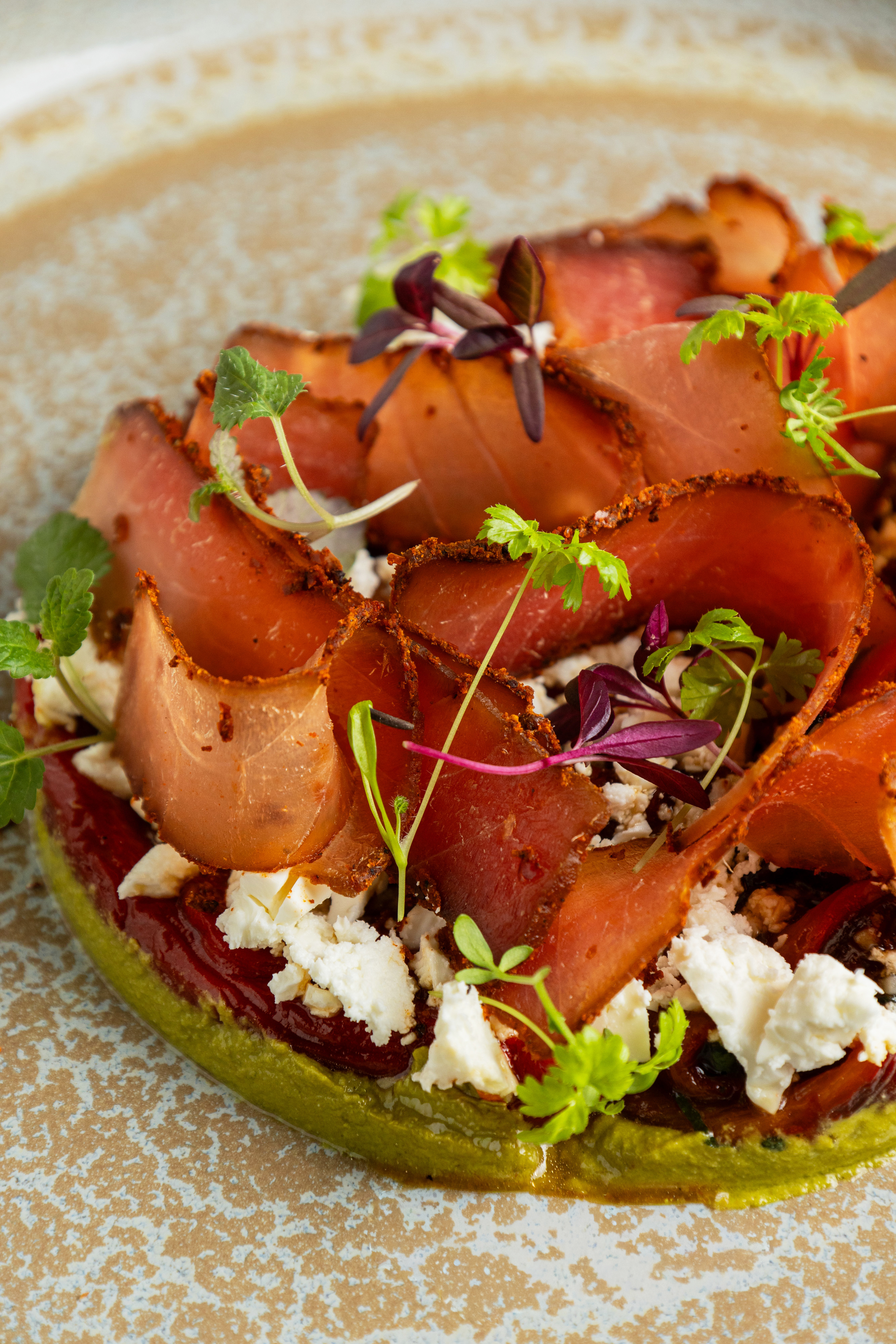
—Tuna, especially yellowfin tuna, is a neutral—tasting product that is often compared to beef or chicken," brand chef Artyom Martirosov explained to our publication. — With proper salting and dehydration, it visually and texturally closely resembles a classic basturma. After drying, it is already a dense piece with a beautiful slice, so all that remains is to pick up the spices and bring it to the desired taste.
The resulting product is a basturma rather in appearance, but has a vivid taste of its own. It doesn't need sauces, and it works great with herbs, marinades, and simple side dishes. In "Crab Cakes" it is cut into transparent ribbons and served with baked ramiro peppers, salted cheese and green cherry plum pesto. Another well—proven method of use is to rub shavings to hominy.

Beef Salami
Historically, salami is made from pork, with other types of meat added in rare cases. However, in the Carniceria Vino restaurant (Moscow), three varieties of these delicacies are prepared from dry-aged beef from adult dairy and meat cows. There are only a few companies engaged in such production in the world.
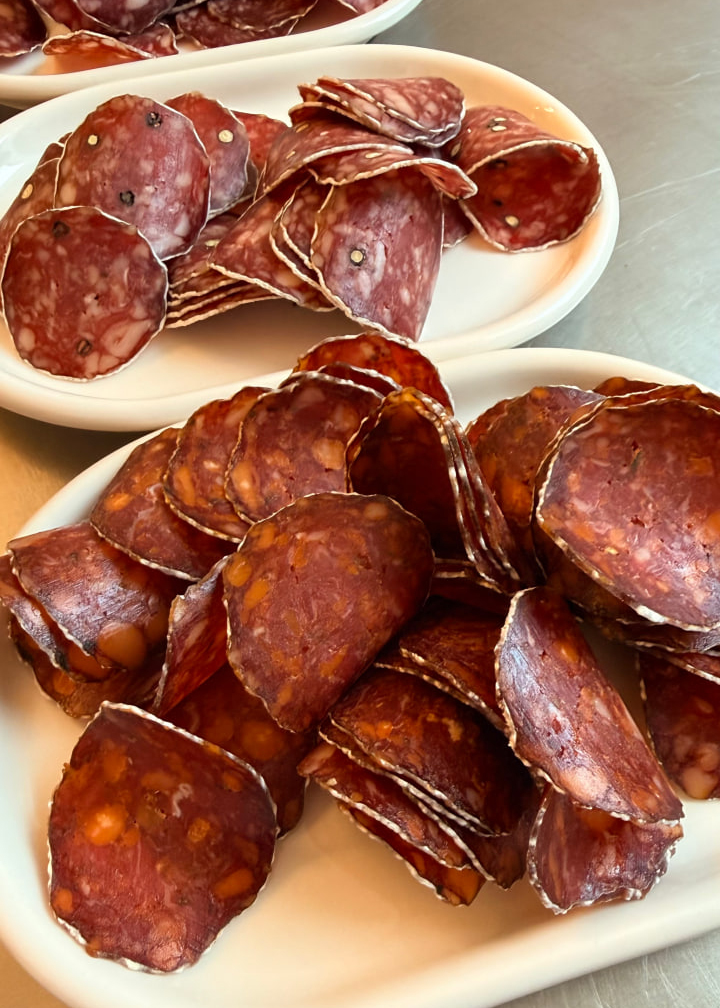
"The production time of our salami ranges from a month to two months, depending on the size," says Anton Loshchilov, butcher chef of the Carniseria Butcher Shop brand. — Fermentation and maturation processes take place under special temperature conditions and humidity levels, resulting in the growth of noble mold and the formation of a characteristic taste and aroma.
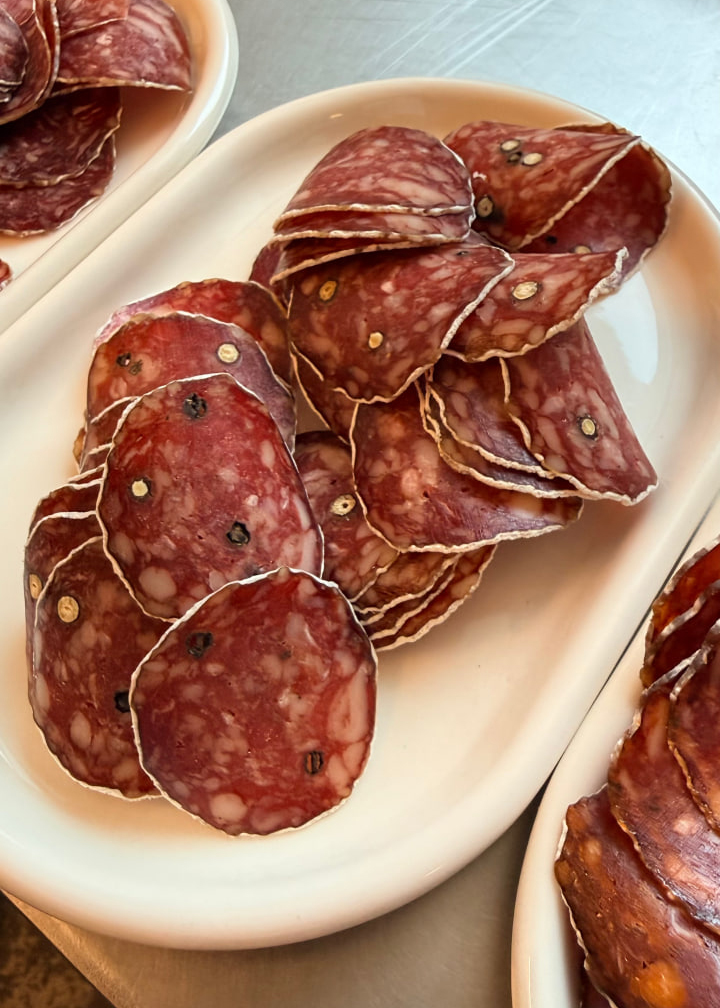
Our interlocutor is convinced that even though there are no centuries-old traditions of cheese-making, professionals in Russia have sufficient experience and conditions for the production of high-quality meat delicacies. Therefore, today you can make salami based on your preferences and desire to create a delicious product, without running into the barrier of a traditional shape, slice or set of spices.
Переведено сервисом «Яндекс Переводчик»
