- Статьи
- Science and technology
- Learning is in the light: students introduce a space scanner, an AI toy and unique diagnostic tools

Learning is in the light: students introduce a space scanner, an AI toy and unique diagnostic tools

Russian students and graduate students are increasingly going beyond educational and scientific projects, creating technology startups with real products, first customers and investments. Izvestia gathered projects from medicine, space technologies, new materials, and EdTech created by graduates of the Sbera Student Accelerator, which was attended by teams from various universities across the country.
Health Assistant with AI
Student Yulia Chumacheva has developed a unique health service called Health Hero. The girl is a second-year graduate student at the Faculty of Biology of Chelyabinsk State University.
The application works as a "smart" doctor's assistant: it analyzes the user's medical data — test results, scans, symptoms — takes into account chronic diseases, medication intake and lifestyle, and then forms personal recommendations. The idea of a medical service was born not in a laboratory, but out of communication with friends.

— The idea came to me out of the need of people who contacted me to decipher the analyzes back at the university. Back then, I was running a health blog explaining how and why the tests were changing. I didn't know then that it would grow into a big project that would make health accessible to everyone," she told Izvestia.
In September 2025, the first investments in the amount of 15 million rubles came into the project, which allowed the team to refine the AI core of the service and begin entering the segment of corporate medicine. The team plans to further improve the service and enter the CIS and Middle East markets at the end of the year.

"Clean space"
Clean Space is a technology startup created by graduate students of the St. Petersburg State University of Telecommunications named after Professor M.A. Bonch-Bruevich. The team is developing the WARD space lidar based on domestic components, an orbital scanning system. The technology can be used for high-precision docking of spacecraft, synchronization of inter-satellite optical communication channels, as well as detection of space debris.
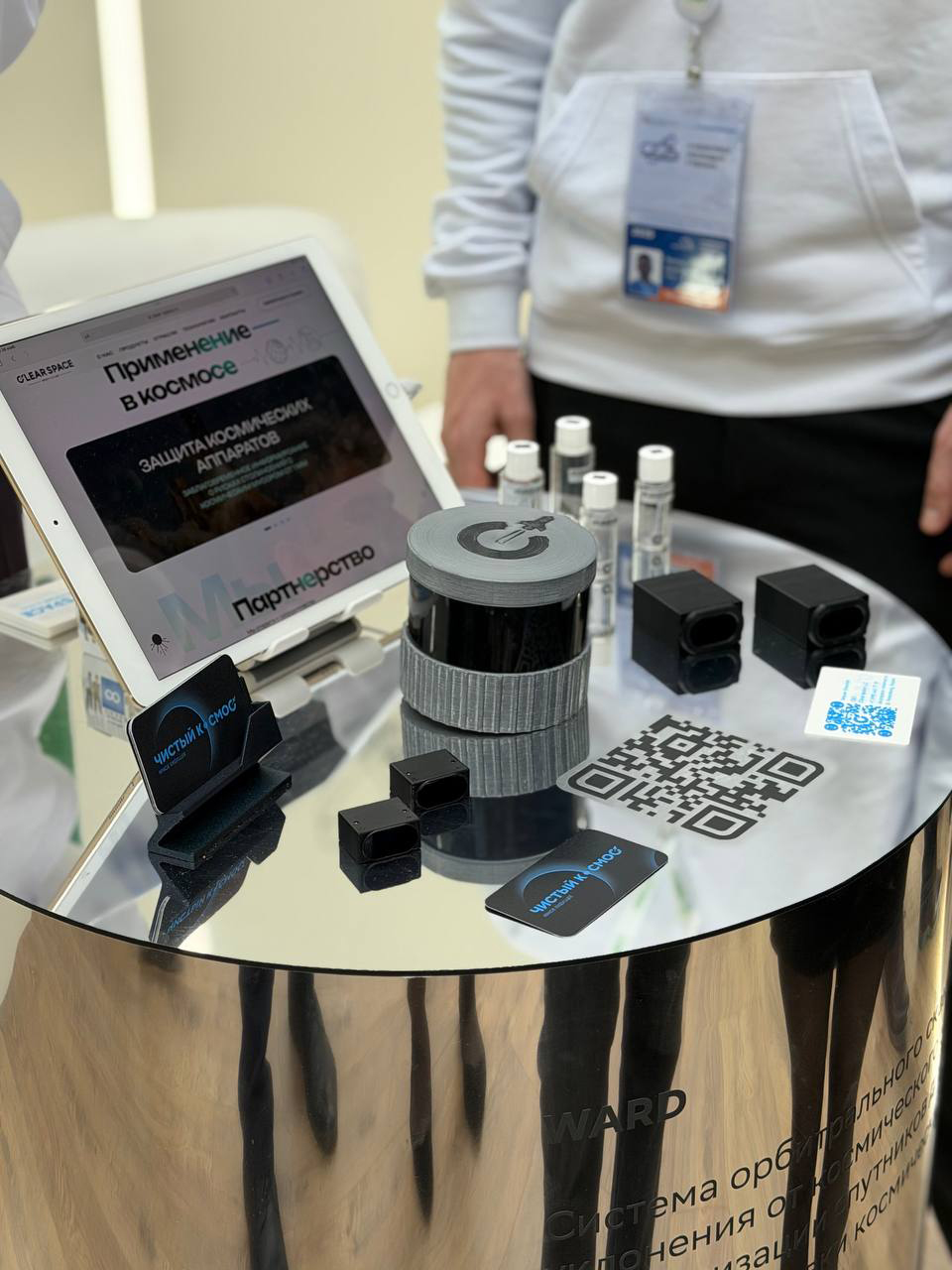
The system allows satellites to receive real-time data about the surrounding space, increasing the safety and autonomy of orbital operations. In 2025, thanks to participation in the accelerators of Sbera and the Moscow government, the team established contacts with the leadership of Roscosmos, and also attracted the attention of the Voskhod: Space Technologies venture fund, signed cooperation agreements with companies from Kazakhstan, and began a dialogue with representatives of the United Nations on sustainable space development.
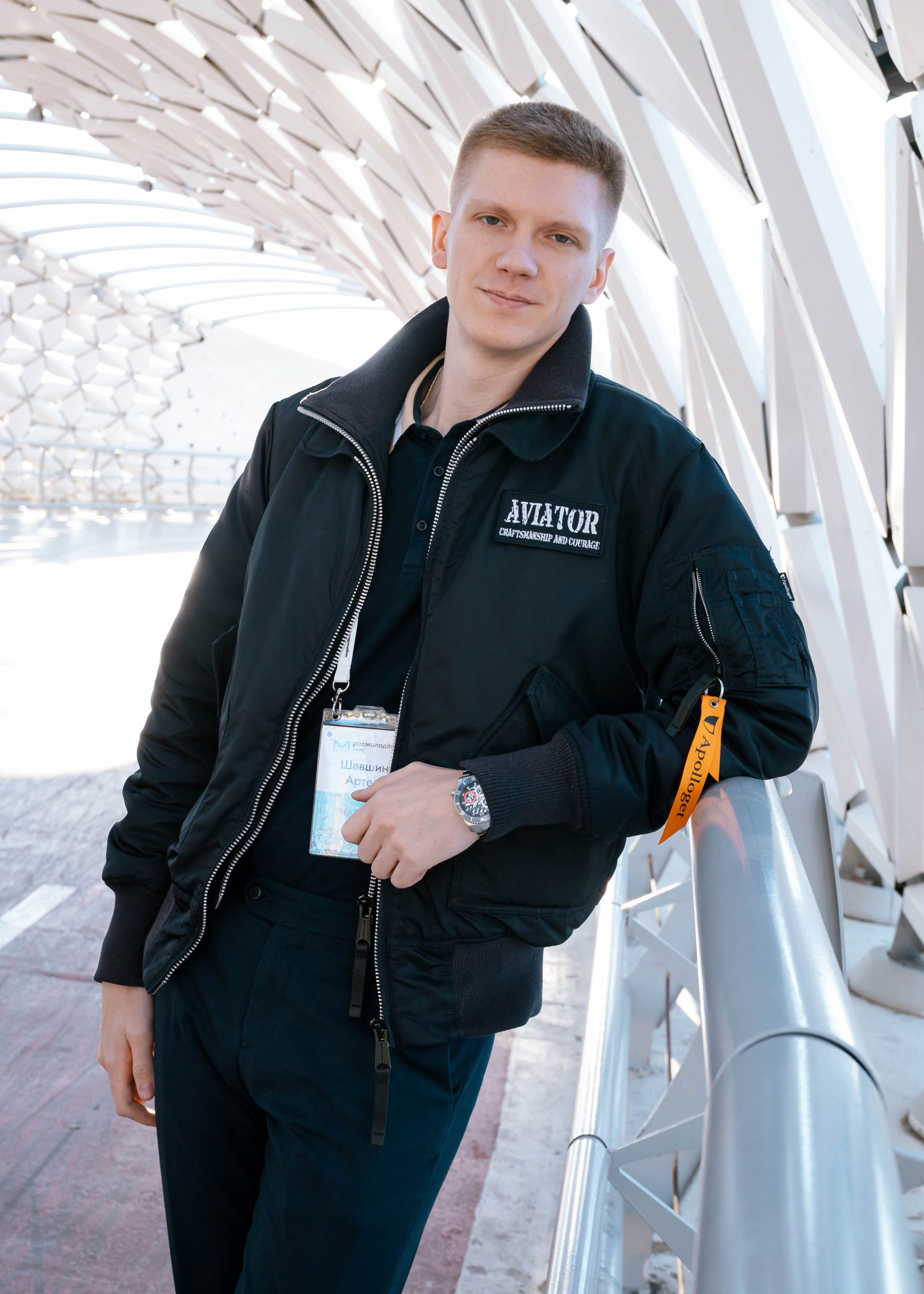
Artyom Shavshin came up with the idea of a startup immediately after completing his master's degree. By this time, he was working at the Russian Institute of Radio Navigation and Time and had a good understanding of how satellite equipment is created. His team's first product was a laser sensor for detecting the range of objects. Today, this lidar is being prepared for pilot tests in robotic storage systems, drones, and solutions to protect airports from birds. This approach has become fundamental for the team: before launching technologies into space, each module is tested on Earth.

Graphene thermal paste
Rusgrafen is a research and production startup created by Dmitry Matienko, a 23—year-old physics student at the Higher School of Economics, who develops and implements new graphene-based materials for industry and electronics. The startup is based on its own scientific development: an additive that changes the properties of graphene and makes it possible to create thermal interfaces with high and stable thermal conductivity.

Dmitry Matienko
The key product of the company is graphene—based thermal paste of domestic production. Unlike many solutions on the market, it demonstrates stable performance in real-world operation: it effectively dissipates heat, does not damage electronic components, does not cause corrosion, and retains its properties for a long time. This makes the product particularly in demand in segments where the temperature regime directly affects the reliability of equipment and the economics of processes — in mining, data centers and industrial electronics.

— The idea of the project grew out of my scientific and applied work with graphene. I have seen that there are many thermal interfaces on the market with high-profile statements, but without stable performance in real operation. While studying at the accelerator, it turned out to be the most difficult to change the approach: in science, you can improve a solution for a long time and look for the ideal, but in business it is important to stop in time and bring a product to market, even if it is not perfect yet. I had to learn to take responsibility not only for the outcome of the experiment, but also for the economy, timing and the team," said Dmitry Matienko.
The startup sells 7 thousand packages of thermal paste per month and has already applied for a patent for the invention.
Miishka
Miishka is an interactive toy with artificial intelligence developed by first—year ITMO students. The idea of the project was born at the HSE case championship while working on an AI-related task. The team drew attention to the problem when children spend more and more time on smartphones, parents are overloaded with tasks, and traditional toys often remain unclaimed.

This is how the image of the "smart bear" appeared — not a digital gadget, but a familiar character, inside which complex technology is hidden. Miishka knows how to communicate with a child, memorize his interests, adjust the complexity of games and learning scenarios to his age and level of development. A mobile application is provided for parents, in which you can track the child's activity and interests — this function has become one of the key ones for the project.
— We didn't just combine a plush toy and artificial intelligence. We have created the first character in Russia that adapts to a child," said Mikhail Shafiev, the founder of the project.

"Neotomograph"
Another successful student's development is the Neotomograph, a non—invasive intraoral scanner that allows for the rapid diagnosis of dental and oncological diseases of the oral cavity without ionizing radiation. The project was created by 22-year-old Daria Archakova and 24—year-old Alina Kalinichenko, students of Sechenov University and practicing physicians who personally encountered the limitations of existing methods of early diagnosis in their clinical work.
The technology combines two approaches that have already proven effective in medicine: 3D intraoral scanning, which is widely used in dentistry, and optical coherence tomography, which is actively used in ophthalmology. Their combination makes it possible to obtain fundamentally new data on the condition of oral tissues and use them for early screening of oncological diseases, periodontitis and caries.

— The idea of the project was born out of clinical pain: today, the dentist often cannot see early tissue changes, which means he loses critically important time for the patient. Our key value is the balance of efficiency on two fronts. On the one hand, we are creating a product that gives the doctor a high—quality, safe diagnosis without radiation and with a minimum number of false negative results, and the patient a chance to detect the disease early. On the other hand, we consciously design the solution so that it is economically feasible for the clinic and effectively integrated into its business model," said Alina Kalinichenko.
At the demo day of youth startups within the framework of the Moscow Startup Summit, the technology aroused the interest of an investor whose family itself was faced with cancer. He supported the project after seeing the potential for early cancer detection and social impact.
From a student to a startup
Students are the most advanced, creative, educated part of the youth, among whom many new ideas are born, said Natalia Magidei, Managing Director and head of the Directorate for the development of the startup ecosystem and Open Innovations at Sbera.

— In young entrepreneurs, we do not see "novice specialists", but people who are familiar with technology, look at familiar things from a different angle, learn quickly and find solutions where there are no ready-made answers yet. The task of the student accelerator is to create an environment in which their ideas receive resources, knowledge, expertise, technology and the opportunity to turn into a working product and growing business in a short time, because over the long run it is these ideas and their young authors who form the future leaders of the technology market," she said.
In addition to the Sbera student accelerator, there are many institutes and programs in Russia to support student entrepreneurs, both public and private. Thus, the Ministry of Education and Science has created a platform for university technological entrepreneurship (UITP). There is also the "University of Entrepreneurs" program of the Department of Entrepreneurship and Innovative Development of the City of Moscow, ASI and ANO "Human Capital Development" and a number of other accelerators, trainings and programs.
Переведено сервисом «Яндекс Переводчик»
