- Статьи
- Internet and technology
- Shock anti-fraud: The Cabinet of Ministers held a new package of measures against cyberbullying in the State Duma

Shock anti-fraud: The Cabinet of Ministers held a new package of measures against cyberbullying in the State Duma

The Russian government has submitted to the State Duma about 20 initiatives to combat cyberbullying. The previous package of measures has already reduced digital crimes by 9.5% in the first 10 months of this year. However, fraudsters are evolving, disguising themselves as banks and authorities, which makes it more difficult for organizations to maintain a balance between the convenience of providing services and the "reinforced concrete" security of personal data. The new rules introduce labeling of international calls, children's SIM cards with parental control, a limit of 20 bank cards per person and a simplified scam message through Gosuslugi. However, critics see gaps in preventive work with the population. Details can be found in the Izvestia article.
Official momentum and plans ahead of schedule
One of the main innovations of the second package of initiatives is the algorithm for restoring access to an account on the Gosuslug portal using trusted methods only. According to the government's press service, we are talking about recovery through the MFC, applications or bank websites, as well as using biometrics. In addition, it is proposed to introduce children's SIM cards that allow parents to control a child's access to unwanted content and reduce the risk of minors being involved in fraudulent schemes.
The systemic struggle against so—called droppers, individuals who provide fraudsters with access to their bank accounts, continues. It is proposed to set a limit on the number of bank cards — no more than 20 per person (and no more than 5 cards in one bank).

The new package of measures establishes the right of telecom operators to use various tools to detect suspicious calls, including AI, and obliges them to transfer information about fraudulent numbers to the Anti—fraud GIS registry. Traffic on such numbers is suspended.
They also pay a lot of attention to the fight against phishing. For example, a ban is being imposed on the dissemination of information aimed at deceiving users and stealing their data. The mechanisms for the extrajudicial operational blocking of fraudulent sites are also stipulated. Prior to this, only resources that mimic the websites of banks and financial organizations were subject to mandatory blocking.

The office of Deputy Prime Minister Dmitry Grigorenko demonstrates concrete results and a strategic view:
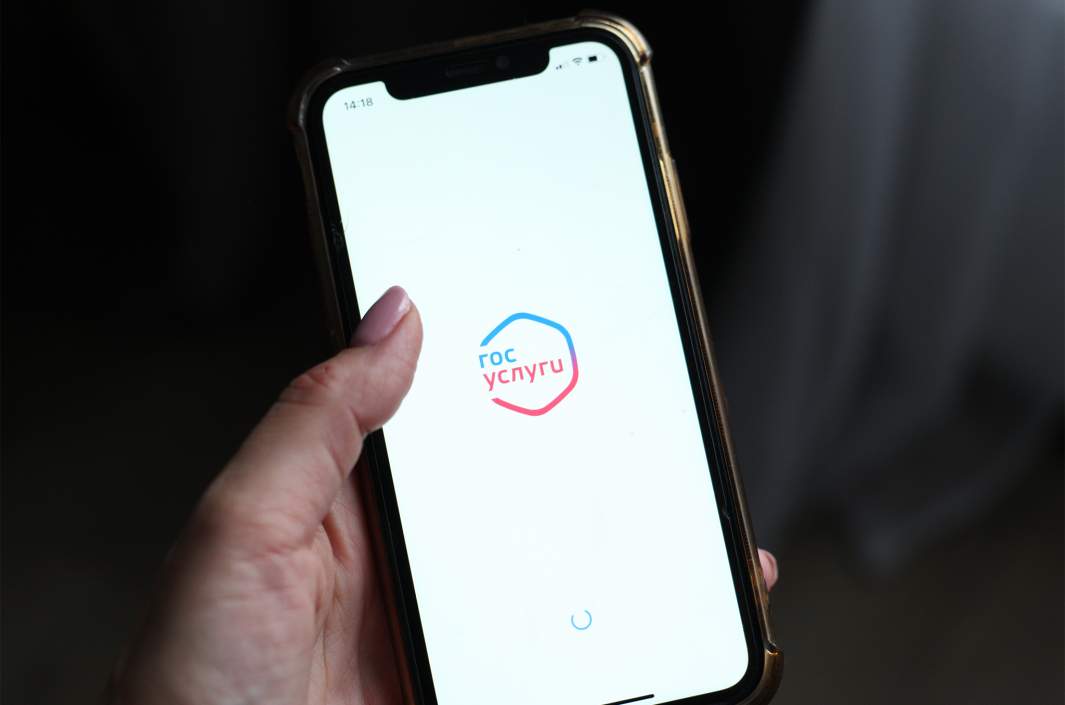
— Step by step, we are building a multi-level protection system that minimizes risks for citizens and significantly complicates the implementation of fraudulent schemes. So, at the beginning of this year, the first package of anti-fraud initiatives was adopted. It includes about 30 measures, and they have already produced tangible results: more than 20 million citizens have taken advantage of the opportunity to establish a self-ban on loans. Over 13 million fraudulent SMS messages with false codes for entering the Gosuslug portal have been blocked since August.
The press service of the Ministry of Finance of the Russian Federation speaks about its expectations from innovations:
— The fight against cyberbullying is one of the key priorities of our work. Measures to protect citizens are constantly being improved. Thanks to the first package of measures, the number of cybercrimes has decreased. We also expect significant results from the subsequent measures," the ministry's press service explained.
Technological breakthrough: from basic infrastructure to AI and IMEI control
The second package of measures evolves the approach to combating fraudsters, closing vulnerabilities such as virtual PBX and phishing mirrors. Senator Artem Sheikin, head of the IT Regulation Committee of the Association of KP VET, sees the initiatives as a large-scale upgrade compared to Law No. 41-FZ.
— The second package of measures to combat cyberbullying was a logical continuation of the law No. 41-FZ adopted in the spring. If the first package created the protection system itself, for example, implemented the Anti—Fraud GIS, established basic rules for interaction between banks, telecom operators and the state, then the second one is aimed at closing identified vulnerabilities and adding new tools that allow you to act proactively," notes Sheikin.

Mikhail Seregin, head of the Information Security Center at Innopolis University, calls the telecom infrastructure the key to system defense.
— The tools stipulated in the second package of measures will allow for a more systematic development of anti-fraud methods, since they affect the telecom infrastructure itself. Databases of user equipment identifiers (IMEI/end devices), monitoring and localization of virtual telephone exchanges on the territory of the Russian Federation, as well as labeling international calls and "carte blanche" for AI systems for detecting suspicious calls are being introduced," says Seregin.

Targeted attacks: Card limits, child SIM, and phishing blocking
The new measures are hitting droppers, spammers and hackers, making it more difficult to cash out and mass attacks, and the counteraction system itself is becoming more technologically advanced and targeted. Andrey Mishukov, iTPROTECT's Chief Operating Officer, shared this opinion with Izvestia.
"The main innovation is to limit the issuance of bank cards to 20 per person (no more than 5 in one bank),— Mishukov emphasizes.

Alexander Kiselyov, UserGate's patent attorney, focuses on citizen engagement and practicality.
— The basic difference of the new package of measures was the increase in the level of citizen involvement in the fight against fraud, which will undoubtedly reduce its scale. For example, the technical implementation of parental control is being simplified, and the provision of information about suspicious calls will no longer be limited to the technical support services of messengers and telecom operators," says Kiselyov.
Business at Gunpoint: Fines, integration, and Rush risks
Banks, operators and IT giants integrate into the GIS "Antifraud" with strict liability for omissions. Olga Komarova, the owner of the finSynapse product, warns about the tight implementation time.
— It is already obvious that the implementation of some initiatives requires more detailed study, especially in terms of timing and sequence of actions. The second package of measures, including work with GIS Antifraud, will enter into force on September 1, 2026. For credit institutions, this period looks extremely short: they will not only have to integrate with the new system, but also build internal processes around it," Komarova notes.
ELMA Information security analyst Alexander Yarov predicts operational challenges from registries and checks.

— All the proposed measures can be roughly divided into three categories. The first is centralized data registers (ESIA, OIS, ECUPK), the second is ownership restriction (linking to devices, bank cards, SIM cards) and the third is confirmation of actions. These measures are aimed at strengthening control over civilian data in order to distinguish between fraudsters and bona fide users," Yarov says.
Gaps in defense: literacy, psychology, and the global context
Technology is not a panacea — scammers adapt, but the person remains the weak link. Sergey Khudyakov, an expert on cyber insurance and co-owner of Mains, emphasizes the transnational nature of threats and the need for de-escalation.
— Cyberbullying today is highly organized and transnational in nature. Attacks against citizens' savings often originate from abroad, and, unfortunately, criminals are still ahead in this technological race. A drastic decrease in the wave of fraud can occur against the background of international de—escalation and as a result of strengthening the joint fight against this phenomenon," concludes Khudyakov.
Переведено сервисом «Яндекс Переводчик»
