Who came to us with a sword: the fourth "Witcher" failed miserably


"Netflix, what have you done, stop!" is the main reaction to the fourth season of The Witcher worldwide. The sequel to one of the most popular franchises has received a flurry of negative reviews and a 17% "freshness" viewership rating on Rotten Tomatoes. This is the most expensive season of the series, with a budget of over $220 million, and very entertaining action scenes. They even released a full-length spin-off with Dolph Lundgren at the same time. But in the end, the only thing that everyone really praises is the new characters played by the star of The Matrix and Oscar nominee Laurence Fishburne and Neil Blomkamp's muse Sharlto Copley. Izvestia watched the fourth season and checked how deserved the failure of The Witcher is.
What are the problems of the new "Witcher"
According to the logic of the series, the fourth season of The Witcher should be the penultimate. He was born traumatically: after the third season of the show, Henry Cavill left, and he was replaced by the equally stellar Liam Hemsworth. Even then it became clear that things were bad. One of the main impressions from last season was the expression of unbearable boredom on Cavill's face in the frame: he did not like which way the producers were leading the franchise, he did not like what was happening with his witcher Geralt in the story, he clearly knew during filming that he would not renew his contract with Netflix.
Netflix saw that the show's team was depressed by Cavill's departure, and saw fans' distrust of the sequel. Streaming has tried to prepare for the release as much as possible. He released the animated "The Witcher" this year, in parallel with the work on the fourth season, he made a spin-off about the gang of "Rats", which now includes the main character Ciri. Dolph Lundgren plays there, who is not in the fourth season, but it's better to look at your favorite actor of the 80s in the movie Johnny Mnemonic, which has been re-released in Russian cinemas right now.
But it seems that the bosses of Netflix watched the resulting season and realized that things were bad. Therefore, the spin-off from the mini-series was rewound to a full meter in order to be shorter, and the season itself was released in one day, although streaming splits its main projects into two parts, and the upcoming "Very Strange Cases" will generally be in three sets. An alarming symptom.
What's going on in the new season
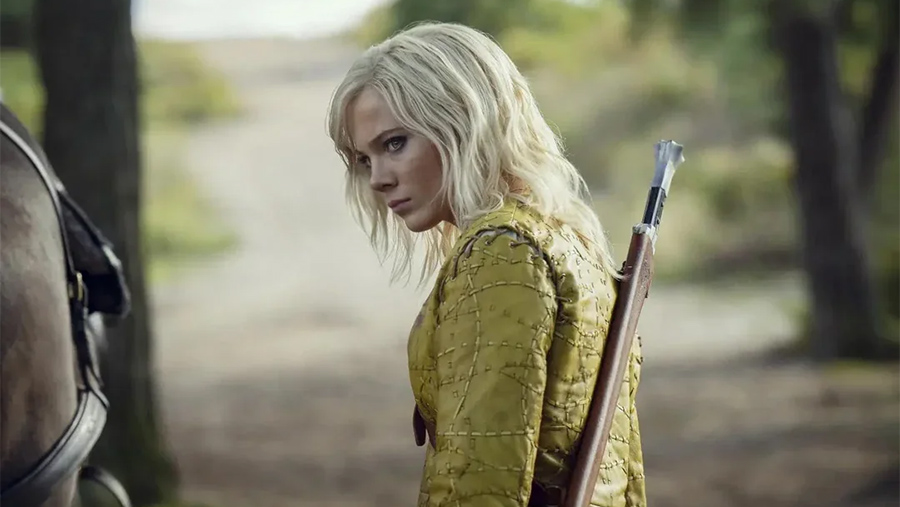
The fourth season consists of three parallel storylines that develop after the epic massacre in the finale of last season. A young woman, Ciri, who is being hunted by leading magicians all over the world, is experiencing something like a belated teenage rebellion and is painfully trying to grow up. She finds friends — a gang of "Rats", these robbers are proud of their freedom and arrange daring attacks here and there. Ciri meets a new love, but the bandits are confused by the cruelty and depressiveness of the mysterious blonde, who even changed her name in order to completely "restart" her unhappy fate.
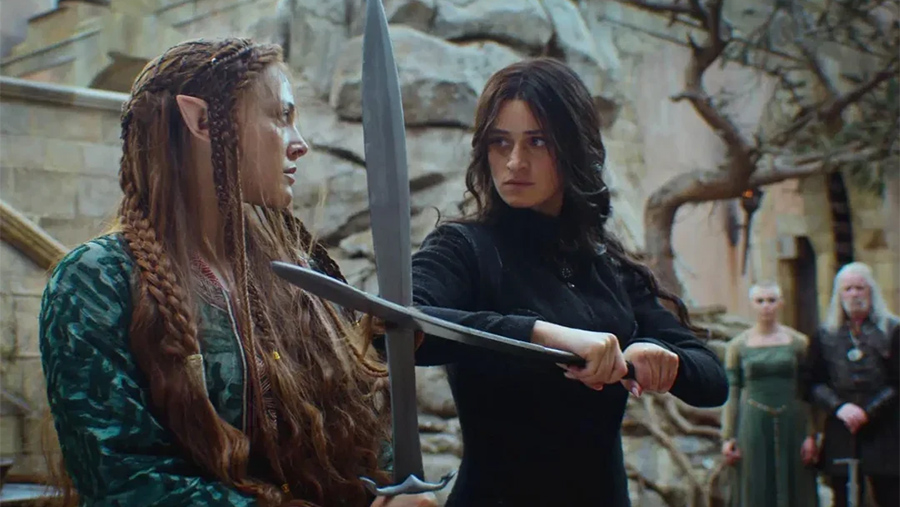
The witch Yennefer and her companions are preparing for a big battle of magicians in a gloomy Gothic castle. She considers Ciri her adopted daughter and really wants to find her. Geralt, wounded in the third season, gloomily wanders around villages and towns, gathering a group of renegades and also thinking about Ciri. All three heroes constantly meet each other in visions and even sometimes cross paths, only to run away again in a mission to save the world from the coming evil.
This structure is already familiar to viewers of the series, and indeed everything is familiar here: the villains, the positive characters, the locations, and the problems. But it used to be fascinating to watch, but now it's very hard and boring. Although there is an expensive mage battle, there are several monsters, among which the mermaid stands out. By the way, she is not called mermaid here, in the Slavic manner, rusalka, emphasizing that the bestiary here is connected with the books of Andrzej Sapkowski, as well as the main directions of the plot. But, unfortunately, what is there does not compensate for what is not here. And there is no clear explanation here, at least, why to watch it at all. To understand this, you have to go back ten years.
The Witcher 3 game is the best version of Geralt
The best version of The Witcher is not Sapkovsky's books (the latter, by the way, was released in Russia quite recently, but did not become a hit), not TV series, and certainly not cartoons. The best is The Witcher 3: Wild Hunt video game, which was released in 2015, became a global cultural phenomenon, still remains a bestseller, and truly made Geralt popular. Not only was it technically flawless and perfectly balanced. It had something of the great works of art, a depth that was hard to expect from a Medieval fantasy action game, of which there are thousands and thousands in the world of video games.
In the center there was the figure of the witcher Geralt. On the one hand, he is a kind of cowboy from Sam Packinp's films: dirty, taciturn, cruel, he wandered through fictional medieval countries, earned a lot of money hunting evil spirits, was a saloon star and a lover of having fun with local girls after a bath, ideally pretty witches.
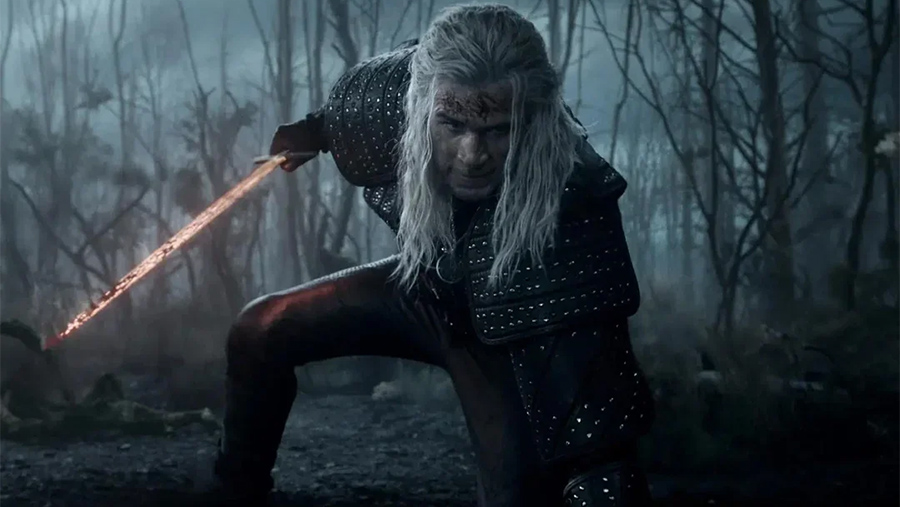
On the other hand, Geralt is, as literary critics would say, a travestied Christological figure. After all, he is not just a mercenary, but a kind of prophet or messiah who changes lives wherever he appears, performs miracles, is almost immortal, cannot have children, sees things that an ordinary person cannot do. In a world steeped in vices, he is the bearer of certain moral laws, he opposes reason to obscurantism, exposes lies, punishes sinners.
At the same time, the game's plot is built apocalyptically, and Geralt, despite all his good deeds, sees that the world is steadily moving towards the end of the world: hostility among states is intensifying, tyrants are taking the places of good rulers, and new challenges are emerging, including those related to previously unknown magical forces. And the key role here is played by the "lamb to the slaughter", Ciri, whom Geralt loves in a fatherly way, and here, too, as in many elements of the game, Christian issues can be traced. So politics, religion, philosophy, and psychology suddenly combined within a single game. In addition, she constantly had to make difficult choices, in which not only the options, but also the consequences were far from obvious. Gamers have been dreaming of a sequel for ten years now, and it should be released next year, but it's hard to say if we'll get anything even close to the ingenious Wild Hunt.

Why did the fourth season fail?
Henry Cavill is not only a Superman from superhero movies, but also a fan of the game and books about the witcher. He became the perfect embodiment of Geralt on the screen, his witcher is endowed with self-irony, full of sad memories, does not deny himself carnal pleasures, perceptive, sarcastic, honest and cruel. For two seasons of the series, it seemed that the game had logically flowed into the series and that next we need to wait for the depth that is so amazing in the game. However, this did not happen.
The creators of the series tried to please everyone, and in the fourth season the result became completely unbearable. The brutality that distinguished the game has been softened here, naturalism has turned into schematics, the battles are unimaginative and monotonous. In the game, monsters acquired such a character over hundreds of years of their joyless lives that one of the advantages of the plot was dialogues with them, the witcher communicated with them with sincere curiosity. Perhaps with much more pleasure than with people. Here, monsters are needed only for computer effects and choreography of fights, which are given a lot of attention (and a lot of money), but we no longer perceive it as personally, we do not remember each monster as exactly what kind of meeting, impression.
The provocative eroticism of the game turned into total chastity here, as if Netflix was aiming at an audience of 12+. It gets to the point where Yennefer's hair is glued to her chest in a bed scene so that "nudity" doesn't happen in the frame. It's clear that the same thing was done with fifteen-year-old Brooke Shields in the Blue Lagoon, but it's at least strange to see this in 2025, especially after Game of Thrones.
Netflix is probably afraid of accusations of objectification or other accusations of the #metoo era, but the world of The Witcher still suggests a completely different attitude to the material. Sex and violence are inextricably linked there, cruelty and dirt, which the hero is always kneading, need to be discharged. Hence Geralt's eternal desire to bathe, but his desperate sex without the possibility of procreation is especially symbolic, that is, as if a hopeless, romantic, somewhat God-defying gesture where there are no boundaries and taboos. That's not going to happen in season four.
Liam Hemsworth still hadn't figured out how he could personally fill Geralt's image, so he decided to just try to imitate Cavill, even chuckling the same way. The audience quickly understands this, and so do the directors. Therefore, they try to compensate for the insipidity of the character with his team, and as a result, the foul-mouthed dwarves, the vampire and the pregnant archer are written out more vividly than the monotonous witcher. Ciri and Yennefer are given a little more colorful, but they share the same condition for most of the film, so they quickly merge. Ciri has a magical clone here, and it's more interesting than the original.
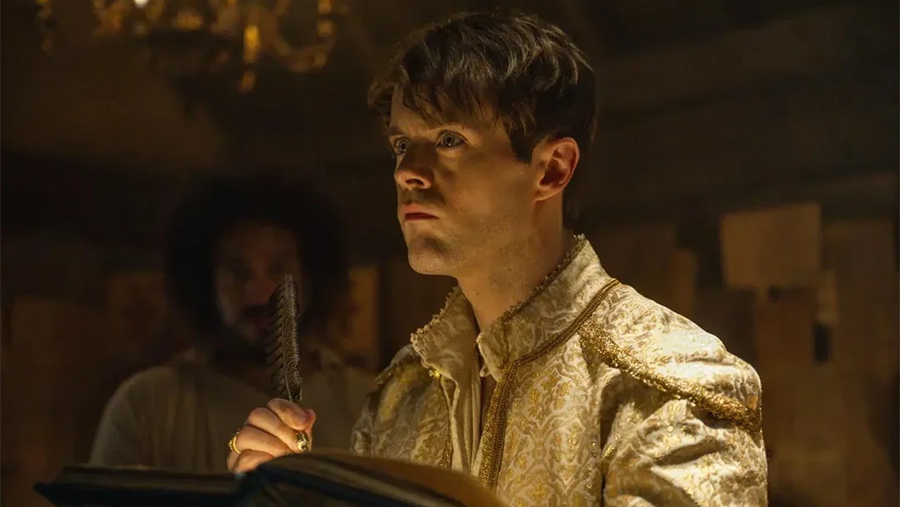
Perhaps Netflix lost this move. The Witcher franchise has never experienced such an image failure, and no matter how it affects the expectation of the game and the final season, if it is removed after such ratings at all. And, most importantly, in the fifth episode it is clear that the series could have been different! Here, suddenly, the bard Buttercup begins to sing, and he is given such a stylization of a Hollywood musical that hope arises. This is followed by an animated novel about vampires, and hope grows stronger, it's done in an original, bright, catchy way. And now it seems that the second half of the series will justify the first four hours wasted. But no, it's going to be the same from now on: the dreary Geralt-Hemsfort, the same battles, getting rid of several regular characters, hints that what's next will be really cool. No, it won't be cool, it looks like it. 17% of the "freshness" on Tomatoes proves that all the shortcomings noted above are not private quibbles, but an expression of a common opinion. And we urgently need to assemble rallies at Netflix headquarters with banners saying "We don't need such a Witcher."
Переведено сервисом «Яндекс Переводчик»
