And he, funny, asks for a "Storm": Shakespeare got quad bikes.


The Pushkin Moscow Theater was overtaken by Shakespeare's The Tempest. She opens the season and obviously sets its direction. Director Nikolai Roshchin rode through the classic text of the Avon bard on an ATV and looked at the story of revenge and forgiveness through virtual reality glasses. What came of it is in the Izvestia report.
From Shakespeare to Roshchin
Shakespeare's The Tempest is more than 400 years old. The play has a long stage biography, but it was rarely addressed in Moscow theaters: the work is traditionally considered one of the most difficult in the legacy of the main playwright in history. 15 years ago, director Robert Sturua staged the play on the stage of Et Cetera under the direction of Alexander Kalyagin. Then the director significantly shortened and reworked the text, focusing on magic, power and forgiveness. The performance caused a furore among the audience and critics. A year later, Lev Durov presented his version at the Theater on Malaya Bronnaya, where he himself played the main role, it was the main performance of the last years of his life, the whole of Moscow went there.
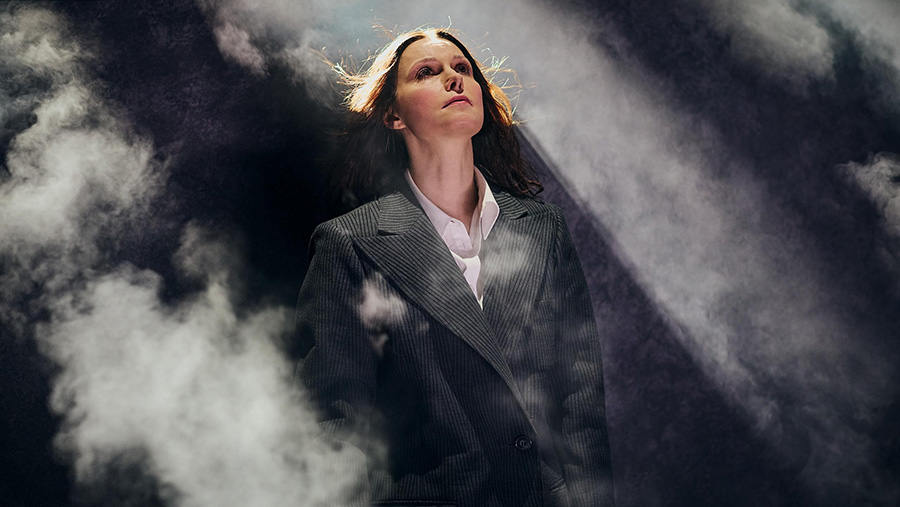
Now the work of the great bard has reached the Pushkin Theater. Director and artist Nikolai Roshchin took over the production. This is the second time he has addressed Shakespeare's legacy. At the end of 2022, his play Othello was released at the Alexandrinsky Theater, where Nikolai was the main director. The Pushkin Theater has moved its entire production team — costume designer Ekaterina Koptyaeva, composer Ivan Volkov and St. Petersburg playwright Mikhail Smirnov. Roshchin himself has traditionally taken up not only directing, but also set design.
A magic remote control and a concrete cave
On the stage is a ship made of rough planks. The captain and the boatswain are standing on the deck. In the hold, the Neapolitan king Alonzo (Anton Feoktistov), his brother Sebastian (Nikolai Kislichenko), his son Ferdinand (Alexander Dmitriev) and the Duke of Milan Antonio (Alexei Voropanov) are dressed in knight's armor. A sudden storm takes the ship to a mysterious island where the exiled Duke of Milan Prospero (Vladimir Maisinger) lives together with his daughter Miranda (Elizaveta Kononova).
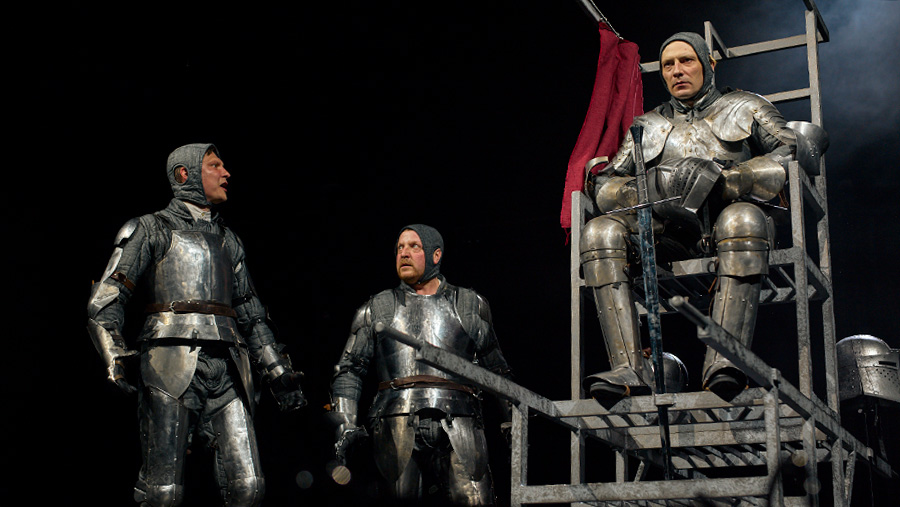
Unlike the original play, the audience does not see an old magician from book illustrations, but a completely modern man with a remote control instead of a magic wand.
Here he presses the button: "peak" — and his beloved daughter Miranda sees happy dreams. "Peak" — and Prospero causes a storm. "Peak" — and the magician controls the spirit of the island, Ariel. "Rush" — and the armed knights prostrate.

Once upon a time, his brother Antonio, with the support of the King of Naples, deprived Prospero of power and exiled him to the sea. But the warlock managed not only to survive on the island, but also to subdue its powerful creatures: the spirit of the air Ariel (Alexandra Urlusiak) and the disgusting son of the evil sorceress Sycorax Caliban (Alexander Matrosov).
Unlike Shakespeare, Roshchin's Ariel becomes a kind of "decider" of Prospero. In the course of the action, he talks about violence on the part of Caliban, about hatred of the new master and about stupid human vices. Ariel is not an ephemeral shadow here, but a character made of flesh and nerves. Despite the fact that the character is played by a woman, Ariel speaks about herself in a man's face. This corresponds to the rough and strong image of the ancient spirit, but contrasts with the petite figure of the actress.
The love story revolves around Miranda and Prince Ferdinand (Alexander Dmitriev). Their meeting and love were supposed to be an island of hope in the midst of intrigue and magical manipulation, but they turned into a mediocre parody of feelings.
The audience enters a concrete space in a gray color scheme. Prospero's cave, island landscapes or scenes on a ship are unified cells with a minimum of furniture. In one room there is a modern white stove with a refrigerator, in another there is a wrought—iron bed, in the third there is a toilet and a bathtub. The only "color spot" of the performance is the hallucinations caused by Ariel in the form of Alexandra Ursulyak dancing.
The Angel of Retribution in the scenic Swamp
The authors of the play have largely preserved not only the plot, but also the Shakespearean style. The actors have to exchange ornate constructions, and the viewer has to wade through Shakespeare's iambic pentameter. In order for the already silent hall not to get completely bored, and the action has moved to a standstill, the artists switch to shouting. But such a directorial decision only confuses the audience more.
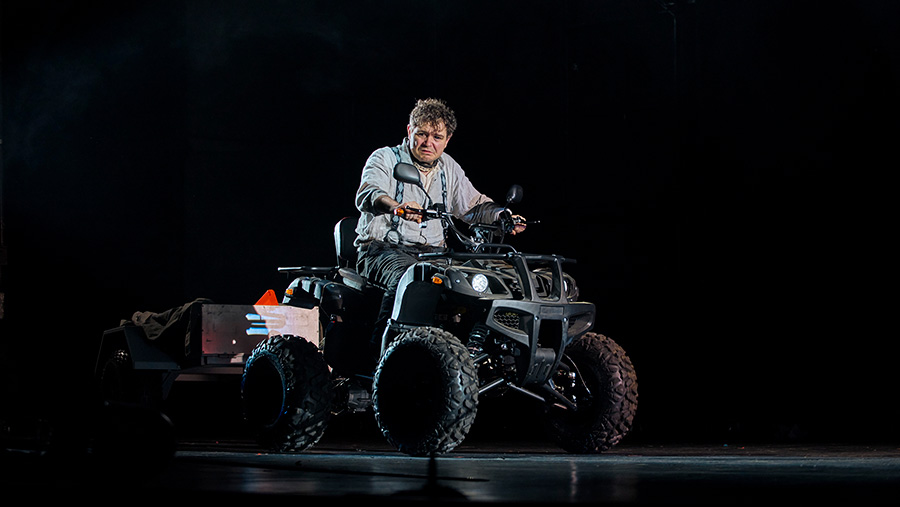
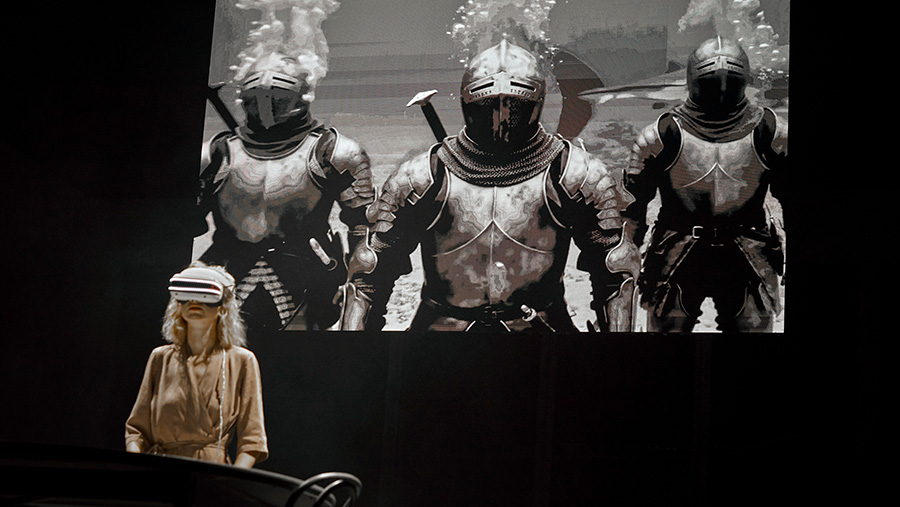
The modern "toys" that populate the play do not save the situation either. The director drove a real ATV onto the stage, handed the actors virtual reality glasses, and even specially made a video in the spirit of the iconic first-person shooter Half-Life. As a result, the viewer watches for a long time as Vladimir Maisinger runs around a virtual cave, gives his daughter to the knights and licks their steel boots by clicking on the appropriate keys in the game.
It is difficult to keep track of the plot and understand what deviations from the original give. And when, at the end of the first act, Shakespeare's story ended and Alexandra Ursulyak appeared on stage with giant black wings on her back, there were even more questions.
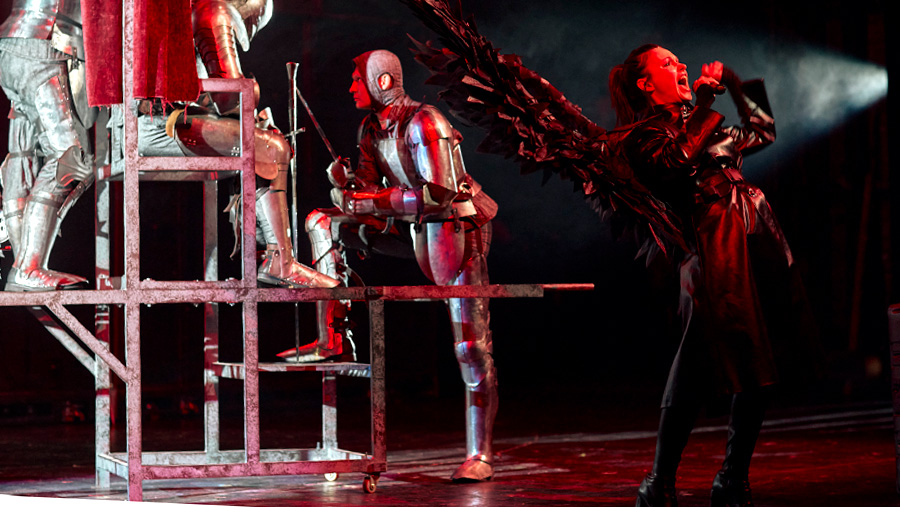
"Now we will replay everything," Ariel assured and announced the intermission. But in the remaining hour, the clouds did not clear, and the plot chaos only intensified. The authors decided to speculate about what would have happened to the heroes of "The Tempest" without the intervention of the spirit of the island. Answer: carnage, violence and death. What conclusion the audience should draw from this is a mystery.

For the entire three hours of the performance, you catch yourself thinking — why all this? What artistic value and semantic meaning do the elements of modernity carry in the play? Why should William Shakespeare's play sound relevant and what did the director do for it? Because of this, the action stands still, and the audience reacts only in the mise-en-scene, when the golden-haired Prince Ferdinand cleans the toilet with a brush. What effect did the authors of the play want to achieve?
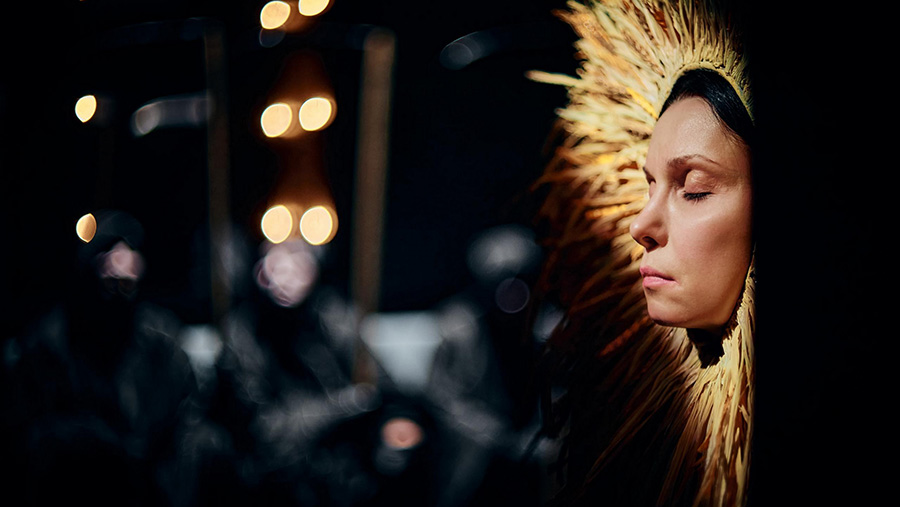
Probably, the beneficial dramatic soil, fertilized by modern realities and means of expression, should have given rise to philosophical allegories and allusions, but it only produced bewilderment and confusion.
It seemed that all the participants of the performance were stuck in a swamp, which they diligently created for themselves. On the other hand, although Prospero is a wizard, magic doesn't always work the same for everyone. "The Tempest" is difficult to stage at all, and Shakespeare from the other world seems to laugh at the futile attempts to decipher his plan.
Переведено сервисом «Яндекс Переводчик»
