"My main task is to start working on space and time travel"


An international center for the study of gravity may appear in Serbia, whose main task will be to find ways to control gravity, South African engineer, businessman and politician Errol Musk told Izvestia. In an exclusive interview, billionaire Elon Musk's father shared the principles of parenting, explained why he thinks traveling to Mars on a rocket is not the best idea, and recalled how the SpaceX story began.
"One day, someone will figure out how we can manipulate gravity for our own purposes."
— Errol, they are planning to train visionaries at MIPT in Moscow. Who better to ask than you how to raise such a person?
— I think every child is born a visionary. Parents and school can make him lose his vision, but he is born a visionary. With my own children, I have discovered that it is not necessary to explain to a four-year-old child that there is a Jesus in the Christian world, because he is able to understand almost immediately: there is a God who cares and watches over us.
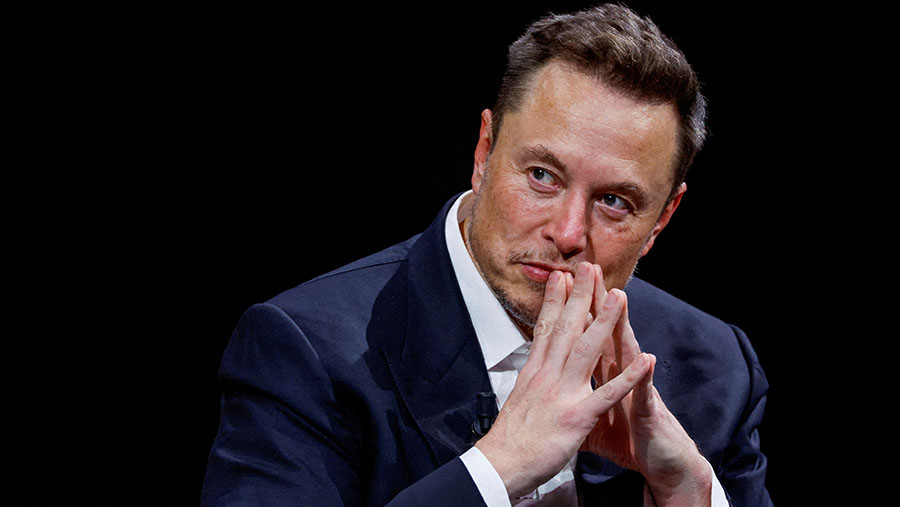
The key idea is for parents to maintain this vision and never tell their children that something is impossible. I just watched a program with my son Ilon yesterday, where he talked about the Neuralink tests. He said that within eight weeks they will be able to restore sight to blind people. This may seem fantastic.
— How to make children capable of such discoveries?
— The main thing in life is not to destroy this vision and give children the opportunity to grow up while preserving it. I am currently trying to create a training institute or center where we will study gravity. It is very important that we control gravity and learn how to use it. Of course, if you apply to recognized universities and scientific faculties, they will immediately tell you, "Oh no, you can't do that."
There are not many people with vision: Albert Einstein, Nikola Tesla, Thomas Edison. But they appear. For example, the Wright brothers created the first airplane, and so on. Therefore, it is important to raise children with the idea that they can do something, and not that it is impossible.

— Tell us more about your gravity research center.
— When we watch movies and TV shows about the future, we see how vehicles move in space, how people teleport, and so on. We take it for granted that it happens in the cinema, but we don't think about it when we leave the cinema. But in fact, the authors of books and films are leading us in the right direction..
One day, someone will figure out how we can manipulate gravity for our own purposes. And gravity leads to space-time travel. And then we can instantly go to the stars, to Mars or somewhere else.
"Flying to Mars and landing on rockets is not the best idea"
— How do you assess the probability of flights to Mars in the near future?
— Flying to Mars and landing on rockets, as I told my son, is not the best idea. It's too far away. Putting people in a small capsule in the middle of space, which will fly for several months, is not the best idea.
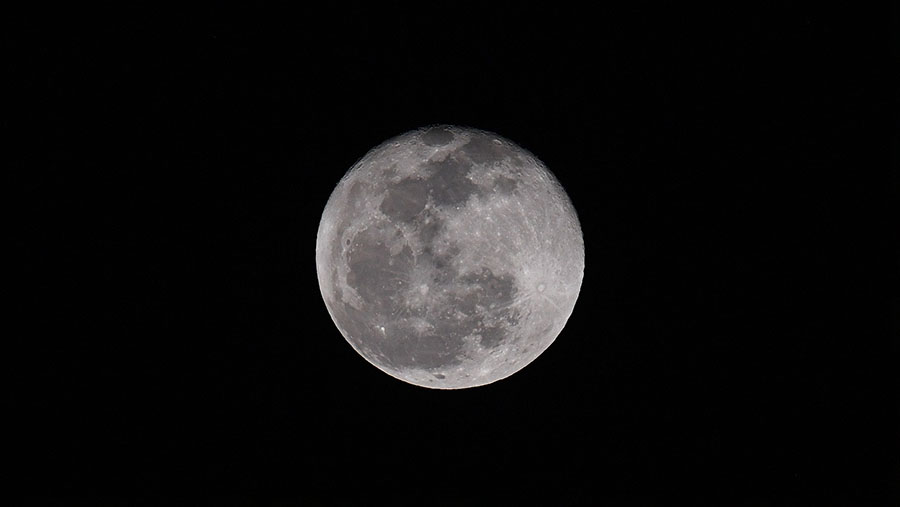
But with space time travel, we can become a space race. You have to understand that there is almost no doubt that there are other civilizations and life in the rest of the universe. And certainly, even in our Galaxy, they should be. There is no doubt about it. The only reason we may not see them is that we may just be a small outpost stuck in the wilderness, a very small planet in a remote area of space.
— Which science fiction would you recommend reading to children so that they become visionaries?
— Any science fiction book is worth reading because it gives great ideas. In the 1870s, Jules Verne wrote "Twenty Thousand Leagues Under the Sea," and that was long before diving became possible.
You also need to read books about human relationships, such as Ayn Rand. Her books are a must-read. They teach you how to go through life incorrectly. It is also important to read books about how humanity governs itself, such as Rousseau's The Social Contract. It should be recommended for reading in schools so that people better understand how society works.
In general, any book you read is never a bad one. Even romantic novels have a lesson in them. You should read everything you can find.

— If we talk about education, which subjects do you consider key?
— If I were running a country, I would recommend that at least two thirds of people study medicine, science, physics, chemistry, all these subjects. And I certainly wouldn't want two thirds of people to study international politics. It would be a real waste of money and a big problem. You need to study natural sciences and mathematics. And, of course, music — this should be a very important area. Although music doesn't seem very scientific, it's actually a very important part of humanity. There are items outside of technology that are necessary. For example, literature.
— But there is an opinion that in the age of technology, it is technical knowledge that determines who will be the leader.
— Not everyone can become an engineer. Engineers are very boring people. I'm an engineer. They are usually not the best conversationalists, not the best artists, not the best storytellers. They don't know how to communicate and organize events that bring joy.
And, of course, sports are very important. It should also be included in education. This is an important part of human life. But it is also true that a country that spends its resources on training people in construction, architecture, engineering, and science of any kind will obviously be a leader among other states. There is no doubt about it.

"It all started in a ruined building"
— What projects are your current priorities?
— My main task is to try to start a serious study of space-time travel. We have to do this. And it starts with studying gravity.
For a year now, we have been trying to find a place to attract talented people from all over the world. Initially, we were thinking about a center in Dubai. Specialists from Russia, China, India, Europe, America, and so on can come there. But recently I went to Serbia because the cost of living there is much lower than in the UAE. Therefore, we are considering the possibility of opening a center in Serbia or Bosnia. The people there are very focused. Besides, they don't have any one particular religion. There are Muslims, Christians, and Jews there. There's more variety here. That's what we're looking at now.
— Do you remember how SpaceX started?
— Going back to Elon, when he founded SpaceX, he just said that he was thinking of trying to build a rocket. He rented an old, dilapidated building. I was one of the first nine people he recruited in the first three months. I worked for free. My task was to try to improve the building. It was in terrible condition: the light bulbs were dangling, the floor was covered in dirt. But Elon got it pretty cheap. If you enter this building now, you will see enameled floors, enameled walls — it looks like a hospital. Hundreds of people work there.
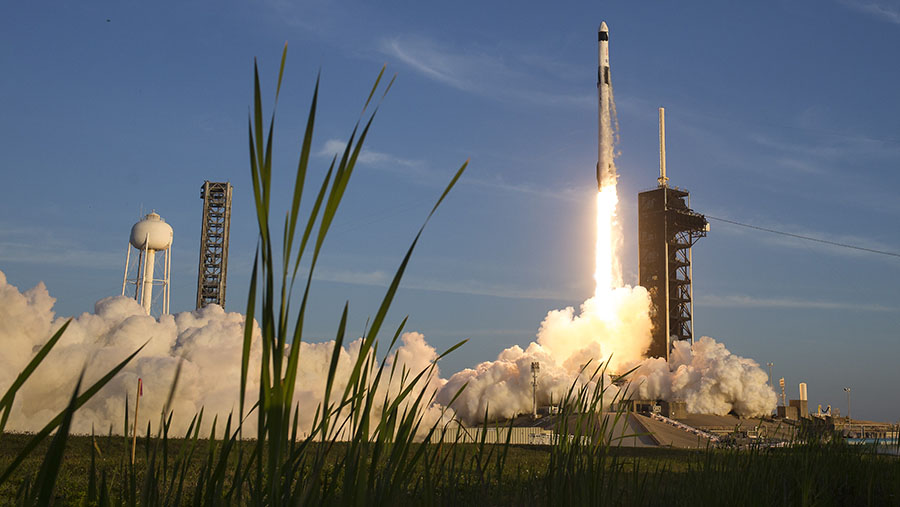
And now thousands and thousands of people work for SpaceX, they have filled an entire city in Texas, in Boca Chica. They all live in houses. But it all started in a ruined building.
— This summer you flew to Moscow to participate in the Forum of the Future 2050. What are your impressions?
— I was so happy to be in Moscow! There are so many mothers with children running around. It was so nice to see that. And so clean, so beautiful. And at night I rode on the river. It was beautiful.
Переведено сервисом «Яндекс Переводчик»
