A special holiday on August 3 is Onufriy the Silent: history, traditions, omens

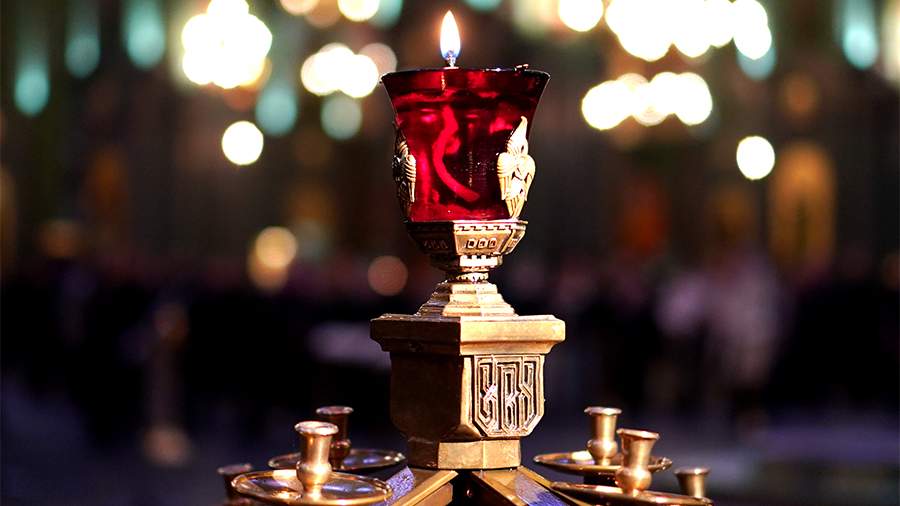
Every year on August 3, Orthodox believers honor the memory of St. Onufry, an ascetic of the Kiev Caves Lavra in the Nearby (Anthony) caves. In the national calendar, the day was named Onufriy the Silent. In 2025, it falls on a Sunday. Read about its history, traditions and signs in the Izvestia article.
Onufriy the Silent – 2025: the history of the holiday
The Monk Onufriy of the Caves lived in the 12th century and labored in the Nearby (Anthony's) Caves of the Kiev Pechersk Lavra, which since the 11th century had served as a haven for hermit monks who sought complete detachment from the hustle and bustle of the world. These underground cells, founded in 1057 by Saint Anthony of the Caves, became a place of prayer and spiritual concentration.
Historical sources have preserved only modest information about the saint, the image of Onufriy in the church tradition is associated with closure and strict silence. According to legend, he spent his days in solitude, avoiding idle talk and even necessary conversations, considering the word a means that should be used only in exceptional cases. Other monks of the lavra also adhered to this ascetic feat.
The relics of St. Onufriy are still kept there today, as a reminder of the elder who chose the path of silence in order to approach God. His name became the personification of silence, rigor and the power of inner achievement.
Traditions of the national holiday Onufry the Silent on August 3
The feast of Onufriy the Silent in the folk tradition was considered a day of silence, which was perceived not as a restriction, but as a spiritual discipline — an internal order that helps to strengthen peace in the home and soul. There was a lot of work at that time — the peasants were actively preparing for autumn, putting farm buildings in order, making blanks, but all the work should be done in silence, with respect for the memory of the saint.
On the day of Onufriy the Silent, the peasant houses were put in order early in the morning. Cleaning, laundry, disinfection of storerooms, and stock checking were all considered mandatory. Special attention was paid to the barns, shelves were put in order, rotten boards were changed.
The women were engaged in household preparations. They cooked compotes, dried fruits, especially apples — it was not customary to eat them raw in order to avoid stomach ailments. The food on this day was supposed to be simple and lean. Even in conversation at the table, they showed restraint, because carelessness in words could turn into trouble.
Cleanliness and orderliness extended to small things — the table was necessarily cleaned after a meal, crumbs were swept away, dishes were neatly folded. Violation of these rules, according to beliefs, could lead to poverty.
In the morning, the housewives performed a special ritual — a trip for "silent" water, which should be collected before dawn from clean springs. It was used to sprinkle houses, barns, and livestock, and was especially valued for its ability to "soothe." This drink was given to anxious children, and ailments were treated with it. It should also be served silently.
The ancestors believed that the earlier and from more springs such water was collected, the more powerful its protection and beneficial effect. They also washed their faces with it, taking care of their health and beauty. The housewives also used "dumb" water for ceremonial baking.
What not to do on the feast of Onufriy the Silent on August 3rd
The ancestors believed that a word spoken unnecessarily could cause a quarrel or discord in the family. Therefore, the main prohibition of the day is verbosity.
People avoided unnecessary conversations, especially arguments and empty discussions. They tried to speak Onufriy only to the point. A quarrel on this day was considered especially dangerous — in Russia it was believed that what was said in anger at a Silent person would stay with a person for a long time and destroy peace in the family.

Also, on August 3, it was not recommended to use sharp objects. Any cuts could take a long time to heal and could be painful.
Also, unwanted guests should not be allowed into the house — according to legend, negative energy could enter the dwelling with them, which would then be difficult to expel.
Folk signs for August 3rd
Onufriy the Silent in Russia, it was customary to observe nature in order to predict what the weather would be like in winter. The cool night on August 3 promised that it would be frosty. And the rains that day promised a good harvest of mushrooms.
Earlier, Izvestia told when and how the national holiday Finogenov Day is celebrated in Russia.
Переведено сервисом «Яндекс Переводчик»
