July 28 — The Day of the Baptism of Rus: the history and significance of the holiday, events in 2025
- Статьи
- Local news
- July 28 — The Day of the Baptism of Rus: the history and significance of the holiday, events in 2025

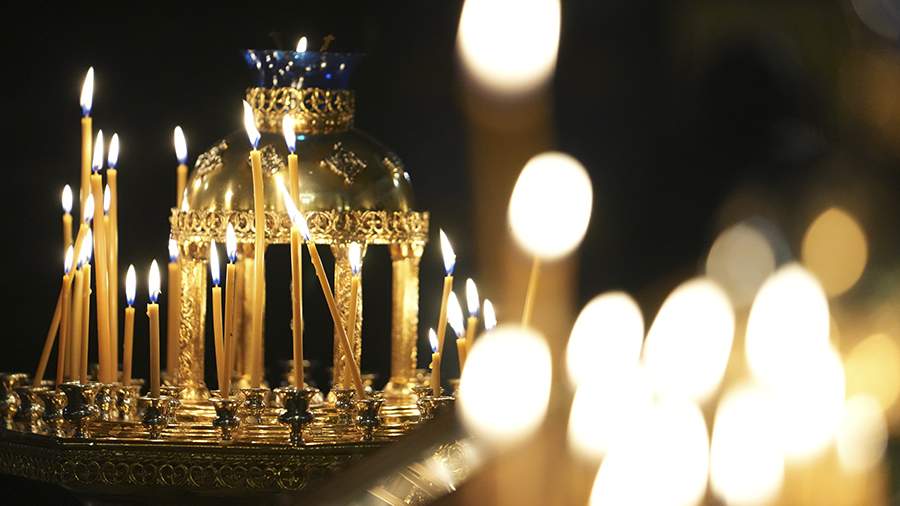
The Day of the Baptism of Rus is one of the great holidays for all Orthodox Russians, which is celebrated annually on July 28 on the memorial day of the Great Equal-to-the-Apostles Prince Vladimir, the baptist of Russia. In 2025, the celebration falls on a Monday. Izvestia tells about the history and significance of this important date.
The history of the Orthodox holiday on July 28th
The holiday is established by the federal law on days of military glory and memorable dates. The decree according to which the Day of the Baptism of Rus began to be celebrated at the state level was signed in 2010 by Russian President Dmitry Medvedev (2008-2012).
For the first time, the celebration was celebrated at the state level in 1888 under Emperor Alexander III, when the 900th anniversary of the baptism of Rus was celebrated in the Russian Empire. For the holiday, which was celebrated on July 15 in the old style, new churches were restored and built, as well as icons were installed in honor of Prince Vladimir.
The celebrations were held on a large scale a hundred years later, in 1988. Then they were timed to coincide with the 1000th anniversary of the adoption of Christianity in Russia. Solemn church services, processions and folk festivals were held in Moscow and other cities.
Preparations for this celebration began back in 1980 by decision of the Holy Synod of the Russian Orthodox Church. During the same period, the jubilee Commission was established under the chairmanship of Patriarch Pimen of Moscow and All Russia (in the world Sergey Izvekov).
The resolution "On the 1000th anniversary of the introduction of Christianity in Russia", adopted by the UNESCO General Assembly in 1987, played an important role in establishing the holiday. The document described the Baptism as "a major event in European and world history and culture," which drew the attention of the whole world to it. In the jubilee year, more than 150 member States of the international organization supported the initiative and held relevant events in their countries.

How did the Baptism of Rus take place?
Christianity in Russia was not immediately accepted. The Tale of Bygone Years, the earliest ancient Russian chronicle, says that before his Baptism, Prince Vladimir was a pagan, had many wives and concubines, and spent most of his time on military campaigns.
At various times, embassies from different nations came to the prince in Kiev, urging the Slavs to convert to their faith. Among them were Volga Bulgarians who profess Islam, Khazar Jews who adhere to Judaism, representatives of the Roman Church, and others. According to the chronicles, the last to arrive was a preacher from Byzantium, who told Vladimir about Orthodoxy.
To understand whose faith was better, the prince sent his envoys to the countries where the preachers came from. They were most impressed by the service in Constantinople. However, Vladimir was in no hurry to make a choice.
Moreover, he captured Korsun (now the territory of Sevastopol) and demanded the Byzantine Princess Anna as his wife. This marriage was beneficial to the prince. At that time, Byzantium was the most influential state and an alliance with it would have contributed to the establishment of Russia as one of the European powers. By converting pagan peoples to Christianity, Byzantium strengthened its sphere of influence, reducing the danger of military conflicts on its borders.
Before the marriage, the Gentile prince was given one condition - he had to renounce idolatry and be baptized according to the Greek church canon. The Prince of Kiev fulfilled the requirement. There, in Korsun, he was baptized together with his warriors, taking the name Vasily in honor of the ruling Byzantine Emperor Basil II.
Returning to Kiev, Vladimir baptized his sons, and after that many boyars converted to the Christian faith. After that, the prince ordered to gather all the inhabitants on the banks of the Dnieper River, where in 988 there was a mass baptism of Kievans.
Gradually, Christianity came to other cities: Chernigov, Polotsk, Volynsky, Turov, where Orthodox dioceses were created. Christianity soon became established as the official religion throughout the territory of Kievan Rus.

However, Prince Vladimir was not the first Russian Christian. Nine centuries before the Baptism of Russia, the Apostle Andrew the First-Called came to the lands of the Eastern Slavs with an evangelical sermon. Later, Christian communities formed in the cities he visited. There is also a legend that it was he who erected the cross at the place where the Kiev Pechersk Lavra appeared several centuries later.
The first ruler in Russia to convert to Christianity was Princess Olga, the grandmother of the Grand Duke. She was baptized in 957 (according to other sources in 955) in Constantinople under the name of Saint Helena, Equal-to-the-Apostles, mother of Emperor Constantine the Great. She was previously included in the list of outstanding women who changed history.
The meaning of the Baptism of Rus
The Baptism of Rus became not just an important religious event. With the adoption of Christianity, diplomatic and cultural relations with Byzantium and other Christian countries of Europe expanded and became stronger, which led to the strengthening of Russia's international authority.
The choice made at the end of the tenth century determined the spiritual fate not only of Kievan Rus, but also the further historical path of our Fatherland. Baptism laid the foundations of Russian statehood, culture and national identity of the Russian people, contributing to their unity and commitment to common values.
Traditions of the Day of the Baptism of Rus
On the eve of the holiday, an all-night vigil is held in all Orthodox churches of the country. Divine services last from dusk to dawn, and on the very day of identity, morning services are held. At noon, a special bell rings in the churches, uniting the faithful in common prayer.
Religious processions are also held throughout the country. One of the most massive is the procession from the Assumption Cathedral of the Kremlin to the monument to Prince Vladimir on Borovitskaya Square. In 2025, as in previous years, the procession will become an important celebration event. It will be held with the relics of Equal-to-the-Apostles Prince Vladimir, which will be taken out of the Cathedral of Christ the Savior on the occasion of the holiday.
On the same day, thematic exhibitions, concerts of sacred music and various cultural events are held in the cities. Many believers choose the Day of the Baptism of Rus for personal events. It is believed that the sacrament of baptism, performed on July 28, has a special spiritual power, and a marriage concluded on this date will be lasting and happy.
Earlier, Izvestia reported on the traditions of the Day of Slavic Writing and Culture.
Переведено сервисом «Яндекс Переводчик»
