
Baptized Russia: how Orthodoxy was preserved by the Russian state
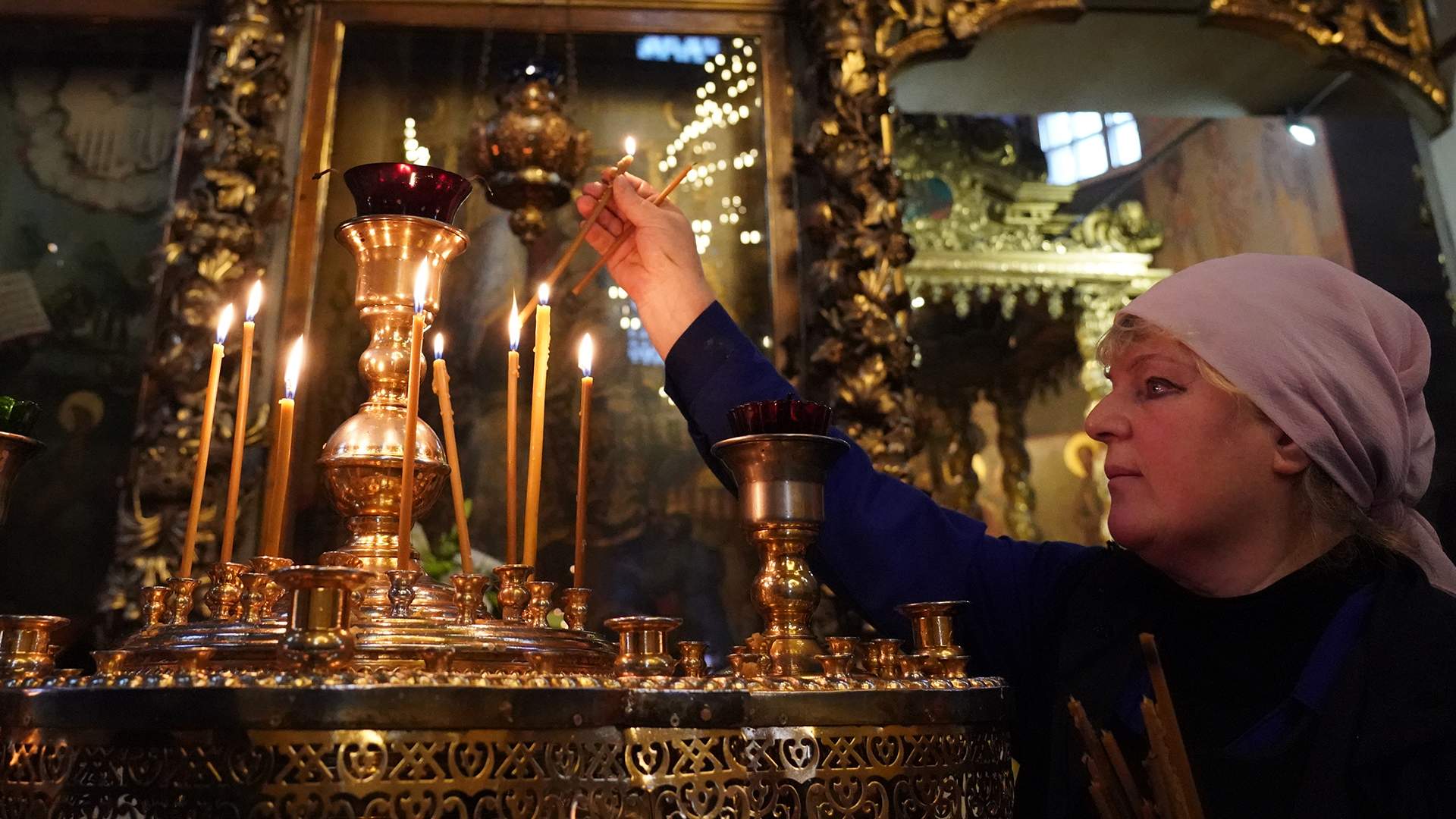
On the church holiday of the Nativity of the Virgin, Rurik's vocation, dating back to 862, marked the beginning of official Russian statehood. After more than a hundred years, Russia was baptized with water and spirit, becoming the successor of the Byzantine traditions and taking God with her. About Prince Vladimir's Baptism and how Orthodoxy saved the country in dark times — in the material of Izvestia.
Remember the Baptism of the Russian land
Historians often reflect on the Baptism of Rus as a purely political and rather mundane decision, which was necessary in the circumstances in which the state of Prince Vladimir was located.
But in the eschatological context, Baptism became the salvation of Russia and the fulfillment of the Savior's promise, when the spiritual potential was depleted and it sounded more and more clearly.: "Let us eat and drink, for tomorrow we will die" — pagan Russia was engulfed by internecine wars.

At that moment, the mystery of salvation by Christianity was revealed to Russia in all its manifestations, because the time was coming for decisive actions, said Archpriest Vasily Melnichuk, director of the St. John of Kronstadt Classical Orthodox Gymnasium and the Blagovest kindergarten.
— When Prince Vladimir sent envoys to Constantinople, to St. Sophia, the largest church in the world at that time, and they saw its greatness, the beauty of frescoes, mosaics, and services, they felt something they did not know: whether they were in heaven or on earth. It is clear that after the return of the ambassadors, a decision was made in favor of the Orthodox faith, the Christian faith. It is a gracious force that acts on the heart and soul. St. Augustine also wrote: "You created us for Yourself, and our heart knows no rest until it settles in You," Vasily Melnichuk told Izvestia.

In 988, according to the Tale of Bygone Years, "innumerable" people came to the banks of the Dnieper River to meet the will of Prince Vladimir, to be baptized and receive God, His Son and the Holy Spirit.
— The earth and the sky rejoiced, there was great joy, grace and enlightenment. Anyone who has felt this power can confirm this, therefore, the Orthodox faith and, at the same time, the Baptism of Russia is not just of tremendous importance — to put it mildly — but the key to life and death, in the knowledge of life, as such, of Holy Russia. At that time, it was concentrated in Byzantium, but the Lord knew, foresaw that it would fall, and handed over the saving mission to Russia, entrusted it with responsibility for Orthodoxy before God, before the whole world," Vasily Melnichuk added.

Orthodoxy has manifested itself in architecture, literature, iconography, and all the phenomena of our lives, marked by a preserved spiritual conciliarity. So it is not for nothing that they say that the Baptism of Rus is the cornerstone of the salvation of the soul, the salvation not only of Russia, holy and great Russia, but also of the whole world, because if it were not for this, life itself would have stopped long ago.
And a great victory has been given to us against our enemies.
Faith in the Son of Man, expressed in the Orthodox worldview, helped Russia in the most difficult times of its tragic and no less heroic history. She supported the people during the siege of Kitezh, when the townspeople did not want to give up and asked the Mother of God in prayers for Her to protect them, and then, according to legend, disappeared into the waters of Svetloyar: "... until that city stands invisible, it will open before the terrible judgment seat of Christ."
With Orthodoxy, the Russian people went to the Battle of Kulikovo, to which St. Sergius of Radonezh, together with monks Peresvet and Oslyabey, blessed Prince Dmitry Donskoy.
Archbishop Vassian Rylo of Rostov, by God's will, wrote a Message to Tsar Ivan the Terrible — to defeat the Horde so that Russia could stand up and become a stronghold of Christianity, throwing off the Mongol yoke, winning the war from the "godless barbarians." In 1480, the Russian army, which had not suffered human losses, stood on the Ugra River and saw how the enemies were leaving.

For Orthodox Christians, the most important lessons of faith are how the Trinity-Sergius Lavra defended Moscow and was a bulwark of defense during the Troubles, and the figure of the holy martyr, Patriarch Hermogenes of Moscow and All Russia, who raised the people against the Polish intervention under the banner of Minin and Pozharsky. The cleric of the Belgorod Archdiocese, Father Nikolai Dubinin, explained why Hermogenes' example still lives in the Russian heart today.
— The Poles, who seized the capital during the Troubles, asked under torture for the Patriarch to recognize False Dmitry, but he chose to die and was tortured to death in the cages of the Chudovsky Monastery. Imagine, for a whole year he was tortured, forced and persuaded by the Poles so that he would make an appeal to Orthodox people and legitimize False Dmitry, but the holy Martyr Hermogenes did not do this, sacrificing himself for the sake of the future of our country, Father Nicholas recalls.

He notes that, thanks to Hermogenes' sacrifice, the idea of the Poles to seize Moscow and power in the country failed.
— Such historical examples tell us that for the sake of our future, our children, our country and the state, we sometimes have to make certain sacrifices. It was possible to choose the "personal" — your life — by making a compromise and a deal with your conscience, but Hermogenes did not do this. He made a sacrifice, preferring to die for the future of his country and for his flock," the source tells Izvestia.

A model of the monument to Patriarch Hermogenes (1530-1612)
The Orthodox faith gave strength, which is very difficult to comprehend for a simple man in the street who had never lived at that time. So, it is impossible to think about what a miracle it is in itself — the endurance of the Holy Trinity Monastery through prayers and struggle against the Polish invaders during the year-and-a-half siege.
For a year and a half, before the victorious Second Militia led by Kuzma Minin did not liberate Moscow, the monastery stood and did not fall under the onslaught of the enemy. And with the image of the Moscow Kazan Icon of the Mother of God, the militia stormed Kitay Gorod, and the Poles soon surrendered the Kremlin. It happened on October 22, 1612, and we know this date as the Day of Russia's Liberation from the invaders.
When a terrible disaster struck our country on June 22, 1941, the attack of the Third Reich and its allies, and at the same time the beginning of the Great Patriotic War, it became clear that it would be impossible to survive the ordeal without Faith, while shells exploded on the fronts and our soldiers fought to the death.
Hieroschemonk Seraphim Vyritsky of the Russian Orthodox Church prayed for the country every day and for hours, continuing his feat of stolypinism on a granite boulder, Metropolitan Elijah of the Mountains of Lebanon, whose Patriarch of Antioch refocused on the support of the Moscow Patriarchate, and many others.

In 1941, near Istria and Volokolamsk, during the offensive of the German forces, the Most Holy Theotokos revealed herself to Soviet soldiers and, according to legend, drove away the Germans who were frightened by Her power. Another case is also mentioned — the failed German tank roll on October 14, when a gap opened in the Red Army's defense line.
The Most Holy Theotokos appeared on the land of the Kursk region — on Poklonnaya Hill and on the battlefields of Kursk.
The intercession of the Mother of God has also manifested itself in the modern life of Russia — in the city of Budennovsk, in 1995. The Most Holy Theotokos, later glorified through the Holy Cross Icon of the Mother of God, was seen for two days during the capture of more than 1,200 civilians by terrorists, and all this time the Mother of God prayed in front of the cross in people's visions.

We received a commandment from Him, that whoever loves God should also love his brother.
Archpriest Vasily Melnichuk added that Orthodoxy is the core, the foundation of our Russian state, just as the Church is the foundation in the words of Jesus Christ, who addressed his closest disciple: "I tell you: you are Peter, and on this rock I will build My Church, and the gates of hell will not prevail against it."
— Historically, when Kiev was devastated, the prince moved the capital to Vladimir, and then it was moved to Moscow. The Lord spiritually foresaw that the enemies — and these were the times of the Mongol yoke — would overcome Russia from all sides, so it was necessary to deepen further.

Father Nikolai Dubinin emphasized in a conversation with Izvestia that the Baptism of Russia, the task of being baptized, is the commandment of the Lord, Jesus Christ, this is the commandment that He gave for everyone to go and be baptized, to teach all nations, baptizing them in the name of the Father and the Son and the Holy Spirit.
— When we fulfill this commandment, we testify to our faith, that we perceive the Lord as our own. The Lord said in the Gospel: "Whoever has My commandments and keeps them loves Me; and whoever loves Me will be loved by My Father; and I will love him and appear to him Myself" — that is, the equivalent of loving God is how we fulfill his commandments, — said Father Nikolai Dubinin.
According to him, by performing baptism, we show faith and love for God, but it is also a choice of the civilizational path that was implemented in the 10th century. When our country and our people were still pagan, we chose to live according to the norms and commandments that the Lord Jesus Christ himself brought. These norms were strikingly different from what was accepted in pagan society.

— Now they seem natural to us — men and women are equal in rights, marriage is holy and cannot be destroyed in any way, in no way, children should be born in love and be gently raised, with love and with care. However, in pagan times, the norms were very controversial — the pagan "nobles" had many wives and concubines, all of them had their rights curtailed, and children were not listed in the legal field at all. You could do anything you wanted if you were the eldest, so Baptism for us is the choice of our civilizational path, when we were formed as a civilization, thanks to the fact that we heard the call of Christ," explained Father Nicholas.

The coming and inevitable baptism of fire along the way
Father Nikolai Dubinin noted that today Russia is going through a turbulent time. Referring to the example of Patriarch Hermogenes, Father Nicholas added that today we must make choices not in favor of ourselves, our comfort, well-being and benefits, but in favor of our common future.
"Our guys, soldiers, and special operations soldiers are probably the most important example of people literally shedding their blood and giving their lives for our future, so that we remain the Russian Orthodox civilization that we have been for thousands of years," Father Nikolai emphasized.

He added that today there is a unique situation — we have both power and truth at the same time, as the blessed Prince Alexander Nevsky said. The Russian people act as a litmus test in the modern world, showing the whole world what is good, what is bad, what is good and what is evil.
— We, the Orthodox, of our Orthodox Christian civilization, are honored to bear witness to this today. It is given to us, given by God. For example, to say that the family is holy, that God created only the union of a man and a woman, that human life is inviolable and the soul is immortal and priceless, for which one cannot compromise principles and lose these principles and values. Each of us, everyone who has been baptized, who wears a cross on his chest, who believes in the Lord, must realize this responsibility today, because today we live in a history textbook at the turn of events, and we determine what the future of our country and our children will be," Father Nikolai explained.
The conflict resolved by the special operation has a theological and eschatological interpretation. According to Father Nicholas, this is not a battle for land or for political issues, but for a civilizational choice, a future, dedication to history, faith, culture, language, traditions, and commandments that fathers and grandfathers revered.

— Russian blood is being shed every day today. This is not a metaphor, not beautiful speeches, but the bitter truth, bitter and salty from the blood that is shed there every day. It seems to me that each of us should go to church, pray for our defenders, pray for Victory to come, and pray that the sacrifices will not be in vain, so that all the blood shed by our defenders will bear fruit in the form of our unity, in the form of our strong families, our children, who will They were brought up in Orthodoxy, in good values," Father Nicholas emphasized.
He shared with Izvestia that he really wants people to go to churches and pray for the defenders, for themselves, and for their families.
"If someone has never received communion, then take communion, if someone has never fasted, then I will start fasting," he added.
Father Nikolai himself was at the front and under fire more than once, seeing death and visiting hospitals. According to him, now is the best time to start a real spiritual life, to find our way to God through the temple, through the church, through the sacrament of the church, for which we were baptized, for which the Russian people became Christians.

Many saints and elders predicted what would happen to Russia in the future. Archpriest Vasily Melnichuk, in a conversation with Izvestia, noted that John of Kronstadt also said that Russia would rise up, be strong and great, with deep faith, so much so that nothing would happen in the whole world without Russia.
— We are going the hard way of the cross. There is no human will here, there is only the will of God, but for now, Russian Orthodoxy holds the peace that Russia protects. If there were no Orthodox Russia, there would be no life itself," the archpriest concluded.
Переведено сервисом «Яндекс Переводчик»
