
Friendship and needs: Turkey strengthens ties with Kazakhstan
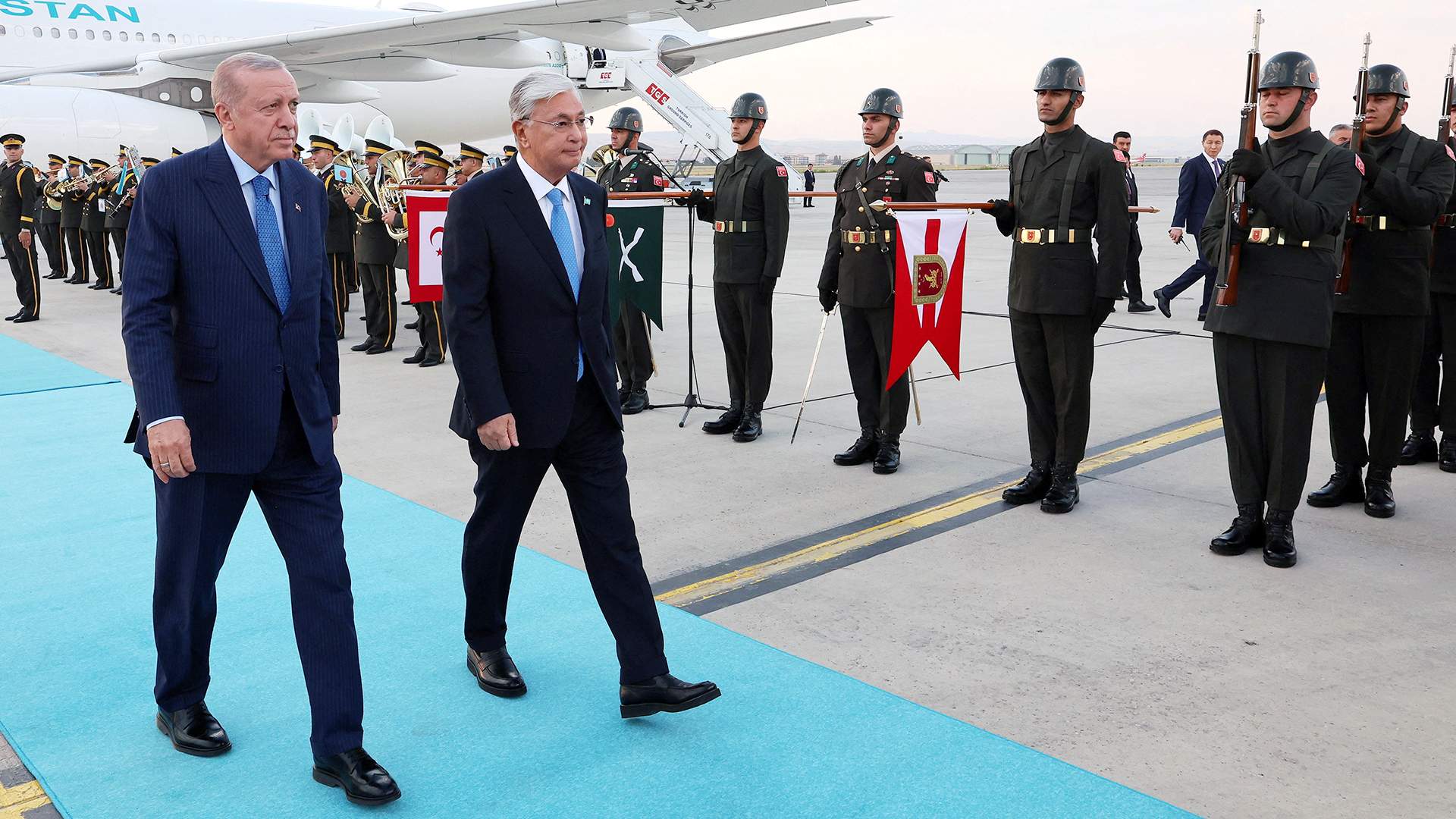
Kassym-Jomart Tokayev paid an official visit to Ankara. The purpose of the trip was to strengthen the strategic partnership between Kazakhstan and Turkey. The parties signed important strategic agreements covering energy, defense, transport, logistics, agriculture, and cultural and humanitarian fields. The main goal, according to Erdogan, is to achieve a bilateral trade turnover of $15 billion. Izvestia investigated the extent to which this affects Russia's interests in the region.
My brother came to visit
"I refused to accept domestic or foreign orders and other awards. However, your decision today is of particular importance. This is a significant historical event in the annals of Kazakh-Turkish cooperation," said the President of Kazakhstan, receiving from Recep Tayyip Erdogan the highest state award of the Republic of Turkey — the Order of Devlet Nişanı for his contribution to the development of cooperation between the countries.
On the eve of the Kazakh leader made an official visit to Ankara, during which he met with representatives of Turkish business and participated in the fifth meeting of the high-level Strategic Cooperation Council of Kazakhstan and Turkey.

President of Turkey Recep Tayyip Erdogan awards President of Kazakhstan Kassym-Jomart Tokayev with the highest state award of the Republic of Turkey – the Order of Devlet Nişanı
Erdogan met Tokayev himself at the ramp with a red carpet and an honor guard. The Turkish leader rarely resorts to such a gesture of the highest respect, only during the visits of the heads of particularly friendly countries.
According to the Turkish leader, who called his Kazakh counterpart a dear brother and emphasized the strategic nature of bilateral relations, further efforts will be focused on achieving a bilateral trade turnover of $15 billion.
Erdogan explained that at the meeting the sides discussed issues of defense, energy, logistics, science and the fight against terrorism, and also signed 20 bilateral documents. The President of the Republic of Turkey highlighted Astana's decision to extend visa-free stay in Kazakhstan for Turkish citizens for up to 90 days.
From table tennis to a transit hub
Personal relations between Erdogan and Tokayev are developing quite well: The media of both countries actively discussed the table tennis game of the heads of state in Ankara and Astana. Two years ago, the Turkish president presented his Kazakh counterpart with an electric car. In November 2024, Erdogan declared that relations between Turkey and Kazakhstan had acquired a strategic character.
Kazakhstan is an important ally and economic partner for Turkey. This time, Tokayev discussed projects in the field of medicine, logistics and grain processing with representatives of a large Turkish business operating in Kazakhstan. The Turkish company Tiryaki Holding, which is going to build a plant for deep processing of wheat and peas in Astana, has signed an investment agreement with the Kazakh authorities for 160 billion tenge ($295 million).

Aktau Oil Pumping Station in Kazakhstan
The Turkish YDA Holding Group plans to create a multimodal transit hub in Aktau, and Sistem Lojistik is going to develop the logistics sector and the center at Aktobe Airport in Kazakhstan.
In addition, Kazakhstan plays an important role in the formation of the Trans-Caspian International Transport Route, known as the Middle Corridor, which connects China with Europe through Turkey and the Caspian Sea. Turkish companies are actively involved in the modernization of the road and port infrastructure.

China-Kazakhstan International Logistics Base in Lianyungang
Against the background of increasing sanctions pressure and the recent suspension of Kazakh oil exports through the Caspian Pipeline Consortium, Erdogan and Tokayev discussed the issue of energy cooperation between the countries. Astana is currently looking for ways to diversify its energy supplies.

At the same time, the parties are developing cooperation in the field of defense and security: Kazakhstan is interested in Turkish drones. Last year, the countries signed an agreement with the Turkish manufacturer Baykar to open a production site in Kazakhstan.

Baykar's Bayraktar Akinci combat UAV at the SAHA EXPO International Defense and Aerospace Exhibition in Istanbul
In addition, Ankara offers Astana the training of military specialists, joint exercises and military education.
The countries' foreign policy positions also converge: they call for a peaceful settlement of the Ukrainian conflict, condemn Israel's actions, and call on the international community to pay attention to the humanitarian crisis in the Gaza Strip.
Russia's interests
For centuries, Central Asia has been a region of conflict between the geopolitical interests of Russia and Turkey. In the 20th century, these trends only intensified, there were many reasons: the collapse of the Russian and Ottoman Empires, the emergence of secular Turkey, two world wars, the formation and then the collapse of the Soviet Union.
The most serious blow was the collapse of the USSR. The newly formed states faced a difficult foreign policy choice. While the countries were deciding which way they should go, the Turkish authorities clearly realized that there was a real chance to expand their sphere of influence and gain access to the oil and gas fields that they needed so much. Ankara began to actively penetrate into the region in three directions — political, ideological and economic.

The opening ceremony of the year of remembrance in the framework of the TURKSOY organization, dedicated to the 100th anniversary of Nurgisa Tlendiev in Ankara. March 3, 2025
Turkey was one of the first countries not only to recognize the independence of these states, but also to open embassies there. Then she actively took up integration, creating one structure of Turkic cooperation after another: the Turkic Council, the World Assembly of Turkic Peoples, the Agency for Turkic Cooperation and Development (TIKA), the Turkish equivalent of Rossotrudnichestvo, and various negotiations between local authorities and the heads of the Turkic republics of the CIS, as well as high—level meetings.

In order to win over the local population, the Turks opened TV channels for the Turkic-speaking countries, consistently created economic projects, and energy cooperation gained momentum.

Turkish language class at one of the universities of Kazakhstan, opened by TIKA agency
All this inevitably affected Moscow's interests in the region, but the Russian Federation was watching what was happening until a certain time.
European states and the United States, in turn, actively supported the political model that Ankara promoted in Central Asia. Turkey has acted quite gently — not through funds, but with the help of science, culture and religion. In addition to Turkish TV channels, more and more educational institutions appeared on the territory of the Central Asian and Caucasian states.
What do the experts think
Russia remains an important player in the region so far: the countries cooperate in the CIS, the CSTO, the EAEU and the SCO. There is still a fairly high level of integration between the states, after the collapse of the Soviet Union, compatriots live in the countries, and there remains an elite raised in the USSR, which still influences the political processes in these countries.
However, it is unknown how long this will last. Pro-Russian politicians are being replaced by young people who have already been educated in Turkey and focus exclusively on it, Vladimir Avatkov, head of the Department of the Middle and Post-Soviet East at the INION RAS, explained in an interview with Izvestia.

Meeting of the Council of Ministers of Foreign Affairs of the CSTO in Cholpon Ata in Kyrgyzstan. June 30, 2025
The political scientist noted that in 2022, Turkey and Kazakhstan agreed to exchange military intelligence information. According to him, this poses a threat both to Russia and to the entire Collective Security Treaty Organization.
— Turkey is a member of NATO, so any data received from Kazakhstan will be transmitted by the Turkish military to the United Kingdom and the United States, for which the British and Americans will pat Ankara on the head. Turkey has gone beyond the economy, education and culture and stepped into the field of security, which is even more dangerous from the point of view of Russia's interests in the post—Soviet East," the expert stressed.

According to the Turkologist, Kazakhstan's simultaneous participation in Turkish-centric and Russian associations can lead to a conflict of interests one way or another.
— For example, how will the integration initiatives of the Eurasian Economic Union and the Organization of Turkic States be combined in the future? — the analyst wonders.

Kazakh military personnel are taking part in the Kysh-2025 exercise in Turkey. February 1, 2025
Ankara considers the region "its natural extension in ethnic, linguistic, historical and religious terms," therefore, it is trying to strengthen relations with Turkic-speaking countries by reviving ethnic, linguistic and cultural ties. In addition, Turkey also relies on political and economic contacts with the states of the region, Viktor Nadein-Rayevsky, a leading researcher at the Institute of World Economy and International Relations of the Russian Academy of Sciences, said in a conversation with Izvestia.
— Cooperation is underway between Turkey and the Central Asian states at the level of law enforcement agencies, intelligence, and headquarters, and officers from all Turkic-speaking republics, including CSTO members, are being trained. First of all, we are talking about Kazakhstan. The very idea of creating an "army of Turan" has been cultivated for many years. But so far, former fellow citizens from the countries of the former Soviet Union do not agree to this idea," the expert explained.
According to him, the first to oppose this was ex-President of Kazakhstan Nursultan Nazarbayev.
— But the other leaders are also not eager to create such a structure. Turkey's problem is that it doesn't have much financial capacity. But despite this, the Turks are trying to pour money into it whenever possible, they are trying very hard. First of all, the funds are used to train soldiers, as well as people receiving higher education," the Turkologist summed up.
Переведено сервисом «Яндекс Переводчик»
