A special national holiday on August 1 is Makrin's Day: history, traditions, omens
- Новости
- Local news
- A special national holiday on August 1 is Makrin's Day: history, traditions, omens

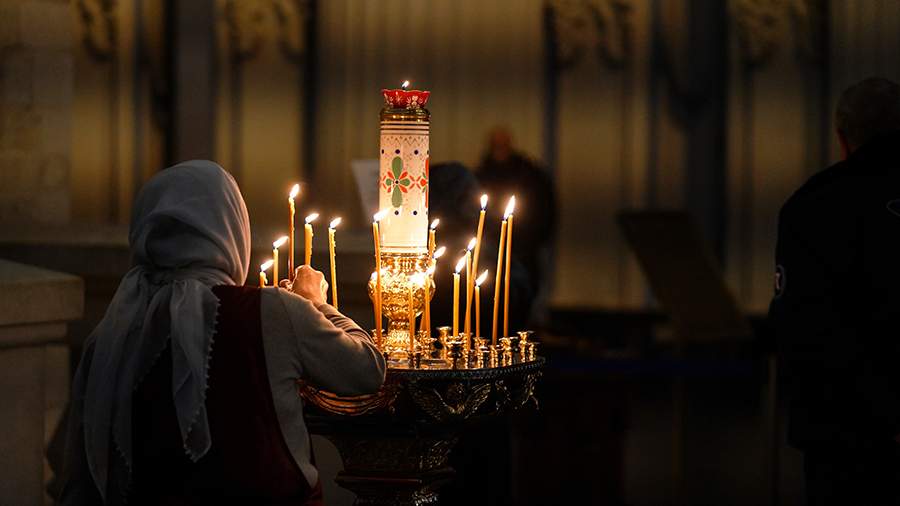
Every year on August 1, Orthodox Christians remember St. Macrina of Cappadocia, whose life became an example of spiritual achievement and piety. In folk tradition, this date is known as Makrin's Day. In 2025, it falls on a Friday. Read about its history, traditions, signs and strict prohibitions in the Izvestia article.
Makrin's Day – 2025: the history of the holiday
Saint Macrina was born in Cappadocia in the fourth century into a pious family. The parents raised their ten children in rigor and faith, and taught them to work and spiritual service from an early age. The saint's younger brothers, Basil the Great and Gregory of Nyssa, became the largest representatives of the Cappadocian theological school of their time. They actively fought against the Arian heresy, and their works formed the basis of Christian dogma, especially in matters of the Trinity, human nature, and spiritual development.
Makrina's mother Emilia received a vision in which an Angel named her future daughter Thekla in honor of the First martyr, but her relatives gave her the name of her grandmother, who suffered during the persecution of Christians under Emperor Maximian Galerius. Having lost her fiance early, the girl took a vow of celibacy, completely devoting herself to her family and spiritual life.
After her father's death, she became the main support for her mother and younger brothers. When the children grew up, Makrina convinced her parent to leave the mundane life and release the slaves. Together they took monastic vows and founded a monastery, which attracted women of noble birth who sought to devote themselves to God.
Makrina led an ascetic lifestyle: she worked, prayed, instructed, and healed. According to legend, the Lord granted her recovery from a serious illness, and later the gift of miracle—working. During the famine years, through her prayers, the monastery's wheat reserves did not run out.
The saint died in 380, offering prayers until the last hour. She was buried next to her parents. Makrina's life became an example of spiritual achievement, and her name became a symbol of faith, self—denial and selfless service.
Traditions of the national holiday Makrin's day on August 1st
The memory of the life and spiritual exploits of St. Makrina has been preserved not only in church history, but also in popular culture. In Russia, the day of her celebration became a symbol of women's labor, spiritual purification and entered the peasant calendar under the name Makrinin (Mokriny, Makrid), preserved in traditions, signs and rituals.
In early August, the main cycle of field work was completed in Russia. There was a brief respite, but the household chores did not stop — the season of picking mushrooms and berries, preparing preparations (jams, pickles), and drying herbs began.
However, on the holiday itself, women tried not to go into the forest, fearing that this might "attract" prolonged rains. Instead, they cleaned up the house, sorted through things and got rid of unnecessary ones. It was believed that cleanliness in the Makrina dwelling would bring well-being for the entire upcoming season.
It was also customary to visit the sauna on this day. Cleansing the body was perceived as preparation for a spiritual meeting with Elijah's Day, which was celebrated immediately after Makrina, on August 2. The sauna was considered a place not only for physical recovery, but also for symbolic renewal before the new stage of the agricultural year.
On Makrina's day, special attention was paid to natural signs. Future prosperity was judged by the number of acorns on the oaks. An acorn-bearing year was perceived as a harbinger of stability and well-being for the whole family.

The ancestors believed that rain on Makrin's day was a good sign that promised a rich harvest of rye next year. Therefore, if the weather was dry, the peasants arranged a "rain calling" ceremony: a girl born on August 1 was dressed up in blue clothes, given ears of corn and sent to the river, where she threw her burden into the water as an "offering" for the long-awaited precipitation.
What not to do on Makrina Day
On Makrin's day in Russia, there were several strict prohibitions both in business and in everyday life. So, people born on this day were not recommended to leave the house if it was raining. The ancestors feared that this could bring natural disasters or setbacks. On August 1, poultry or livestock should not be slaughtered, so as not to bring illness to loved ones. And also salt cucumbers and saute cabbage. It was believed that the products would not survive or even cause poisoning.
Fishing on the holiday was also prohibited. According to legend, mermaids became more active in reservoirs on this day, which could drag a person to the depths. It was forbidden to drink alcohol. People believed that it was from August 1 that dangerous addiction could begin. In addition, you should not bring other people's things or money into the house, as they could "infect" the family with other people's troubles and failures.
Even in choosing clothes, they were careful. It was forbidden to wear dirty or torn clothes. Makrina was revered as the patroness of cleanliness and order, and untidiness could cause trouble.
Special attention was paid to animals. A red-haired cat who came into the house on that day was considered a harbinger of good luck, and it was strictly forbidden to expel him.
Folk signs for August 1st
For the peasants, Makrin's day served as a kind of barometer that helped them make forecasts. So, the rainy weather on August 1 foreshadowed an abundance of grain, but a poor harvest of nuts. The bright sun indicated a long Indian summer, and the abundance of cherries indicated a prolonged, snowy winter.
Earlier, Izvestia told when and how a special national holiday, Omelyan Day, is celebrated in Russia.
Переведено сервисом «Яндекс Переводчик»
