Why the French don't like their president. Analysis

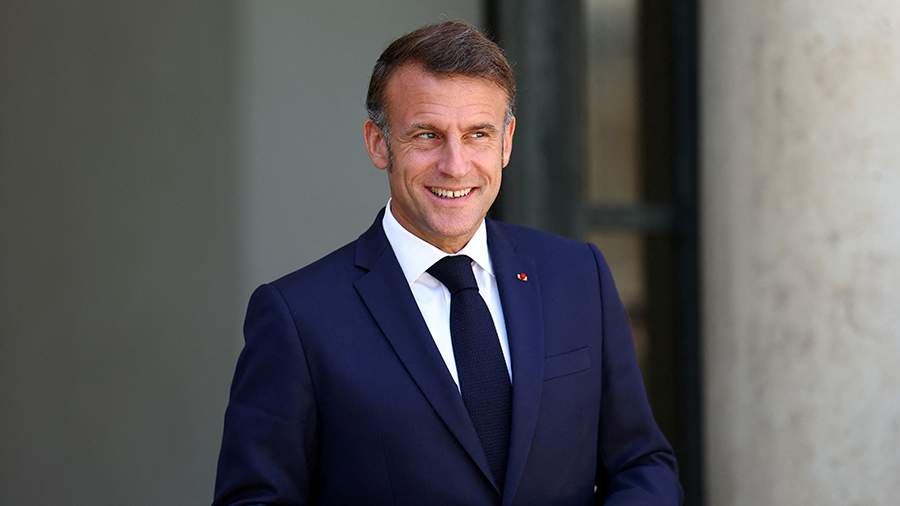
The level of support for French President Emmanuel Macron has dropped to the lowest level for the entire observation period, setting a historical anti-record. The head of state is supported by only 19% of the population. What such low indicators can lead to is in the Izvestia article.
Historical anti-record
• Macron's support level has never fallen below the notional 20% mark. Even during the most intense period of the Yellow Vest protests, approval remained at 23%. The main reason for the accusations against the head of France was the difficult state of public finances. France's national debt currently stands at €3.3 trillion. The fight against the budget deficit remains one of the main tasks of Paris.
• The submitted draft budget for 2026 dealt an additional blow to Macron's reputation. Pensions and other social benefits will not increase compared to 2025 and will not be indexed by inflation. At the same time, the president announced that in 2027 the French defense budget will amount to €64 billion, which is twice the cost in 2017. Many people resent this approach to the allocation of public funds. Many French people called the draft budget socially unfair. It is likely that strong disputes over the draft budget may lead to a new change of government.
However, Macron has never prioritized social policy and is perceived by the French as a leader who protects the interests of the rich. In particular, indignation was caused by an increase in the social tax, which affected primarily pensioners, while for a long time the French leader made allowances for businesses. During his reign, people repeatedly took to the streets to draw attention to social issues, in particular, raising taxes and the retirement age. However, despite Macron's promises, the demands of the population were not fully taken into account. The French president and his entourage primarily developed initiatives to strengthen the international position of Paris, rather than to protect the rights of ordinary citizens.

• Such large-scale financing of the army and military programs is not accompanied by equally large-scale modernization of other vital areas. Providing the armed forces with the latest technologies requires stable and long-term investments. Many fear that defense spending may displace even those items from the budget that are associated with minimal maintenance of the standard of living of socially vulnerable groups. This increases the concern of trade unions and non-governmental organizations that security and foreign policy priorities will dominate the budget over domestic social obligations.
• The situation in the healthcare sector remains quite difficult. Macron announced his intention to radically change the structure and operation of the system, increasing its accessibility, especially in rural and sparsely populated areas. However, now the French president himself recognizes the problems of low salaries and a shortage of young personnel in medicine. At the same time, he did not reassure anyone and admitted that the situation could worsen in the next 10 years. Against the background of increasing inflation and pressure on the healthcare system, the ratings of trust in the country's leadership continue to decline.
• A significant part of the French population lost confidence in Macron back in 2023 after the final approval of the pension reform, the adoption of which was accompanied by mass protests. The main point of the changes was the increase in the retirement age from 62 to 64 years. The society perceived this initiative as ignoring the real living conditions of the population. For many French people, the decision to adopt the reform, despite the expressed popular disagreement, has become a symbol of the gap between government and society.
• There remains a risk of large-scale protests in France, given the extremely low level of support for Macron, especially given the historical tendency of society to actively express civil discontent. There is now a high degree of distrust of the government among the population. The French are especially annoyed by the significant increase in the defense budget amid statements about the need for savings. In the current situation, when Macron is trusted by less than one fifth of the population, even a relatively minor political or economic boost can trigger new protests.

Macron's future
• After completing his second presidential term, Macron has the potential to continue his political career at the European level, despite his weak position within the country. His name has been mentioned for several years in the context of possible key positions in the structures of the European Union, including the post of head of the European Commission. This is primarily due to his consistent position on integration within the EU.
• Judging by many signs, Macron positions himself as one of the leaders of the European Union. He promoted the ideas of the strategic sovereignty of unification and the creation of a single European defense potential. It is expected that all this should strengthen Europe's role in global politics. Despite the criticism and protests in France, European elites perceive Macron as an experienced leader with a clear vision of the future of the EU, he is part of the European establishment.
• In the European Union, key appointments are determined on the basis of diplomatic agreements and lobbying of interests. Approval at the national level does not play a significant role. As a result, despite the decline in popularity at home and public criticism, Macron has a real chance of continuing his political activities in the EU structures. His international connections may play a crucial role in shaping his future role outside of France.
When writing the material, Izvestia talked and took into account the opinions of:
- Advisor to Dmitry Bunevich, Director of the Russian Institute for Strategic Studies;
- Sergey Fedorov, an expert on France and a leading researcher at the Institute of Europe of the Russian Academy of Sciences;
- Pavel Timofeev, Head of the Sector of Regional Problems and Conflicts of the Department of European Political Studies at the Primakov Institute of World Economy and International Relations of the Russian Academy of Sciences.
Переведено сервисом «Яндекс Переводчик»
