
Important papers: the exchange of Russian rubles for euros is growing in Finland
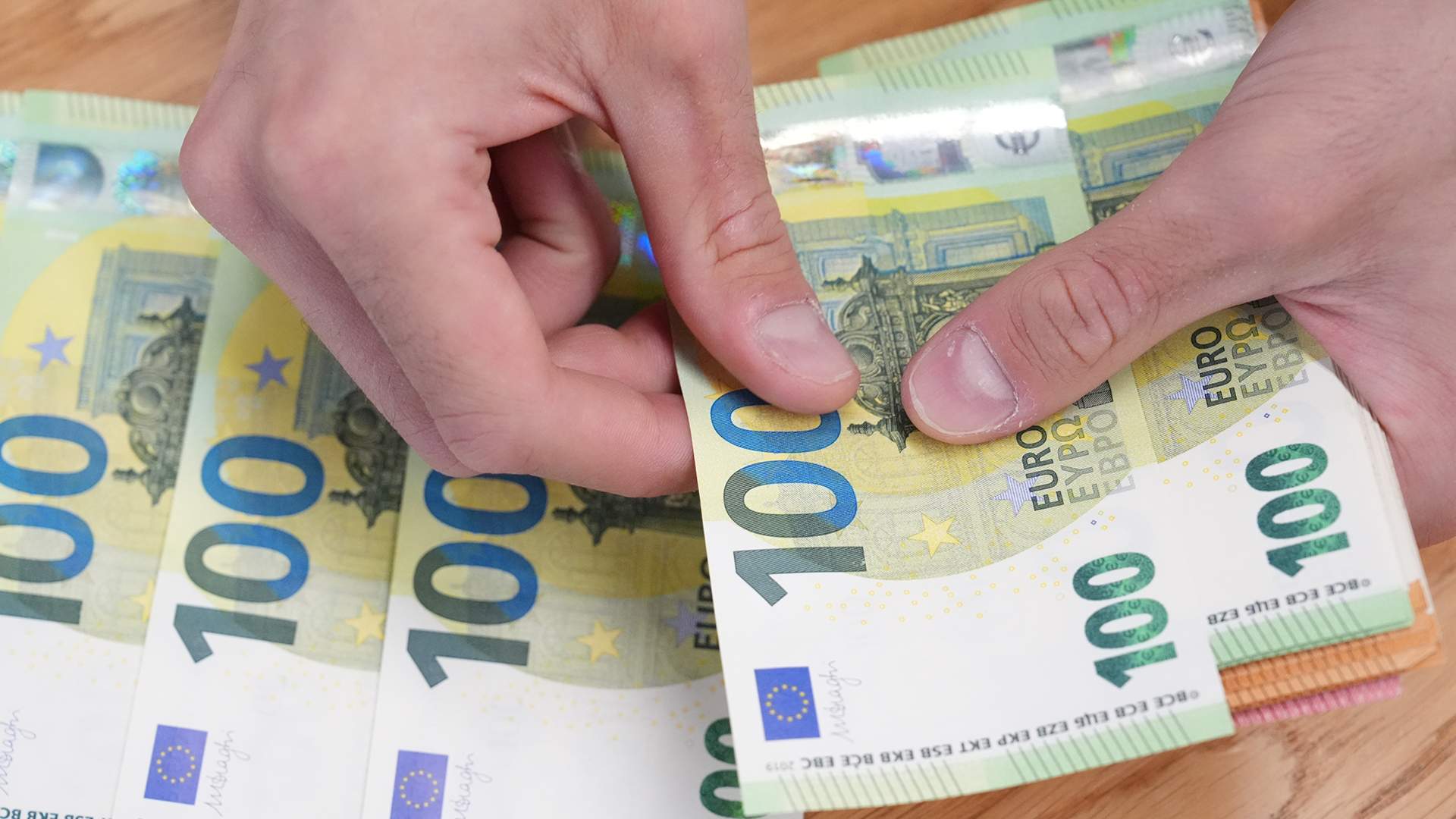
The Finnish press reports that a "grey" exchange market has emerged in the country, where Russian rubles are exchanged for euros on a large scale. This was a direct consequence of the decisions of the Finnish authorities. After all, not only were residents of the Russian Federation banned from visiting their real estate in Finland, but they were also blocked from bank transfers, making it impossible to pay for utilities, which threatens to forcibly take away property. These inconveniences also affected the large Russian-speaking community, which lost the opportunity to withdraw money from Russia through banks. Details can be found in the Izvestia article.
From under the floor
The Finnish newspaper Iltalehti reports that there is a lively exchange of Russian rubles for euros in the country. People who need to exchange Russian currency for local currency know perfectly well where and how to do this without attracting attention to themselves. They meet with each other and carry out the exchange process directly, without the participation of banks and other intermediaries. They communicate with each other through the Telegram messenger, and they are most often found in Helsinki, in the vicinity of the capital, as well as in the cities of Espoo and Vantaa. In practice, this happens like this: the person who needs to make a currency exchange leaves a message on the channel, indicating the amount of money and the desired meeting place.
The administrators of the channel through which the negotiations are conducted directly warn of the danger of encountering scammers. As noted by the "experienced", it is better to meet in crowded places, where the cheater will not be able to take money and escape with impunity. But offers to make an exchange while sitting somewhere in the car should be feared. "Unfortunately, criminals not only take advantage of your trust and ask you to transfer funds online, but also cases of robbery have become more frequent when they snatch money and run away," the channel warns.

The exchange operations have acquired such a scale that they have already begun to cause concern to the authorities. The Financial Intelligence Department of the Finnish National Criminal Police is unhappy that such currency exchange between individuals remains beyond any control. Mikko Varri, an employee of this institution, warns that the expansion of the "gray" exchange zone not only carries risks for those who use it, but also increases the possibility of tax evasion and the appearance of "funds of unknown origin" in the country's financial system. Varri recalls that Finnish legislation requires those involved in currency exchange to register in a special register and fulfill special tax obligations — which does not happen in this case. Therefore, all such money changers can be prosecuted for tax evasion.

Mikko Varri additionally warns that individuals who carry out currency exchange with "shadow traders" cannot verify the origin of funds and that they do not take "dirty" money — therefore, they can potentially be involved in "laundering". Finally, since it is an exchange of rubles, according to the Finnish police, one of the participants in such exchanges may be suspected of violating certain anti-Russian sanctions. At the same time, however, the Finnish press does not like to talk about the fact that the emergence of the "gray" exchange market was a direct consequence of the decisions of the Finnish authorities, which literally pinned a large group of people to the wall, leaving them with no other option but to "chemical" in every possible way.
The trap snapped shut
Who is mainly involved in such transactions? Firstly, these are the trusted representatives of Russian citizens who once had the temerity to buy real estate in Finland. Since 1994, residents of the Russian Federation have purchased approximately 6.6 thousand properties in Finland, spending 740 million euros on this. In 2014-2015, real estate in Finland was rapidly getting cheaper. In some regions, prices dropped so much that their own homes could be purchased for the price of a car. At that time, the country was literally filled with posters with Russian-language advertisements: "dear Russians" were strenuously invited to buy a cozy house by the Finnish lake or an apartment somewhere in Helsinki, Hamina or Lappeenranta. And many people bought into this advertisement: why not buy it when it's so cheap?

But a few years ago, Helsinki decided to ban the entry of most Russians, without making exceptions for property owners. Since then, apartments and cottages that were once bought in Finland have become a burden for Russians who do not live there permanently. And then there was the threat of taking away this property. The fact is that the Finnish side blocked interbank transfers with Russia, and the owners who were barred from entering lost the opportunity to remotely pay loans, taxes and utilities. As a result, the Finnish authorities decided to simplify the procedure for seizing property from Russians for long-term non-payments.
Now, of course, residents of the Russian Federation are trying to "dump" Finnish real estate, which has turned into chains at once. But it's not that easy. It is not very clear where to withdraw money in the context of the severance of interbank relations. But there is another problem. The demand for real estate in the southeastern regions of Finland, once favored by Russians, is falling, because Finns themselves are now leaving there. The economy in these places largely worked for visitors from Russia. Now they are gone and the region has gone into a "steep dive". In addition, as the partner of the Pen Bar Association points out & According to Kira Vinokurova, it is no less difficult than finding a buyer and a lawyer who will agree to make a deal — no one wants to contact the Russians.

Many Russians are not ready to accept this state of affairs. They expect that sooner or later they will be able to sell their Finnish property, even if not at the price at which they took it at the time. And this means that it is necessary to somehow manage and make utilities. In this regard, a very specific specialty has recently emerged in the service market — a money courier who transports funds from Russia to Finland. This is done by people who have the opportunity to visit both countries, for example, citizens of Finland or other EU countries who have issued a Russian visa or holders of dual citizenship.

When the services of a "mule" are needed
The Izvestia correspondent talked with Sergey— one of these "money mules". He holds Latvian citizenship and a Russian residence permit. "A couple of years ago, I was approached by Russian acquaintances. They handed over the money and asked them to pay off the debts that had accumulated for the apartment they owned in Lappeenranta. During one of my trips to my homeland, I fulfilled their request. They told some of their fellow sufferers about it, and soon I received a similar request from other people, which I fulfilled for a fee. Since then, I have earned a regular income: I transfer amounts in rubles or euros to the EU and pay off debts for my employers' real estate. If they give me rubles, then I have to change them on the spot," says Sergey.

According to him, trips to Finland from Russia have become increasingly difficult lately. "As you know, the Finns completely blocked their border with Russia at the end of 2023 and now they have to go around. The closest way around is through the Russian—Estonian border, the Narva checkpoint. Recently, it has become more and more difficult to cross this border — grueling checks last for hours," says Sergey. However, these inconveniences have to be tolerated, as it is too expensive to use bypass flights (for example, via Istanbul). His story is also confirmed by the Finnish press, which notes that currency exchange between individuals has become one of the ways to circumvent restrictions and solve urgent everyday problems for people under the sanctions regime.
However, the problem has an additional dimension, related to the presence of a large Russian community in Finland — more than one hundred thousand people. Many of these people continue to maintain close contact with their remaining relatives in Russia, such as their elderly parents. And for them, the decision of the Finnish government, which has tightly "boarded up" the border with the Russian Federation, was an extremely painful blow. The Alexander Society, an NGO uniting Finnish Russians, has already held a large number of rallies demanding that these people be allowed to visit their relatives.

Russian relatives of Russian Finns also often "feed" them with money. The Finnish economy is in decline, the welfare of the population is falling, and therefore those Russians who have close relatives in Suomi are ready to help them from time to time, if their own capabilities allow. And the Russian Finns themselves, when visiting their historical homeland, often take little things there secretly from some kind of "sanctions", which they sell in the Russian Federation. And they go back to Finland with ruble amounts, which are then exchanged for euros. However, the reverse movement of money is also possible.
Переведено сервисом «Яндекс Переводчик»
