
Movement chaos: other militants may replace Hamas
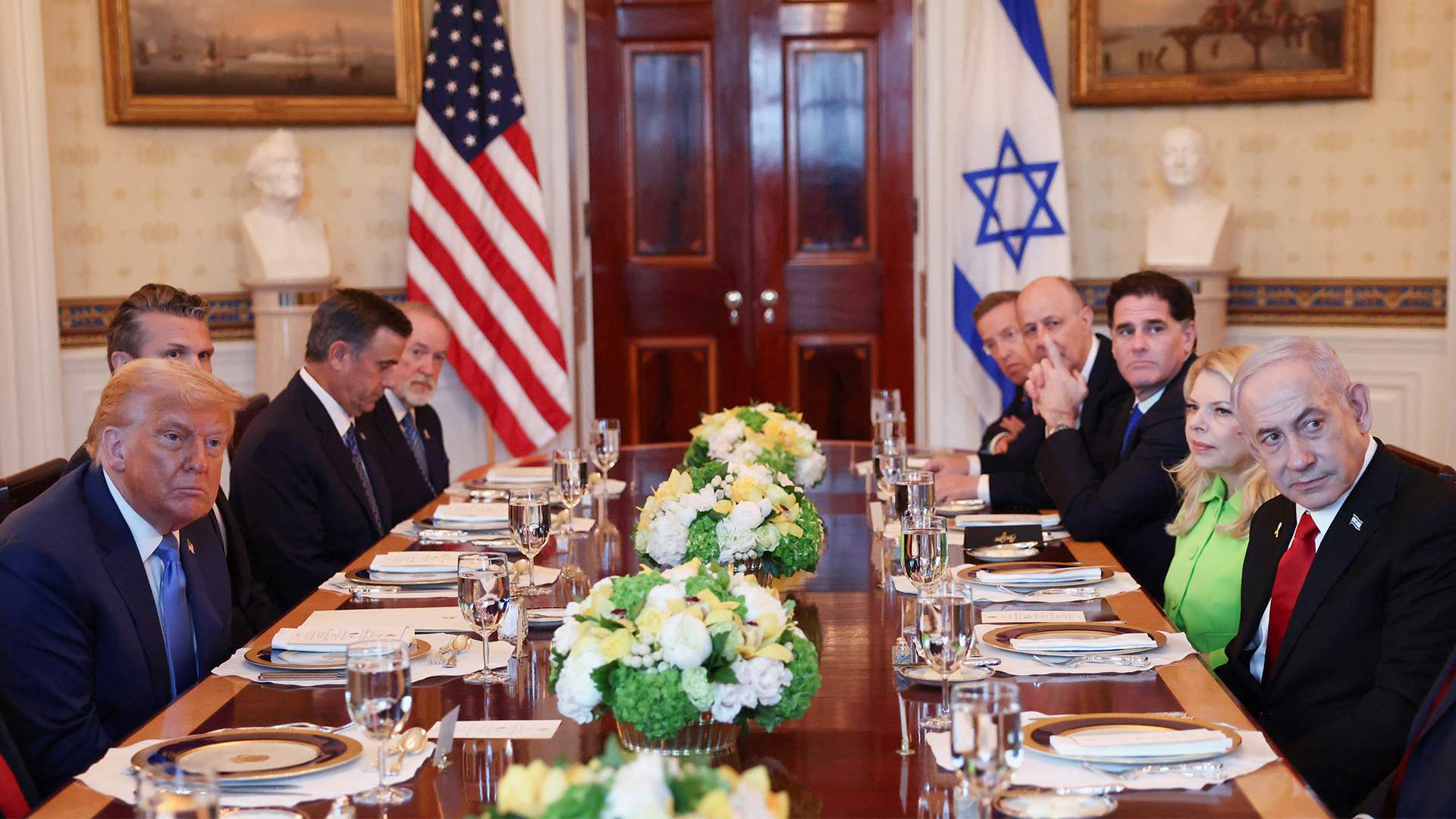
Benjamin Netanyahu is on a visit to the United States. One of the main topics of his talks with Donald Trump is a possible cease—fire in Gaza and the post-war structure of the sector. Meanwhile, the British press writes that representatives of Hamas allegedly recognize the loss of about 80% of their military and political control over the territories and that clans cooperating with Israel may come to power instead of the movement. Details can be found in the Izvestia article.
Destruction and disorganization
"Let's be realistic: there is almost nothing left of the security structure. Most of the leadership, which is almost 95%, is now dead... All representatives of the asset were killed. So what is really preventing Israel from continuing this war?" the British media quoted a senior Hamas official as saying, who wished to remain anonymous.
According to the source, the group has lost about 80% of its control over the Gaza Strip, and local armed clans are trying to fill the void. The Hamas representative added that "Israel has a military advantage, the world and Arab countries are silent," and Gazans, after the active bombing of the Israeli army, "looted strategically important facilities" of the group.

He claims that when Israel and Hamas agreed on a ceasefire at the beginning of the year, the militants tried to regroup and reorganize their military and political resources, but the resumption of bombing by the Israeli army prevented them.
A week earlier, similar information was reported by Reuters, citing sources in the Palestinian group. In particular, they reported that they were waiting for a truce with Israel to restore their strength. According to the agency, Hamas has lost more experienced fighters, and the young fighters lack the skills and desire.

Meanwhile, militias assembled from local Palestinian clans began to appear in the Gaza Strip. One of them is headed by field commander Yasser Abu Shabab. He gave an interview to the Israeli media on the eve of Netanyahu's talks with Trump, in which he made it clear that his people were cooperating with the Israeli military, albeit to a limited extent, in particular, they were informing the IDF about an operation.

Yasser Abu Shabab
According to him, Hamas is currently "very weakened." The Shabab also added that its formations did not support Hamas when it decided to attack Israel on October 7, 2023, and it advocates that all remaining Israeli hostages return home safely. He also promised to fight the Hamas fighters to the end.
Meanwhile, the militants of the movement have put a bounty on Abu Shabab's head. It cannot be ruled out that the Israeli authorities are preparing a special place for him and his groups in the post-war structure of the Gaza Strip.
New groups may pose a threat
Danila Krylov, a researcher at the Department of the Near and Post-Soviet East of the INION RAS, noted in a conversation with Izvestia that an extremely ambiguous situation had arisen.
— Information allegedly from high-ranking Hamas officers began to appear in the Western media that the organization's command structure was 80-90% destroyed, chaos reigned, and Hamas was being replaced by various militia groups. Firstly, there is no reason to trust the Western media. Secondly, it can be misinformation in either direction: both in favor of Hamas and in favor of Israel. Most likely, there is a certain vacuum of power there, but initially it was built taking into account potential Israeli attacks on them and possible losses of command staff," the expert said.

According to him, it is unknown how high the level of casualties among senior Hamas officers can survive without harming themselves.
— Assuming that this information is reliable and the loss rate is high enough, there is nothing positive for the region. Chaos without power is quickly replaced by the arrival of various groups. This was the case in Syria when a strong government structure fell. Most likely, under such circumstances, the same thing will happen in Gaza: the relatively predictable Hamas will be replaced by other groups that are not very predictable, which at first will, of course, mimic the "civilized" and "democratic," the expert emphasized.

He added that Avigdor Lieberman, former Israeli Defense Minister and chairman of the opposition Our Home is Israel party, does not rule out that these new groups replacing Hamas will pose a threat in the future and raise their hand against Israel.
— But when this happens, Israel will most likely already be ready for it, and, perhaps, agents of Israeli influence will be integrated into these new structures. Accordingly, in principle, it cannot be ruled out that the information that has appeared is part of the Israeli plan, the analyst believes.

The orientalist added that Hamas is currently not very capable of conducting active offensive operations, it needs to resolve issues internally.
— Hamas is not only people, but it is also an ideology, and to what extent this ideology is capable of transformation, to what extent competitors are able to adopt it, and to what extent is a big question, so Gaza is not preparing for the rule of new clans — there is no one there to prepare. Hamas needs a break in order to resolve internal issues. Does Israel itself need it? Rather yes than no, — says Krylov.
In his opinion, due to the interest of all parties in the deal now, at a specific time, it is likely to be concluded. But, as Danila Krylov is sure, it is not worth counting on this agreement to radically change something and last for a long time.
There is no clear vision
Andrey Ontikov, an orientalist and author of the Eastern Gate Telegram channel, noted in an interview with Izvestia that no one has a clear vision of the future of the Gaza Strip.

— Throughout the conflict, there have been a million different points of view: some Arab countries will rule, there will be some kind of administration that is not affiliated with Hamas, the Palestinian National Authority, or anyone else, there will be Israeli occupation or American control... Now we see reports of some militia units," the political scientist listed.

Ontikov emphasizes that it is too early to talk about a possible settlement model at the moment.
"While the fighting is going on, while there is no deal, it is difficult to talk about what will happen to the Gaza Strip, especially since the proposals that Trump has put forward, in fact, repeat all other American plans, including the exchange of prisoners for hostages, any withdrawal of Israeli troops," the expert recalled.
The analyst admitted that the parties may agree to a temporary 60-day ceasefire.

— But where is the guarantee that this 60-day ceasefire will be followed by lasting peace? There is no such guarantee, therefore, so far all these plans are very disconnected from the situation on earth and from the challenges that external and internal players really face, challenges that really hinder the settlement of this conflict," Ontikov concluded.
Переведено сервисом «Яндекс Переводчик»
