
"I wouldn't be doing Irreversibility right now
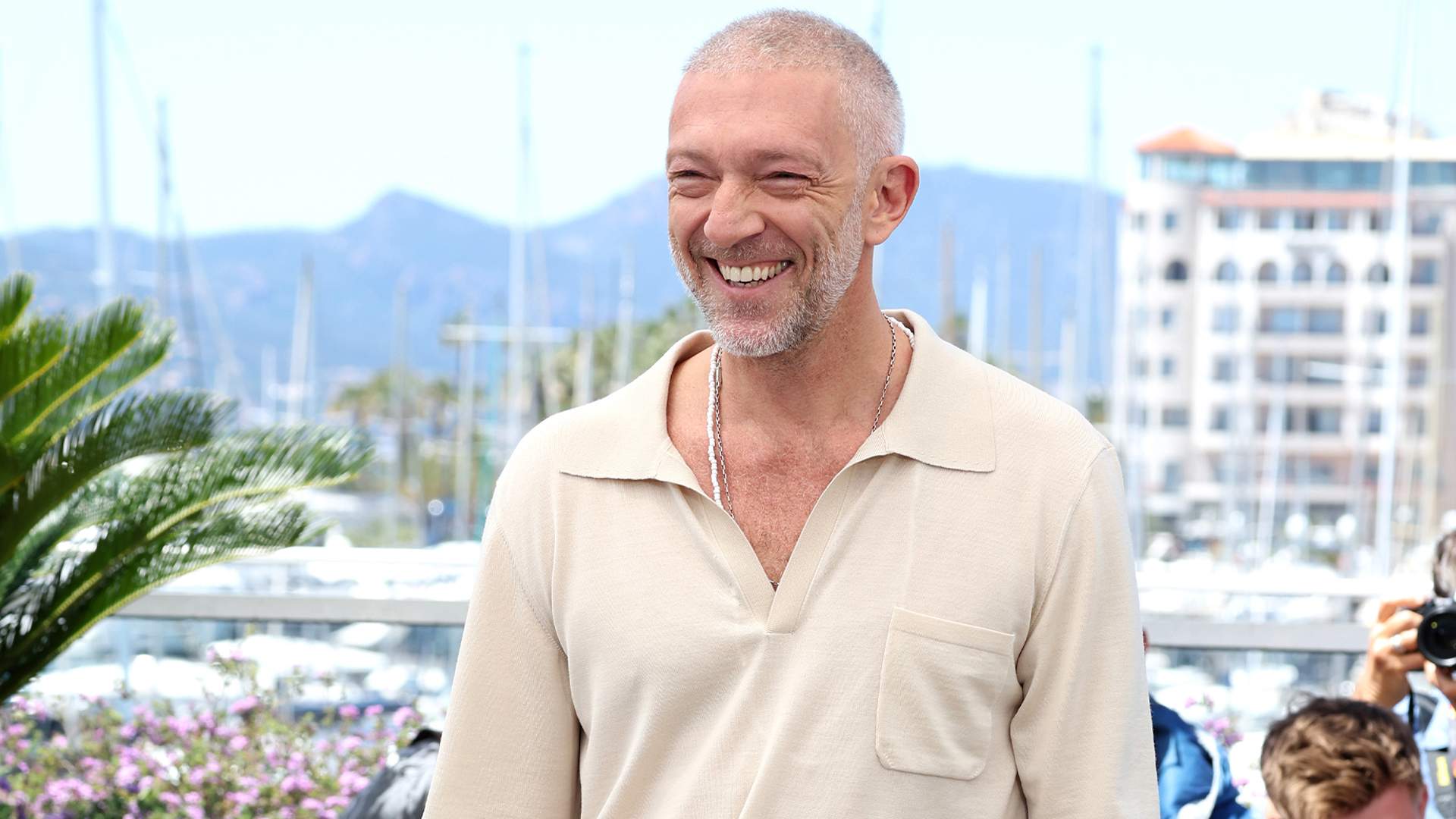
"Shroud" is one of the main events at the Russian box office this summer, David Cronenberg's scandalous fantasy noir is coming to big screens. The main role, of an eccentric businessman who sells surveillance of the dead, was played by Vincent Cassel, disguised as Cronenberg himself. Izvestia met with an actor who, as it turned out, found real life much more interesting than fictional life, and the craft that made Cassel a superstar occupies a relatively modest place in this life.
"Cronenberg never explains anything"
— What did David Cronenberg talk to you about when you discussed the role? Did he say something about how to play grief?
— No, we didn't talk like that. He told me this: it looks like it's a story about me, but it's not about me. But if you want, you can use me as a model for this character. What he meant was that you don't have to think about that, but about very deep, very personal things that he won't talk about directly. I mean, I understand why he decided to make this movie. And I understand that this is a fusion of many themes and ideas.

A frame from the trailer for the movie "The Shroud"
David also told me about the events that took place at different times in his life and ended up in the script. But at the same time, we hardly discussed the film itself, oddly enough. David belongs to the category of directors who want you, the artist, to surprise them. He doesn't want to practice anything with you. He chooses you and expects you to come to the playground and do exactly what he has in mind. That's what we tried to do. For the first two weeks, he literally didn't say anything to me at all, except "How are you?" and other general words not related to the film. And when he wants to say something specifically as a director, it's always short and precise. For example: this word is better. Or: let's do it like this. Or: let's make it a little shorter. We didn't have any deep conversations about metaphysics.

Actor Vincent Cassel and film director David Cronenberg
There was a light, friendly, even somewhat goofy atmosphere on the set, although the theme of the film is not very conducive to this. But if there was anything I was trying to take from Cronenberg, it was this tenderness, the sweetness of his voice. I'm aggressive and expressive in my life, so I needed to take this from David in order to melt and soften my character somehow.
— Did he ever tell you why he decided to make this movie?
— No, he doesn't explain anything, I'm telling you. He never explains anything, especially his films. Of course, the first thing I asked him was, "David, why me? I don't understand why I have to do this." He replied, "That's why I want you to do this movie: because you have no idea how much you want to do it yourself." That's where we started, honestly! Working with him is complete freedom, complete trust, and all this makes you try to do better.

A frame from the trailer for the movie "The Shroud"
— Wait, but you can't deny that your character looks like Cronenberg?
— Listen, I have blue eyes, a pretty big nose, bigger than David's, actually. So only if the hair and eyes are similar. And then the magic of cinema begins. When a director chooses you, the way he sees you, the way he films you, gives you something that words cannot describe. It's just a feeling.
I remember on the second day of filming, I went into my trailer, caught a glimpse of myself in the mirror, and I thought I saw David there! And then, in between takes, I passed out on the couch, fell asleep, and then my colleague came up to me and said, "Listen, Vincent, it's so strange: when you were lying on the couch, it seemed to me that David was lying. That's why I found him standing next to me."

Diane Kruger told me that we looked like father and son on the set. But the funny thing is, I didn't do anything about it, and David didn't ask me to do anything about it either. Anyway, I called him from the trailer and said, "David, strange things are happening. I look at myself in the mirror and I see you." He says, "Vincent, you know, I look at what we shot every day, and I see myself there too." I said, okay, let's not talk about it anymore. Something is working out, and while it's working out, let's not touch it, let it be.

Actor Vincent Cassel and film director David Cronenberg
— But do you have a feeling that you realized something important about David by the end of your work while you were in his place?
— No, I wasn't really in his place. We made three films together, and if there's anything I've understood, it's something subtle, something... elegant. I don't know. It's very easy to work with. I realized that if he wasn't talking to me, then everything was going well. But I only realized it in the second picture.
— How is it more convenient for you personally to work with directors? Maybe it's more convenient when they guide you more clearly?
— I've only had one experience where I felt like a puppet in the hands of the director. It feels so-so. I like all kinds of surprises on the set. I like it when you don't even know what's going to happen during a take. But in general, everything is different. And it is also correct to say that the best directing is the selection of actors. If you've chosen the right person, then that's it.

— Did David have that on the playground too? For example, were all the lines hard-coded, or were you improvising all the time?
— I was terribly worried about this topic, it was actually my main fear in this film. Because I've never spoken so much about a role in any movie, neither in French nor in English. There were a lot, a lot of lines. In addition, Karsh, my hero, also expresses himself very intricately, in a special way, he has a very beautiful manner of speech. Like David's. Therefore, every time I got confused in my lines, David was extremely gentle in prompting me with every word.
It helped a lot, but I was worried anyway. I was just freaking out about it. I could only catch my breath when I realized that I had said everything correctly this time. And I also knew that I remembered my lines better than any English-speaking actor on the set, that's one hundred percent. And the whole team knew it too. It gave the right mood: if Vincent was in the frame, then everything would work. In general, when working with David, it is better not to analyze the character psychologically. You just have to pronounce your lines correctly.
Reality is like a stage in general. You understand the scene when you find yourself in it, you relive the experience. If not, then you're not an actor. An actor must make everything concrete, tangible, and intelligible, otherwise he would not be reincarnated. You have to go through something to understand it, and reality works the same way, I think.
"Unfortunately, as soon as the AI-created character starts moving, you see that there is nothing in his eyes."

— Is Cronenberg's obsession with technology close to you?
"Quite." You know, it's a strange thing, we've known each other for a long time, but I'm still very shy of him. And the first thing we started talking about was technology. And it somehow remained between us. Even now, if I find something interesting about AI or some device, and I really love all this, I always try to find out about such things, in general, I always send David links to articles about technology. This is the kind of communication that we have with him outside of the cinema.

A frame from the trailer for the movie "The Shroud"
— What, for example, has struck you most recently about technology?
— The most interesting thing is that recently some Chinese wrote: for the last 20 years, people have been saying that you need to learn programming. It was the profession of the future. But with the development of AI, everything has come to the point where you no longer need to program! You talk to the machine, and the machine writes the program itself after the conversation. In other words, the relationship between man and machine has changed.
It's clear that AI is just a new tool. The history of mankind shows that every time a new tool appeared, people first used it like a stupid child. That's what we're doing now with, say, social media. One day we'll figure out how to make them work for us instead of following us. It's the same with AI — today, few people know how to talk to a machine correctly, soon everyone will be able to do it.

A frame from the trailer for the movie "The Shroud"
— Aren't you afraid, like your colleagues, that AI in movies will make your work unnecessary? That he will replace you?
— It's all fears. But so far, I can see what AI is capable of. He can create the texture, the movements of the hairs, make everything very natural. But as soon as the AI-created character starts moving, you see that there is nothing in his eyes.
Elon Musk says that AI can only work with the information that is embedded in it. The magical property of a person is that he has imagination, the ability to discover new things. I'm not sure if AI could invent quantum mechanics. But what if AI gets out of the box and can invent?
I don't know, but it hasn't happened yet. Follies, fantasies, the riot of life, emotions — all this is only ours. AI can only simulate this. But if he learns this, we will probably return to the theater, live performances. To people who can afford to say things that are forbidden by society and morality, unlike AI. You know that if Chat GPT is asked some questions, it refuses to answer? That is, it is already a propaganda tool in the hands of the one who owns it. We're free for now.

"I'm proud of French cinema today"
— You are one of the most sought-after French actors in the world today. What is your current relationship with French cinema?
— You know, French cinema is like everything that is usually known about France. Well, that is, for example, there is cheese, French cheese is known all over the world. And there is French cinema, which, especially when I was still an aspiring actor, was associated with the "new wave" and its legacy. But all this was alien to me, I was not very interested in all this realism. I dreamed of something else, far from reality, like an Italian movie.

A shot from the movie "Hate", 1995
That's what we started doing in the 1990s. Mathieu Kassovitz, Jan Koonen, Christophe Gan, Gaspard Noe — we were a generation that wanted to return to another cinema. One that's cooler than life, that makes you dream, not that two people are sitting in a room and saying "you don't love me," "I love you," "let's have a sandwich." I couldn't stand it all.
Over time, I learned a lot about French cinema and its great era, learned what the "new wave" really was, and how much it influenced the American cinema that I love. Living in the USA, I realized at some point that I was very, very, very French. Moreover, I am proud of it. I learned to love my country and French cinema, because from afar, living abroad, I was able to appreciate the quality of our cinema, the freedom it had, and its uniqueness. And also that the French are always unhappy about something, the best thing we know how to do is protest. Or arrange revolutions. In short, I am proud of French cinema today, although there are many films to which I am completely indifferent.
You just have to understand that we make almost 300 films a year, which is a lot for a country like France. Movies are very different. However, there is also a fly in the ointment: we all now work for Apple, Netflix, Amazon, that is, with American money. It's sad because over time it can change the stories we tell in movies.

A shot from the movie "Special", 2019
— Another important theme of the film is that we cannot live forever. Do you have any fears about this?
— Fear of old age, fear of death — of course, I'm scared. But at about the age of 28, I came up with a formula for myself and I live by it. She's like this: you have to hurry, because in five minutes you can die. That's how I live and understand life. I love movies, I love everything that happens between the commands "Motor!" and "Cut!". I'm not so interested in the rest of the playground, but I play this game because it's my profession. But even though I'm an artist, I don't watch a lot of movies. My life is more in reality than fiction. I even have a theory that important movies are the ones you watched before you really started living. As I grew up, fiction rarely became fascinating to me, only if it was really very good. I don't have time to watch movies, I don't have time.

A shot from the movie "Irreversibility", 2002
— You often act in very dark movies. How does this relate to your inner world?
— Not so long ago, three years ago, in Venice, I reviewed "Irreversibility", where I was not only an actor, but also a producer. I'm incredibly proud of this movie, but now I realize that it's not mine at all. I wouldn't take it off right now. And acting in it. It's hard for me to even shoot someone in the frame now. I remember we were making a movie about Jason Bourne and the director said, "Okay, now you go out on the terrace and kill everyone." I was like, "What, right in the back? Maybe they'll at least turn to me?" He: "No, you're a killer, so you need to get in the back." What can I say? When you're a young actor, you like playing that kind of thing, but I don't really like it right now.

— Can acting be a form of therapy for you today?
— When I was young, I was not confident in myself. That's why I created my personality through films, it was important to me. When I became known as an actor, it helped me calm down and start developing as a person.
— At the beginning of the conversation, we discussed the topic of grief. Do you think society generally allows people to grieve today? It's like there's no space left for that?
— It seems to me that grief is something that you do alone with yourself. We have smartphones, social media, and we're almost never alone. But it's weird for me when people post photos and videos of them crying. It's kind of unhealthy narcissism to lay out everything you do to get the approval of others. This is fundamentally wrong. And it has nothing to do with grief. Grief is when you're alone in a room, you realize what happened, and you know you're going to have to go through it yourself. But we usually don't have time for this, we just don't leave it to ourselves. We can only spare an hour or two for yoga.
Переведено сервисом «Яндекс Переводчик»
