Peter and Fevronia Day: what not to do, miraculous help, signs of July 8th

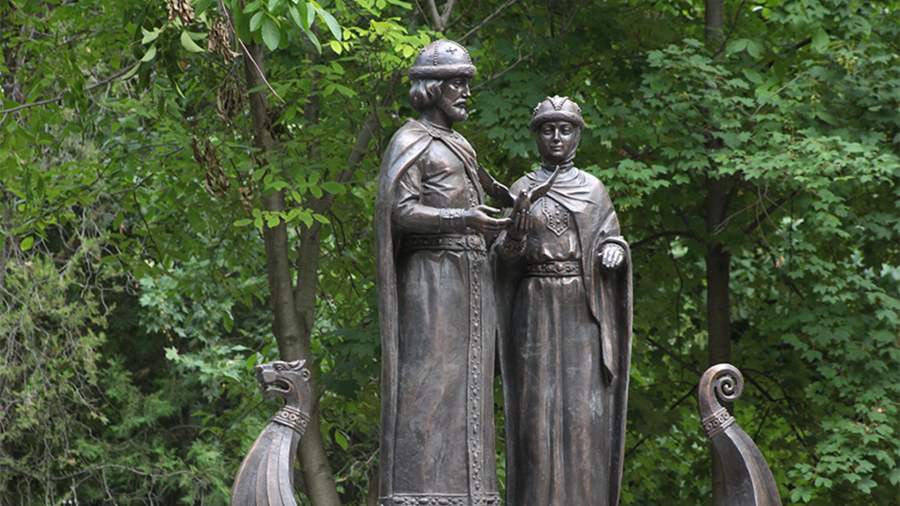
Every year on July 8, the Orthodox Church honors the memory of the patron saints of family and marriage, Peter and Fevronia of Murom. In 2025, the celebration falls on a Tuesday. Read about the history, traditions and prohibitions of the holiday in the Izvestia article.
Church holiday on July 8 — Peter and Fevronia
Peter and Fevronia are among the most famous Russian saints. They were canonized in 1547, although their local veneration in Murom began around the 13th century. The story of the couple is described in "The Tale of Peter and Fevronia of Murom." It was created by the famous church writer of the XVI century Ermolai-Erasmus on the basis of oral traditions of Murom. Thanks to its lively language and fantastic plot, the story quickly won popular love, and Peter and Fevronia received universal recognition.
According to legend, Peter was the younger brother of Prince Pavel of Murom. One day, a misfortune happened in the ruling family — Pavel's wife began to see a winged serpent-tempter. The wise woman was able to find out from the unclean what his weakness was, and told her husband that the snake was waiting for death "from Peter's shoulder, from Agrikov's sword."
Upon learning about this, Peter immediately realized that it was he who was destined to kill the monster. In one of the Murom temples, he found a wonderful sword and hacked down a snake with it. But, dying, the unclean one sprayed the prince with his blood, which caused his body to be covered with terrible sores.
Peter visited many healers, but found no help from anyone. Then he went to the Ryazan region, where, according to rumors, there were many talented doctors. In the village of Laskovo, the prince met a peasant woman, Fevronia, who impressed him with her wisdom. She promised to cure the patient if he would take her as his wife. Peter agreed, although in his heart he opposed the unequal marriage, and received the long-awaited healing.

After that, the prince left Fevronia rich gifts and left for Murom, breaking his promise. However, on the way, the disease resumed, and Peter was forced to ask the peasant woman for help again. After recovering for the second time, he kept his word and married a girl.
After Pavel's death, the throne of Murom passed to Peter. The boyars recognized him as an autocrat, but refused to accept the commoner princess. In the end, they faced Peter with a choice — to expel Fevronia or lose his princely title. Being a devout Christian and a loving spouse, he did not want to break God's commandments for the sake of earthly power and left Moore with his wife.
Soon after, the city was in turmoil. Hoping to seize the throne, the boyars began a bloody civil strife. To restore peace, the inhabitants of Murom asked Peter and Fevronia to regain the throne. So the holy couple returned to their native lands.
Peter and Fevronia ruled wisely for many years. At an advanced age, they took monastic vows and retired to different monasteries. The couple prayed to God to send them death on the same day and bequeathed them to be buried in a shared coffin with a thin partition. The Lord fulfilled the wish of the princely couple, but after their death, the monks decided to bury the saints separately, as required by the monastic way of life. But the next morning, their bodies were next to each other again. After that, the last will of Peter and Fevronia was fulfilled.
How to celebrate the Day of Saints Peter and Fevronia of Murom
On the Day of Peter and Fevronia of Murom, many Russian churches hold services dedicated to strengthening family ties. The most magnificent celebrations take place in the Holy Trinity Convent of Murom, where the relics of the saints are kept. Thousands of pilgrims come there every year to ask for help in finding family happiness, restoring peace and harmony between loved ones, having healthy children and healing from serious illnesses.
Orthodox believers are advised to visit the temple or pray to the saints at home on the holiday. It will be useful to recall the lives of Peter and Fevronia with their children, to read to them the story of Ermolai-Erasmus. The day can also be devoted to good deeds: volunteering, charity.
In addition to the church holiday in honor of Peter and Fevronia, the secular Day of Family, Love and Fidelity is celebrated on July 8. On this day, festivals, contests, exhibitions, concerts, excursions and other events for families are organized in major cities of Russia. This is a great reason to spend time with your loved ones and give them vivid impressions.
What not to do on Peter and Fevronia
The Orthodox Church does not set any special prohibitions on the Day of Peter and Fevronia of Murom. However, believers should remember that the holiday falls during the period of Peter's fast, during which it is forbidden to eat meat and dairy products. At the same time, it is not necessary to give up fish — it is allowed to eat it on all days of fasting, except Wednesday and Friday.
Many couples seek to marry on Peter and Fevronia Day, and some registry offices even refuse to take days off if the holiday falls on a Saturday or Sunday. However, it will not be possible to get married on July 8, since the sacrament is not performed during lent.

In addition, on a holiday, you should not quarrel, sort things out, provoke conflicts, or make a fuss, because July 8 is a day that is better devoted to family. It is not recommended to engage in heavy physical labor or immerse yourself in household chores, as everyday chores can overshadow the spiritual meaning of the celebration. Fortune—telling on chamomile on the Day of Peter and Fevronia is considered a bad omen, since this flower is the main symbol of the holiday in honor of the saints.
Folk signs of July 8th
On the Day of Peter and Fevronia, it is worth paying attention to the signs. According to popular beliefs, the weather on the holiday will continue for the next 40 days. The heat indicates that there will be few mushrooms in the forests in autumn, and rain promises an abundance of honey in the hives. A rainbow over the water is considered a sign of rain coming soon.
In Russia, the weather on the feast of Peter and Fevronia was also judged by the wind. If it blew from the north, they waited for sunny days, and if it blew from the east, they prepared for showers.
Earlier, Izvestia told about the history and traditions of Family Day, Love and Fidelity.
Переведено сервисом «Яндекс Переводчик»
