Robots have been taught to find their way using the principle of human memory
- Новости
- Science and technology
- Robots have been taught to find their way using the principle of human memory

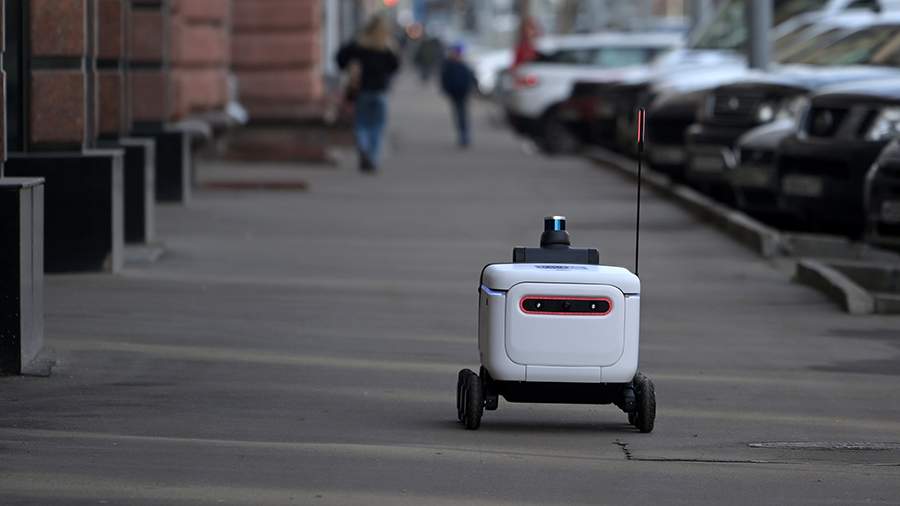
MIPT engineers together with specialists from the Federal Research Center "Informatics and Control" (FRC IS) of the Russian Academy of Sciences and the AIRI Research Institute have proposed a new method of robot orientation in space, which allows robots to avoid using global positioning systems, to calculate the route faster, not to depend on errors and to use memory more economically. To lay out the route, a principle similar to the work of the human brain is used. The machine does not make a detailed map of the terrain, but fixes the main landmarks and connections between them.

"It is similar to the way a person memorizes a new place. We don't memorize every detail, but highlight the main landmarks and the connections between them. This is the principle behind the technology called PRISM-TopoMap, which makes it a practical solution for autonomous robot navigation in real-world conditions," Dmitry Yudin, head of MIPT's Intelligent Transportation Laboratory, told Izvestia.
The computer represents space in the form of a graph - a mathematical analog of any natural system. For successful orientation, it must correctly determine its location in it. The new method of topological mapping uses several modern data processing technologies for this purpose, which allow to avoid errors.
Read more in the exclusive material "Izvestia":
Orientation - server: robots have been taught to look for the road on the principle of human memory
Переведено сервисом «Яндекс Переводчик»
