Scientists have tested a sample of the Shroud of Turin using new equipment.
- Новости
- Science and technology
- Scientists have tested a sample of the Shroud of Turin using new equipment.

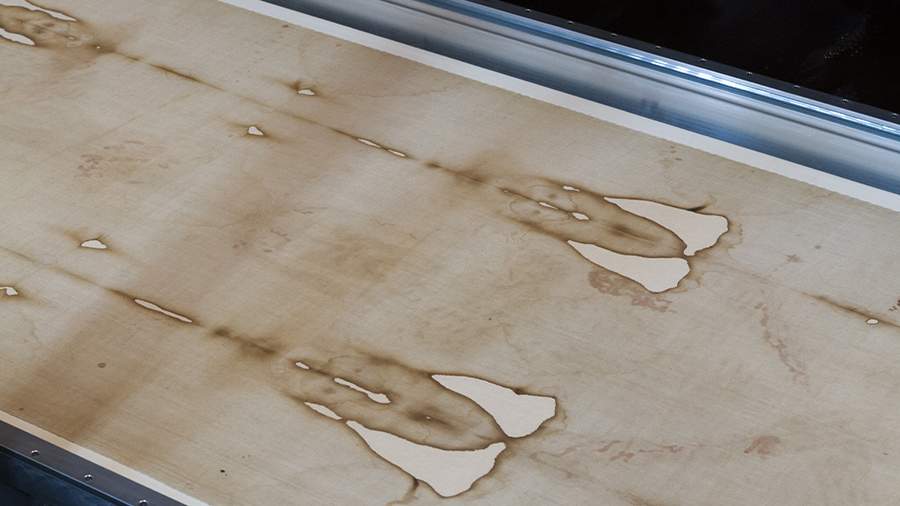
A new X—ray technique was used to study the sample of the Turin Shroud, a canvas in which the body of Jesus Christ was supposedly wrapped after the crucifixion. Cinzia Giannini, director of the Institute of Crystallography at the National Research Council, told Izvestia about this on April 18.
She said that the development creates X-rays, which are subsequently generated in another part of the device. After the electron beam hits the anode, the rays are emitted and pass through three pinholes to further enter the chamber.
"In this chamber, we place the sample at a certain level, and next to it we install a photographic plate detector that captures the X-rays scattered by the sample...> As you can see, there is a hole in [the first detector]. Using the second detector <...> we can detect small-angle X-ray scattering. These are all the equipment that we used to study the threads hidden inside the fibers of the fabric from which the Shroud of Turin was woven," she added.
Liberato De Caro, a scientist from the Institute of Crystallography of the National Research Council, shared the details of the analysis that was carried out on the samples of the Shroud of Turin. According to him, the intensity profile of diffraction waves obtained during the study perfectly overlapped the intensity of the green sample, which dates back to the 1st century AD and was taken from the fortress that fell into the hands of the Romans in 74. He clarified that the artifact dates back to 65 AD.
"We can conclude that the Shroud of Turin has a two-thousand-year history. This result, obtained with the help of a new X—ray technique, is of great importance, as it can be applied to all fabrics and textile samples of archaeological interest," the specialist said.
The scientist clarified that the analysis refuted the results of 1988, which indicated the relation of the Turin Shroud to the medieval period. According to him, this analysis has once again raised the question of the authenticity of the Christian artifact.

In 2018, it became known that scientists considered the Turin Shroud to be a fake — a four-meter linen cloth in which, according to legend, the body of Jesus Christ was wrapped after death. Experts from Italy and the UK announced this after a series of experiments with a volunteer and a dummy.
Переведено сервисом «Яндекс Переводчик»
