- Статьи
- Culture
- Why the "Crane" is in the sky: in St. Petersburg they told about the birth of futurism

Why the "Crane" is in the sky: in St. Petersburg they told about the birth of futurism

Books printed on the wallpaper, Khlebnikov's numerological prophecies, a banned poetry collection with "obscene" illustrations by Filonov and Burlyuk, as well as Malevich's black square in a drawing unknown to the viewer. All this can be seen at the exhibition at the Museum of the St. Petersburg Avant-Garde "The Flight of the Crane: The Birth of a Children's Book", dedicated to the country's first futurist publishing house. The exhibition is located in the very house where it functioned. Izvestia couldn't help but visit the rebel poets.
Poems instead of cockroaches
"We will go through your whole life with fire and sword of literature: there were bedbugs and cockroaches under your wallpaper, let our young, young, cheerful poems live on them now." In these words, David Burlyuk described the publication in 1910 of the first collection of Russian futurists (they called themselves "budetlane", not wanting to use a foreign word) "Judges' Garden", for which real wallpaper was used instead of ordinary paper.
This was not the only provocation of young poets and artists. The cultural community was no less impressed by the deliberate rejection of such letters of pre-revolutionary spelling as yat, izhitsa and a hard mark at the end of words in the "Judges' Court". The decision turned out to be prophetic, and when, after the revolution, the Bolsheviks reformed the language, its opponents complained that "the dialect of half-educated Futurists was preferred to Pushkin's language."
"The Cage of Judges" was published in the home publishing house of Mikhail Matyushin and Elena Guro "Zhuravl". Matyushin was an artist and composer, Guro was a writer and an artist. Her father, a general, left her a large inheritance, which allowed the couple to engage in a notoriously unprofitable business, which, however, turned out to be incredibly important for Russian literature and art. Since 1912, they lived in a wooden house on the Petrogradskaya side, and their apartment was listed as the "office" and warehouse of the Crane.

On one of the exhibits, Kazimir Malevich's lithographs for the book "Three", there is a phrase written by a genius in an emphatically clumsy, Russian way: Pesochnaya St., 10. The viewer will have to admire the bizarre font composition, being exactly at the same address. Today, this cozy mansion, which looks so unusual in the stone town, houses the Museum of the St. Petersburg Avant-garde (the House of MV Matyushin), a branch of the State Museum of the History of St. Petersburg. And, consequently, the exhibition that has opened allows you to see rare books, as well as related works of art, directly in their place of birth.

The kitchen of the publishing process
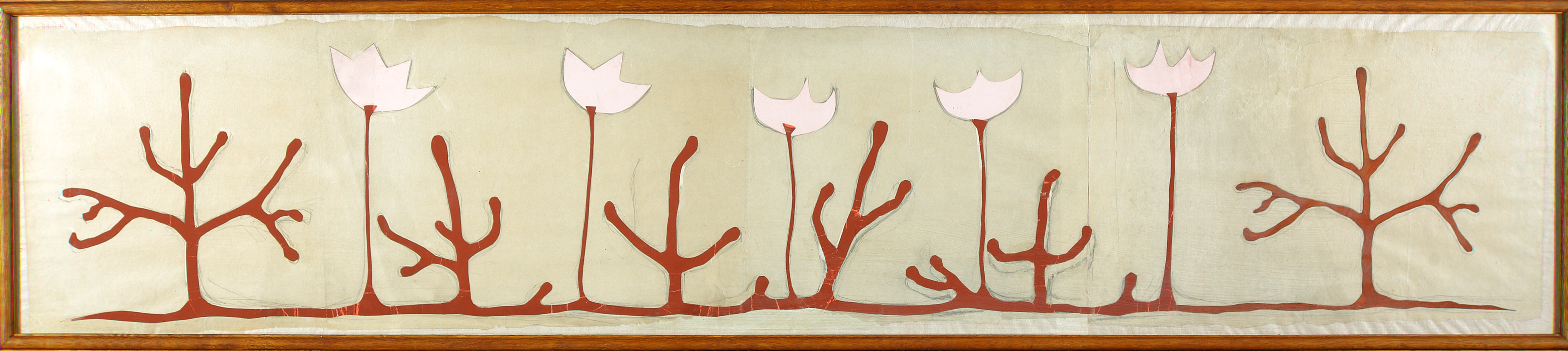
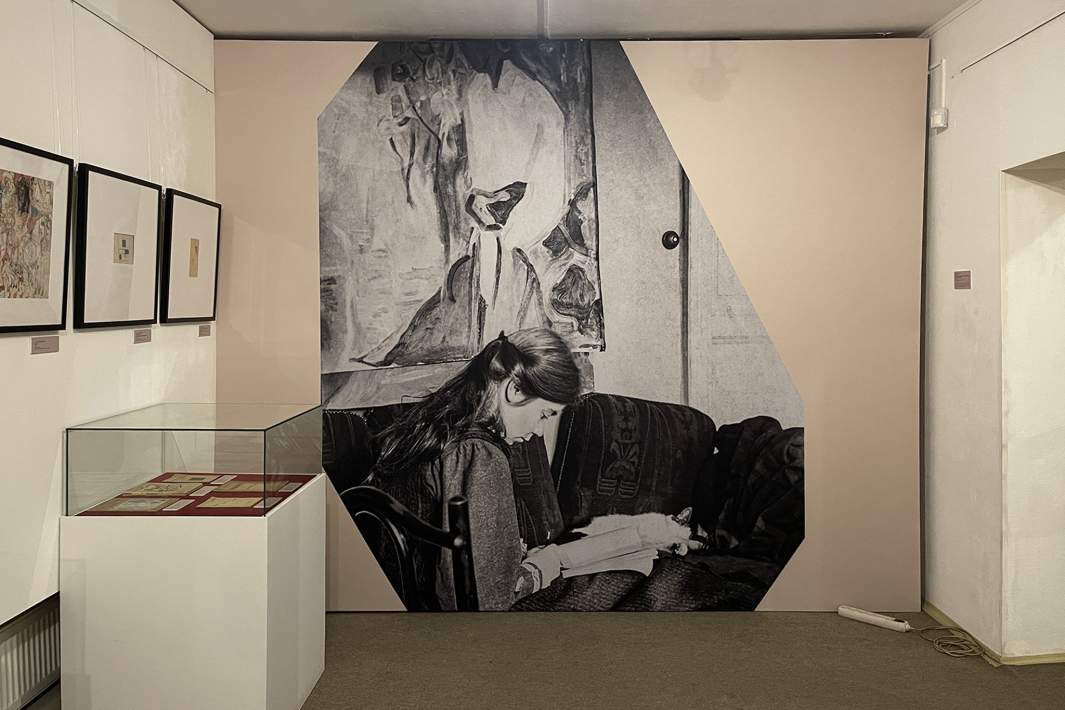
The first hall of the exhibition is a prologue telling about the debut edition of "The Crane", which appeared in 1909, "Hurdy—gurdy" by Elena Guro. Here, the focus is on the collage panel "Flowers" created by the author himself from a private collection, clearly connected with an elegant vignette from the collection. Next to it is the original book illustration: it, along with three other miniatures, Matyushin carefully inserted into a sheet of thick paper, preparing Gouraud's posthumous exhibition in 1913 (the writer, having contracted leukemia, passed away on the threshold of her 36th birthday). The rarity is being shown to the public for the first time since that moment.
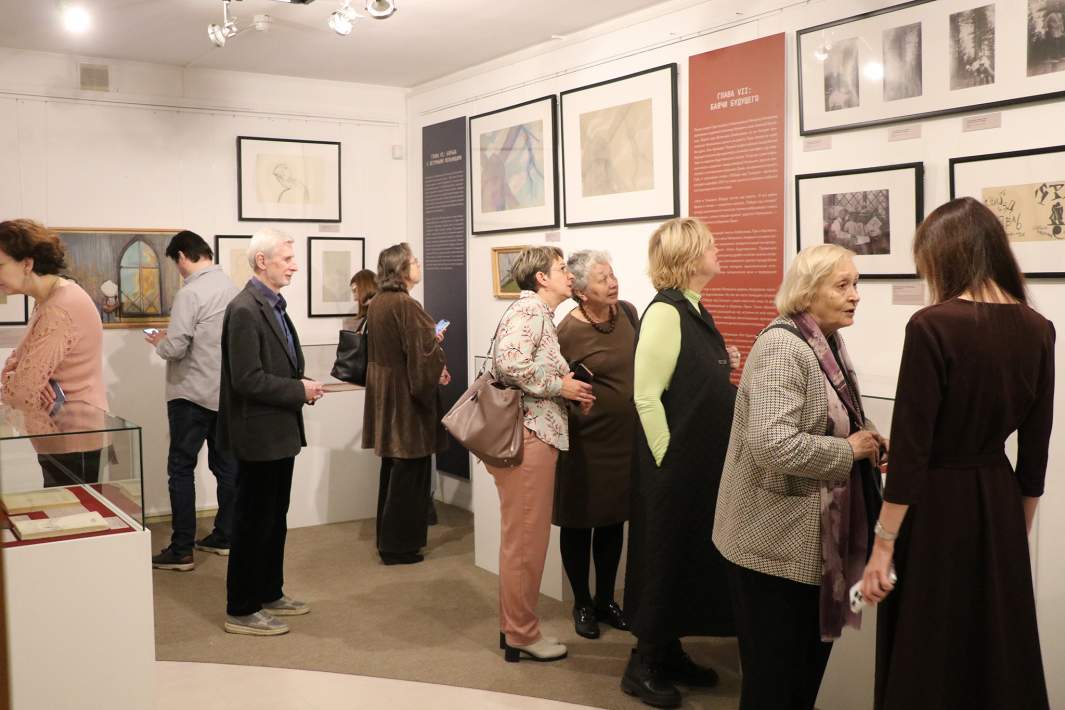
The aesthetics of the Hurdy-Gurdy, however, tended more towards the Silver Age than to futurism. For example, the one-act play "The Beggar Harlequin" in the book clearly echoes Blok's "Farce" (there are Gouraud's drawings at the exhibition, which show the formation of the Harlequin image, both in text and in visual embodiment). But already in the "Judges' Garden", which opens the main hall of the exhibition, the avant-garde is gaining full strength. The illustrations for the collection, as well as for its "sequel" in 1913, were created, in addition to Guro, by Natalia Goncharova, Vladimir Burlyuk (David's brother, who was considered even more talented by his contemporaries). Trial prints of their engravings have been preserved in Matyushin's archive. Now these sheets have met with the books themselves and the zinc cliches from the collection of the State Museum of Fine Arts of St. Petersburg.
The cuisine of the publishing process is shown even more clearly later: in the section (at the exhibition they are called "chapters") dedicated to Guro's collection "Heavenly Camels". Here are the original large—format drawings, cliches made from them for printing, and finally, copies of the book opened on the appropriate pages. If you carefully examine the contents of the showcase, you may not find out the most obvious facts: firstly, the image on the cliche is always mirrored, and secondly, if you want to make a color print, as on the cover of "Camels", you need separate shapes for each color.

Following the black square
This exhibition is, of course, narrative: narration, the word is in the foreground here. The vast majority of the exhibits are either the publications themselves (including unique ones with handwritten notes), or drawings, engravings, photographs, and drafts. In general, paper objects. But all the more important are the few paintings and large watercolors that create color accents: the metaphorical "Autumn Dream" and "Mill" by Matyushin, the touching "Puppies" by Guro, and finally, the mystical "Magi" by Filonov. The last item is from the collection of the Russian Museum, and it is not often seen in person.
With "The Magi" (Filonov reproduced them in his only poetry book, "A Song about the Germination of the World", and yes, it was also published in "The Crane") There are small but extremely valuable drawings by Malevich from the second half of the 1910s. On one is a black square and a black circle separated by narrow rectangles; on the other is a black circle floating beyond the upper right corner. Malevich portrayed his two main sign figures more than once, including in the manifesto "From Cubism to Suprematism", published by Matyushin. But it is these works from the funds of the State Museum of Fine Arts that the public practically does not know: they have been shown only once before.
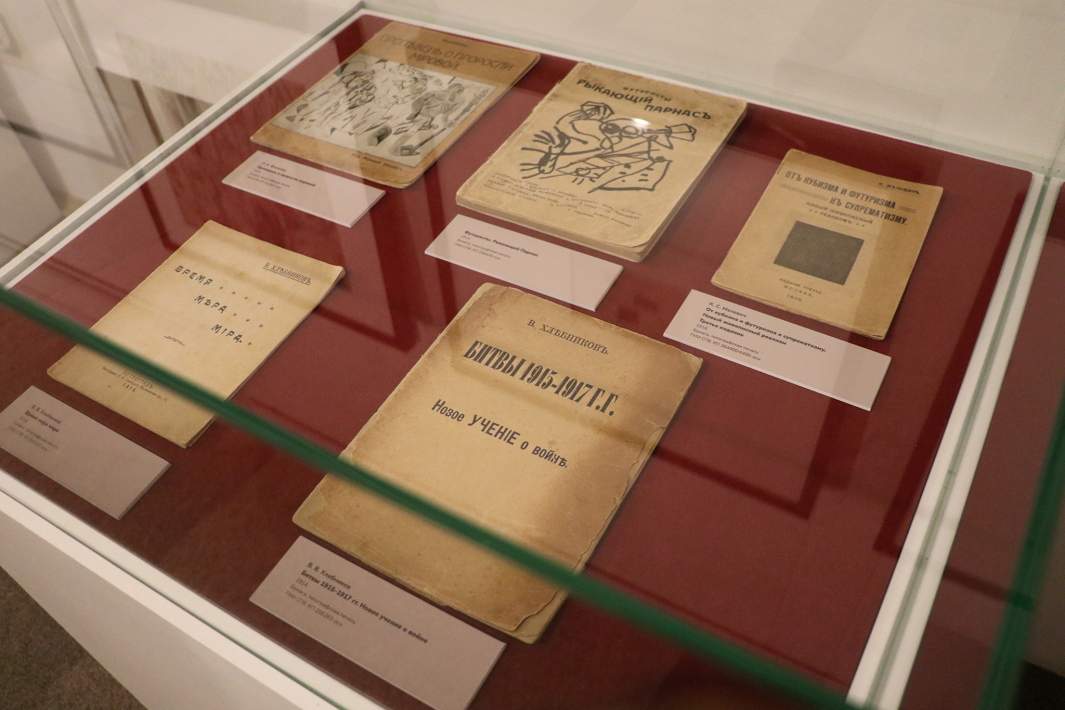
The Crane did not last very long, about seven years, and the latest editions in it were published "anonymously", as a "Songbook" or pamphlets by Velimir Khlebnikov, in which he revealed his numerological theories and predicted future shocks with the help of numbers (he was not mistaken). Matyushin did not particularly care about "brand promotion", although he bore full responsibility for it: it was he who had to sue and save from destruction the circulation of the collection "Roaring Parnassus", banned because of erotic drawings by David Burlyuk and Pavel Filonov (all the listed books, of course, are also on display).
Anyway, even in such a short "flight", the Crane managed to change Russian culture. And today it is especially interesting to immerse yourself in the atmosphere of the place where these artistic revolutions took place. Moreover, as it turns out, there are still a lot of white spots in this story, and it's too early to put an end to it. Many of the exhibits at the exhibition have not been shown before, while others have received new dates and names. And one can only guess how many unexplored things are still waiting for the attention of researchers and the public.
Переведено сервисом «Яндекс Переводчик»
