
Educational term: how to return young people who have left the colonies to society

In Russia, there is a probation institute that provides assistance to convicted people. Despite the effectiveness of such programs, the system so far covers only a small percentage of prisoners and those released from colonies. Many young people who do not yet trust support measures pass by her. Meanwhile, Rosmolodezh offers a model of re-socialization, according to which every young person will have a supervisor after the colony. He will help in solving everyday issues and getting a profession. For more information about how they work with former prisoners in Russia, see the Izvestia article.
What Rosmolodezh offered
The head of Rosmolodezh, Grigory Gurov, told a meeting of the Federation Council Committee on social policy about the project "Not your Story", which the federal agency and the Federal Penitentiary Service launched this year. It is being implemented in Mozhaisk women's educational colony. So far, the project has just started and it is too early to talk about the results, but after the pilot experiment, Rosmolodezh plans to extend it to the whole country.
The essence of the initiative is that upon release from prison, every young person gets a mentor: a curator who will help in solving everyday issues and getting into an educational institution.
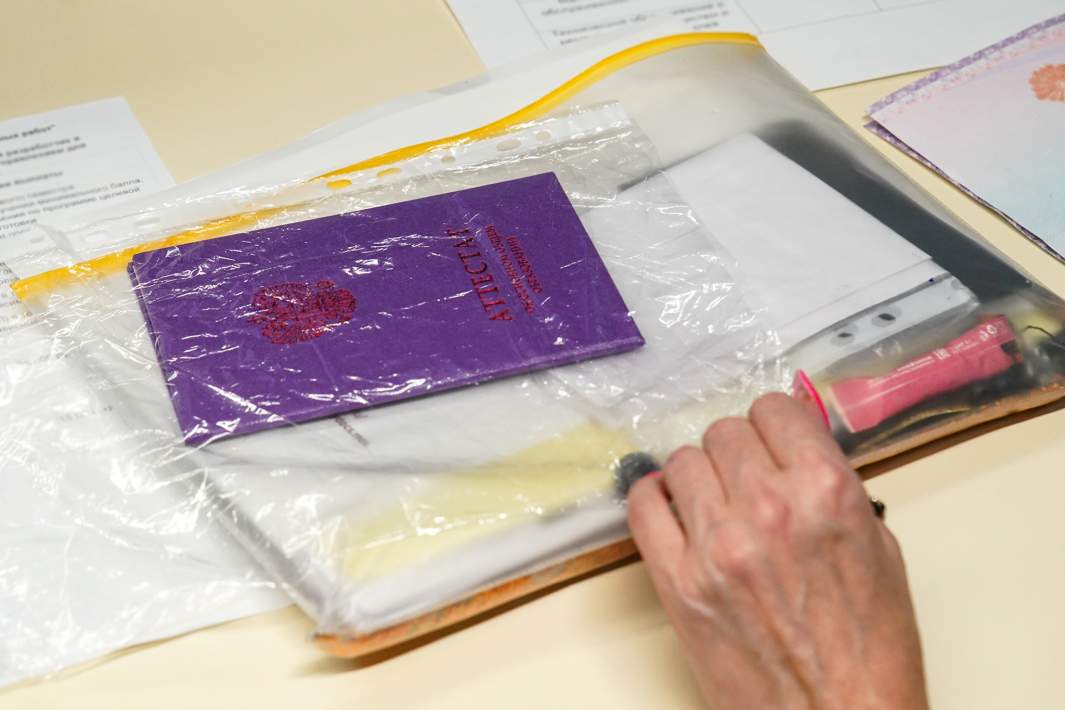
"Our task is to ensure that every young person gets a mentor when they are released, so that we can resolve everyday issues and re—enroll them in school, college, or university," Gurov said.
Mozhaisk women's Colony is one of two educational colonies for girls in Russia, where minors aged 14-18 are kept. This is a small institution, usually there are only a few dozen pupils: in 2024, 36 convicts were reported, and in September 2026, 45 girls who started training this year.
Izvestia sent inquiries to Rosmolodezh and the Federal Penitentiary Service. No responses had been received at the time of publication.
How prisoners are being resocialized in Russia
The Ministry of Justice reminded Izvestia that in February 2023, the federal law "On Probation in the Russian Federation" was adopted in Russia.
Probation is a system of social, psychological, legal and other measures of assistance to convicts and people who have just been released from prison and find themselves in a difficult life situation. The main goal of this institution is to re—socialize, in other words, to return to a normal life in society. Such a system is needed to prevent people who have already served their sentences from committing new crimes, the ministry explained.
"At the same time, not only commercial and non—profit organizations can be involved in probation, but also citizens, including volunteers," the department said.
There are three types of probation in total: executive — for those who have been convicted without real terms, penitentiary — for those who are in places of deprivation of liberty, and post-penitentiary. This is just helping those who have been released from prison and are now in a difficult life situation. It has been operational since January 2025.
— Currently, active work is underway to introduce the institute of post-penitentiary probation in all regions of the Russian Federation. The Russian Ministry of Justice monitors this process, including emerging law enforcement practices, which allows for timely adjustments of approaches and increased targeting of assistance to those who particularly need it, the Ministry of Justice noted.
137 probation centers have already been established in the regions with the possibility of staying more than 3 thousand people. The Federal Penitentiary Service maintains a unified register of persons in respect of whom the program is applied.
According to the law, the system is completely voluntary, and this is not a way to control convicts. The main measures are assistance with documents, housing, and employment; assistance in obtaining education; psychological and medical support; and restoration of social ties. Those who apply for probation can also be advised on social and legal issues.
Individual re-socialization programs should be developed in each case. In 2024, the first year when the law was in force, more than 32,000 individual programs for the rehabilitation of convicts were drawn up, the Ministry of Justice reported. And the FSIN stated that those who passed probation had a five-fold lower relapse rate.

What are the problems of the probation system?
In a scientific article, Anna Serebrennikova, Doctor of Law, Professor of the Department of Criminal Law and Criminology at Moscow State University, in 2023, evaluating the adopted probation law, wrote that psychological and educational work inside the colonies was ineffective, since psychologists report to the head of the correctional institution, convicts do not trust them and they do not talk about real problems. At the same time, the professions taught in the colonies were not needed in the labor market: with the skills of an animal breeder, turner, seamstress, carpenter or cutter, a young man turned out to be practically uncompetitive after his release.
The specialist insisted on the appearance of pre-penitentiary (pre-trial) probation, in which people could be helped even at the stage of choosing a preventive measure. But even a good system won't work if people don't trust it, and the help turns out to be formal, Serebrennikova warned.

However, for post-penitentiary probation, a person must declare the need for assistance while still in prison, added Eva Merkacheva, a member of the Presidential Council for the Development of Civil Society and Human Rights.
"And this is a big problem, because many people initially do not declare it, and only later, when they are free, they realize that they cannot cope," she told Izvestia. — In addition, the system stipulates that a person can seek help within just six months of release. But, again, he may not calculate his capabilities: he lived with relatives for six months, they fed him, and then, thinking that he had already adapted, he faced the fact that he could not find a job himself.
Therefore, according to Eva Merkacheva, people should be able to contact the post-penitentiary probation center at any time and receive assistance there.
At the same time, the president of the Interregional Fund for Assistance to Prisoners, a member of the Public Council at the Federal Penitentiary Service of Russia, Suzanna Kirilchuk, stressed that the country has created the necessary legal framework for probation and the key task now is to ensure the full implementation of this law, making assistance really accessible to everyone who needs it.

— Support begins in a correctional facility, and after release it can continue with the participation of penal enforcement inspections, probation centers, NGOs and social services. But in practice, it is important not only to have the opportunity to seek help, but also to understand how clearly the person was explained his rights and the further course of action, — said the interlocutor of Izvestia.
The experience of the foundation, which is visited by more than 300 people every year, shows that it is not enough for a person to simply inform them that help exists, it is important to explain where to go, draw up an action plan and, if necessary, accompany them in the first stages, the expert added.
Young prisoners are a special category
Susanna Kirilchuk calls young people aged 16-25 who find themselves in places of detention a special category.
— It is during this period that life orientations, professional skills and the ability to make decisions independently are formed. Mistakes at this age can have serious consequences, but with timely support, a person has much more opportunities to change their life," she stressed.
According to various estimates, it is among young people that relapses occur most often, although there is no open data on this. In total, in Russia, according to the Judicial Department of the Supreme Court, more than 36.3% of those convicted in 2024 already had an outstanding or outstanding criminal record at the time of the new sentence.

—Young people aged 16-25 often regard the probation system as a continuation of their supervision," Eva Merkacheva noted. — Such a person wants nothing to remind them of the prison system, and for help to be completely separate from it.
According to her, young people are ready to accept support, depending on who offers it, and taking into account how they were worked with in the colony.
— You can give a person what he lacked and why he eventually committed a crime, that is, to increase the level of culture, education, intelligence, empathy. If it is given in an educational colony, then such a young man will be ready to accept help after his release," the editorial interlocutor emphasized.
Is there a need for a mentor institute
Suzanna Kirilchuk noted that she supports Rosmolodezh's initiative to develop mentoring for people leaving the colonies. A mentor is needed not for total control, but to help get through the most difficult transition period, she noted.
— But you can't work with everyone the same way. A minor may need assistance in continuing education, choosing a profession, and restoring family relationships. For a young adult, assistance in finding employment, obtaining housing and forming stable social ties," the expert explained.
Mentoring, according to the president of the foundation, could become part of a sustainable system of assistance: with training of specialists, clear tasks and interaction with educational institutions, employers, psychologists and NGOs. However, such work should be professional.
Eva Merkacheva also noted that the main question is who will be the mentor. This may be a person with "unique experience" — for example, an authoritative person in the world of science or creativity, or a civil servant, the expert believes, without excluding that there may be few such people.

It is important for a young man to see that the specialist who works with him is not going to humiliate him, lecture him or solve everything for him, but is ready to calmly help with a specific problem, Suzanna Kirilchuk emphasized.
She called continuity of support the main condition for successful adaptation: in a correctional institution, a person has a certain routine, access to specialists, the opportunity to study and receive psychological help. After his release, he will face the need to solve dozens of issues on his own. And that's why specific actions work.

— It is especially important that these measures do not exist separately, but form an individual plan for returning to an independent life, — said the editorial interlocutor. — The approach in which a person is simply given a list of addresses and told to "Handle it yourself" almost never works. But excessive care does not solve the problem either. If decisions are constantly being made for a person, they don't learn to act on their own.
Therefore, the task of a specialist who helps a person who has left the colony is not to live his life for the ward, but to help him gradually learn to cope on his own. Successful probation is when a person has acquired skills that allow him to do without constant accompaniment and not return to his previous lifestyle.
Переведено сервисом «Яндекс Переводчик»
