- Статьи
- World
- In the rear of the battle: Europe has become the production base of the Armed Forces of Ukraine

In the rear of the battle: Europe has become the production base of the Armed Forces of Ukraine

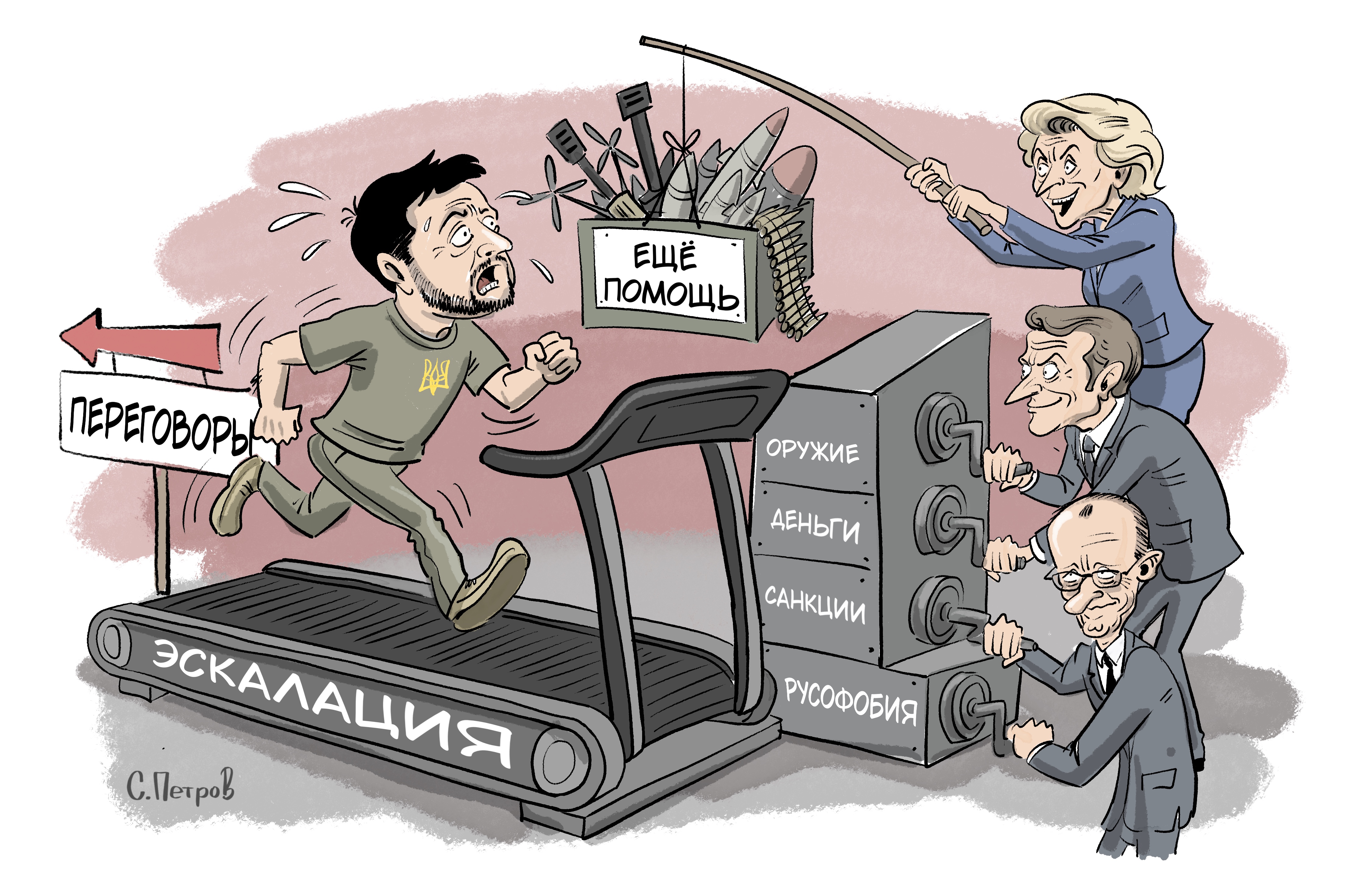
The NATO summit in Ankara fixed the role of the European members of the bloc as the main supply center for Ukraine. Assistance to Kiev in terrorist attacks on the civilian population and infrastructure of Russia makes the countries of the alliance complicit in crimes, the Russian Foreign Ministry stressed to Izvestia. The ministry noted that Moscow will respond to aggressive actions with all available forces and means. Experts point out that the West currently has no way of winning a strategic victory over Russia. Moscow may also change its long-term policy towards the countries that most actively support Ukraine.
The role of the West in the Ukrainian Armed Forces attacks on Russia
Moscow has repeatedly warned NATO countries openly and through diplomatic channels that they become complicit in crimes when they help the Kiev regime and support its attacks on civilians and civilian objects in Russia, the Information and Press Department of the Russian Foreign Ministry told Izvestia. However, the North Atlantic bloc continues to move towards an escalation of the crisis around Ukraine. This has a negative impact on the situation in Europe as a whole.
— We emphasize once again that such adventurous plans and their implementation will have far-reaching consequences. We warn you that the response to aggressive actions against our country will be decisive and destructive for their initiators. We reserve the right to respond to threats against us with all available forces and means," the department said.

Smolenskaya Square drew attention to the fact that the creation of enterprises for the production of drones and their components, as well as other weapons for the needs of the Armed Forces of Ukraine, is a clear step towards prolonging the conflict in Ukraine. In April, the Russian Defense Ministry published the addresses and names of European enterprises that produce drones for the Armed Forces. The military department stressed that the European rulers "by their actions are dragging these countries into a war with Russia." At the time, this caused panic in European capitals, but it did not lead to a change in policy.
Moreover, Western countries are helping Ukraine with intelligence, and the Baltic republics and Finland are providing their airspace for strikes against Russia. Russian Deputy Foreign Minister Mikhail Galuzin noted that Moscow has verified information that Latvia and other Baltic countries provided their air corridors for Ukrainian drones.

The NATO summit held in Ankara finally consolidated the role of Europe as the rear base of the Armed Forces of Ukraine, political analyst Denis Denisov emphasized to Izvestia. The bloc's countries have agreed to allocate €70 billion to Ukraine for military assistance in 2026, with €60 billion of it provided by EU states. Hungary, Slovakia and the Czech Republic refused to finance Kiev, but the main supplies still come from Germany, Great Britain and the Nordic countries.

What kind of missiles does Europe supply to Ukraine
It is these states that actively provide long-range weapons to the Armed Forces of Ukraine. In particular, Britain is transferring Storm Shadow missiles to Kiev, which struck Bryansk in March, killing eight people. The French equivalent of this rocket, the SCALP-EG, was also transferred to the Ukrainian Armed Forces. Germany has not yet supplied its Taurus missiles to Ukraine, but it is actively helping the Kiev regime with drones, as Izvestia previously reported. The Europeans also participated in the creation of the Flamingo rocket. For example, the guidance system was developed by the French company Safran Electronics & Defense, Le Monde reported.

Despite the sharp reduction in gratuitous aid, the United States does not deny Ukraine military support. At a meeting with Vladimir Zelensky in Ankara, Donald Trump announced that the United States would transfer to Kiev a license for the production of Patriot anti-aircraft missile systems. The American media claim that this decision will make it easier for Washington's competitors to gain access to American military secrets.
The United States generally welcomes the attacks by the Ukrainian Armed Forces on Russian infrastructure. The Financial Times reported that American intelligence assistance plays a key role in ensuring the accuracy of Ukrainian attacks on Russian factories. According to the newspaper, satellite images and operational data from the US special services are used by Kiev to adjust the trajectories of drones and overcome electronic warfare and air defense systems.
Moscow is well aware that Washington continues to supply weapons and military technologies to Kiev with might and main and "does not wear rose-colored glasses," said Dmitry Peskov, the press secretary of the President of the Russian Federation. At the same time, the United States says it wants to participate in resolving the Ukrainian issue. Moscow is ready for dialogue: a new telephone conversation between the presidents of the Russian Federation and the United States may take place in the near future.

Nevertheless, Russian Foreign Minister Sergei Lavrov said: Moscow will no longer believe the West that it wants negotiated solutions on Ukraine. He only imitates his readiness for negotiations on Ukraine, but now he has openly begun to issue ultimatums to Russia.

Risks of escalation of the conflict in Ukraine
The Kremlin emphasizes that the strikes will only lead to Russia increasing the security zone on the border with Ukraine. Earlier, Vladimir Putin said that buffer zones were being created in Kharkiv and Sumy regions. The purpose of such measures is to protect the civilian population. The President also noted that the Russian energy system has a high margin of safety, despite the attempts of the Kiev regime to damage the economy.
In any case, the fate of the Ukrainian conflict is being decided on the line of contact, and the Russian Armed Forces continue their offensive. In early July, they liberated Konstantinovka, one of the most fortified settlements in Donbass. Military experts see this as a strategic success that will bring the liberation of the Donetsk People's Republic, about 15% of whose territory is still occupied by the Ukrainian Armed Forces.

A strategic victory over Russia is impossible, no matter "how many Western drones Ukraine sends against Russia," Olli Kotro, adviser on international affairs and EU relations at the Finnish Alliance for Freedom party, said in an interview with Izvestia. According to him, in order to support Kiev, the EU is forced to increase its debts, especially poor countries suffer from this. At the same time, most Western states understand the need to restore relations with Russia, Kotro stressed.
In early July, Russian President Vladimir Putin ordered an analysis of the involvement of each instigator to the continuation of the conflict in Ukraine. According to him, this analysis is necessary for possible responsible decision-making in the future. We may be talking about a long-term policy towards the countries that most actively support Ukraine. In particular, Moscow has already announced that it is capable of stopping energy supplies to the European market.

The new NATO aid package for Ukraine shows that supporters of a peaceful settlement have failed to become the dominant force in the Western camp. Cash injections are likely to prolong the conflict and delay peace talks. The last meeting of the delegations of the Russian Federation, the United States and Ukraine took place in February 2026 in Geneva. The NATO summit in Ankara showed that apart from the United States and several European countries, no one is going to push Kiev to resume the peace process.
Переведено сервисом «Яндекс Переводчик»
