
There is no better world: how fear expands and contracts the reader's soul

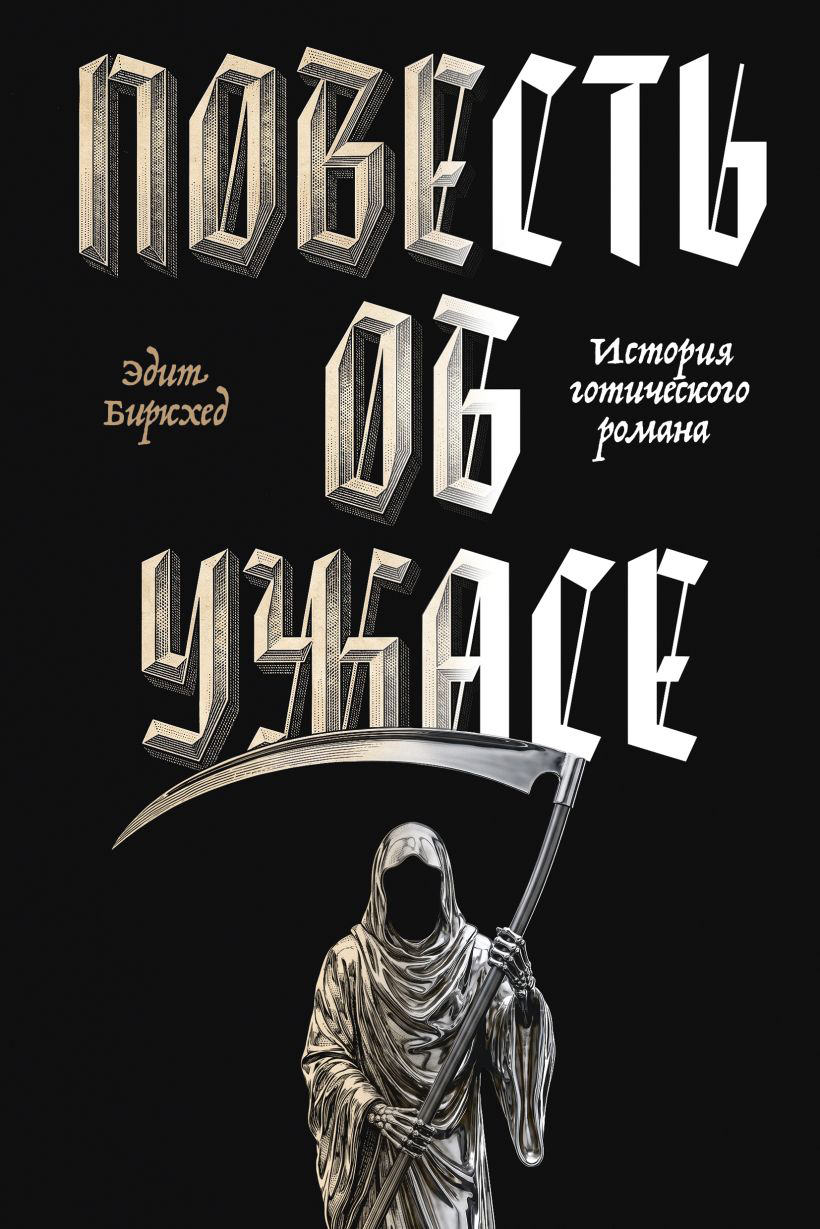
Published in 1921 and first translated into Russian, the study of the evolution of the Gothic novel, undertaken by Edith Birkhead, an employee of the University of Liverpool, is considered the first large-scale study of the genre, which then caused ridicule in intellectual circles (and even now it is able to amuse people with a keen sense of humor). The author of the study, however, managed to maintain a balance between irony and respect, as evidenced by numerous reprints. Critic Lidia Maslova presents the book of the week, especially for Izvestia.
Edith Birkhead
"A tale of horror. The history of the Gothic novel"
Moscow: Individuum, Eksmo, 2026. Translated from English by V. Salmin — 320 p.
In her monograph, which does not pretend to be a comprehensive coverage of the material, she was guided by the "high canon of literary Gothic," as philologist Oksana Razumovskaya clarifies in the accompanying article. To understand this canon, it is important to distinguish between two types of horror, designated by the words terror and horror. The first is included in the title of Birkhead's book — meaning "a sublime kind of fear that causes vague, lingering anxiety," as Razumovskaya defines it, while horror is a rougher, often physiological feeling that arises from a direct encounter with a source of fear combined with disgust. This dichotomy was outlined by another of the founders of the genre, Anna Radcliffe, who believed that terror "expands the soul", while horror, on the contrary, "compresses and almost destroys" it.
Birkhead's monograph devotes the second chapter, "The Novel of Tension," to the work of Mrs. Radcliffe (whose main distinguishing feature was the persistent explanation of initially frightening supernatural phenomena for banal rational reasons). Radcliffe is one of the end-to-end characters of the entire book, as is Horace Walpole, to whom the first chapter, "The Beginning of a Gothic Novel," is devoted to The Castle of Otranto (1764).
These two key figures somehow periodically arise in the analysis of different samples of the genre. The researcher manages to present the Gothic novel in its development as a kind of unified whole, a living organism. Different parts of it are interconnected, and many writers now and then, willingly or unwittingly, send a kind of "greetings" to each other, even if they are separated by a considerable time distance. This sense of unity is often achieved by a rather ingenious device, when Birkhead suggests looking at one work through the eyes of another character.
Thus, describing the castle of Otranto, the central element of the novel of the same name, which in itself creates an atmosphere of horror ("underground vaults; poorly fitting doors with rusty hinges; lamps that easily go out in the dark; secret door"), Birkhead notes that such a dwelling would ideally suit Cherubina from the satirical novel by Ethan Stannard Barrett "Heroine, or The Adventures of Cherubina" (1813-1814), parodying the cliches of the Gothic novel and sentimental literature. Carried away, Birkhead further transforms herself into the picky Cherubina, looking through her eyes at the shortcomings of the Castle of Otranto: "She would probably complain that the author failed to fully unleash the potential of supernatural elements embedded in the narrative."

Cherubina, a full-length seeker of eccentric adventures, and her sarcastic creator unfold in the middle of the book, in the chapter "Parodies of a horror Novel." Here, an analysis of parody techniques allows us to create a concise encyclopedia of the signature attributes of the Gothic genre, highlighting its concentrated extract: "Barrett does not miss a single detail of the Gothic canon: bandits and condottieri, whose appearance enlivened so many novels, are replaced by a gang of Irish thugs; Rousseau's theories are parodied without any reverence. Thunder thunders "in a terrifying manner, like Ossian's"; the sun, "that famous gilder of the eastern towers,"rises in purple splendor, the hero bursts into terrifying curses and spews superlatives and carefully constructed phrases in the spirit of Johnson, and the heroine excels at brilliant witty answers, wears "sparkling silk", "stumbles, slips He flutters and walks unsteadily."

Such a comical collage of scraps torn by an indefatigable male hand "from a fragile tapestry of romance" is capable, according to Birkhead, of pleasing even a reader unfamiliar with the parodied primary sources. The same chapter demonstrates how well a female hand (in the company of a mocking mind) can cope with the dissection of the Gothic canon: we are talking about the ridiculing exaltation of Gothic novels "Northanger Abbey", which Jane Austen completed two years after Anna Radcliffe's extremely successful composition "The Italian, or The Confessional of Penitents dressed in Black."" (1797).
By itself, this double name can both set up an appropriate solemn mood and provoke a grin, and later Birkhead gives an armful of examples of the spectacular naming inherent in the Gothic genre: "Twelve O'clock, or Three Robbers," "The Monks of Cluny, or the Monastery of Castle Acre," "The Tomb of Aurora, or the Mysterious Challenge.", "The Mysterious Spaniard, or the Ruins of St. Luke's Abbey", "Barbastal, or the Wizard of the Forest of the Bloody Ash". This list is presented in the chapter "Short Tales of Horror," which provides a concise summary of the genre's evolution from the eighteenth century to the nineteenth: "The Gothic novels of Walpole, Miss Reeve, and Mrs. Radcliffe appealed to their readers for their freshness and novelty, but by the end of the century, in the speeches of Isabella Thorpe and Catherine Morland from Northanger Abbey, we notice a thirst for more intense emotions."
Radcliffe, who retired from writing after "The Italian," according to Birkhead, probably despised the "vulgar success" of such works as "The Monk" by Matthew Gregory Lewis, whose numerous imitators "began to cook a thick, rich mixture of horrors, like a witchcraft potion in a cauldron." In 1820, the author of the famous "Melmotte the Wanderer", the Irish priest Charles Robert Maturin, was able to rehabilitate the genre a little, tearing it out of the hands of commercial hacks and filling it with psychological depth. Birkhead describes him as a great original and the hero of many anecdotes generated by his unusual habits: "His craving for frivolous society, attention to his appearance (dapper clothes, dancing skills) and desire for creative self-realization suggest that writing became for him a form of resistance to the rigid canons prescribed by the Protestant clergy."

However, in addition to deepening the psychological component, which the Reverend Charles Maturin succeeded in Melmoth, the authors of the Gothic genre soon found an easier way to quench the reader's thirst for thrills: "Innovative writers realized that five pages of a short story can contain as many experiences as five volumes of a Gothic novel." The Gothic novel has moved into a new aggregate state and has found a comfortable niche in the form of brightly illustrated pamphlets with short stories. The pages of these periodicals were, as Birkhead put it, "a mix of graves and fun," which made reading easier for an audience tired of dark intrigues and unsolved mysteries.

Thanks to Birkhead, Walter Scott, the creator of serious historical epics and romantic chivalrous novels, may open up to someone from an unusual side. Birkhead recommends his "Willy the Wanderer's Tale" as an exceptionally crafted masterpiece of the supernatural horror genre. Scott's keen interest in the otherworldly was not at all painful, psychopathological in nature, as proof of which Birkhead cites the case when the writer quietly spent the night in a double hotel room, where the deceased was located on the next bed. This composure probably allowed Scott to develop a sound and humorous approach in literature, which Birkhead suggested a century ago (and which may be useful even to modern adherents of the supernatural): "Ghosts should not appear too often or indulge in excessive chatter. A magician has no right to summon spirits if he is unable to endow them with manners and speech befitting their supernatural nature. Thoroughness and abundance of small details—in a word, some prosaicism—is probably the secret key to gaining listeners' trust in ghost stories."
Переведено сервисом «Яндекс Переводчик»
