Art Technology: why it's worth going to the Magnificent Hermitage exhibition in the New Manege
- Статьи
- Culture
- Art Technology: why it's worth going to the Magnificent Hermitage exhibition in the New Manege


The Magnificent Hermitage exhibition has opened in Moscow's New Manege, and this is the case when you need to go not so much for an impression of the classics as for an intellectual experiment. With the support of Interros, the museum space has become a laboratory where academic art enters into a dialogue with digital art. There is no place for old-school snobbery and no fear of the advent of neural networks. And there is an honest conversation about how high technology gives the classics new optics. At the same time, business becomes a full-fledged participant in the process of cultural transformation.
Answers or questions
For many years, Interros has been building its patronage trajectory as an intellectual activity. This is a fundamentally different position: they don't just write checks for the implementation of exhibition projects, but they comprehend what is happening with art right now.
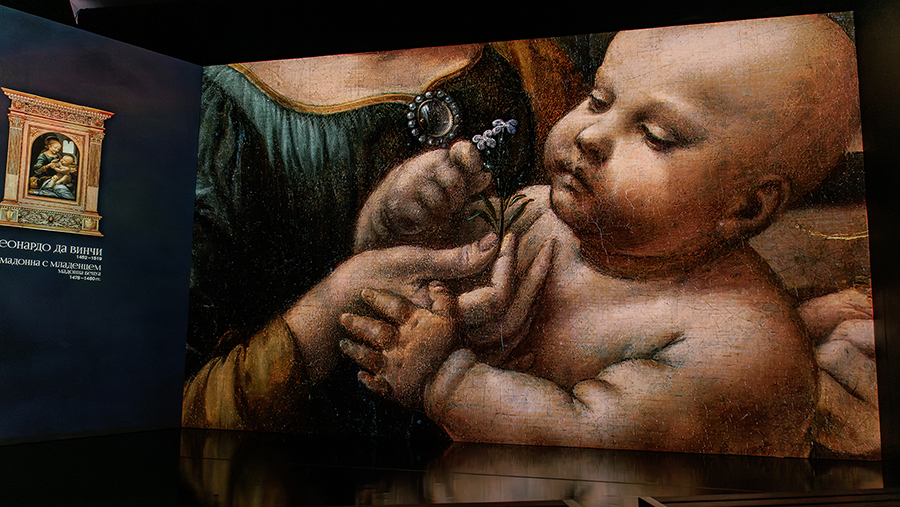
The Magnificent Hermitage exhibition in the New Manege is a vivid illustration of this thesis. Contrary to the stereotype that numbers simplify great paintings, the project demonstrates the opposite: modern technologies are able to reveal those nuances, details of the original that are not visible even in a museum. Or transform the work in such a way as to reveal it in a new way. We are not talking about literally translating painting into 3D graphics for the sake of attraction. This is co-authorship at the level of meanings.
But won't these new meanings kill the work itself? The creators of the exhibition do not make a final verdict. There are no ready answers at the Magnificent Hermitage exhibition, but there is an invitation to reflection. Instead, the viewer is offered a unique experience: see how digital "doubles" of masterpieces and multimedia installations change our perception, and decide for yourself. Let's just note that the careful treatment of the artifact here is guaranteed by the Hermitage itself: modern formats do not replace the exhibit, but enter into a complex dialogue with it.
— It's still an undeveloped art form. Moreover, we will soon have to think about how to distinguish between digital art created by artificial intelligence and human-made art. Which of these should be recognized as art objects and which should not? Who will be the judge? We are waiting for a lot of interesting revelations in this regard," said Vladimir Potanin, founder and president of Interros.
This approach correlates with the broader paradigm that partner structures are developing, in particular by actively opening up new areas at the intersection of high technology and art. Take, for example, the topic of blockchain and art tokens. It would seem that what does cryptography have in common with paintings by old masters? The right to immortality is common.
Thus, the Hermitage, in cooperation with Interros, was the first Russian museum to issue tokens (analogous to NFT, but without dependence on Western cryptocurrency exchanges) linked to masterpieces from its collection: anyone could purchase unique digital versions of these rarities, including those showing objects before or during restoration, that is, in in a way that no one else will see them. The result was not only the popularization of cultural heritage and the testing of innovative approaches to museum work, but also the income that allowed financing the restoration of Rembrandt's painting "Flora".
When Interros initiates or supports projects to tokenize cultural heritage, it is about creating a new, decentralized model of ownership of beauty and responsibility for its preservation. This is the very transformation where businesses reflect on a new form of art and a form of access to it, making collecting and patronage transparent and modern.

Patronage + technology
The peculiarity of the current project in the New Manege is that cultural support here is not limited to traditional methods and sponsorship tools of the 20th century. Interros helps a great institution to experiment, creating an environment in which a state museum on the scale of the Hermitage can afford a complex dramaturgy of digital storytelling. This is an intelligent responsible business in action: it does not take away the museum's function of storing eternity, but adds to it the opportunity to reflect on the future.
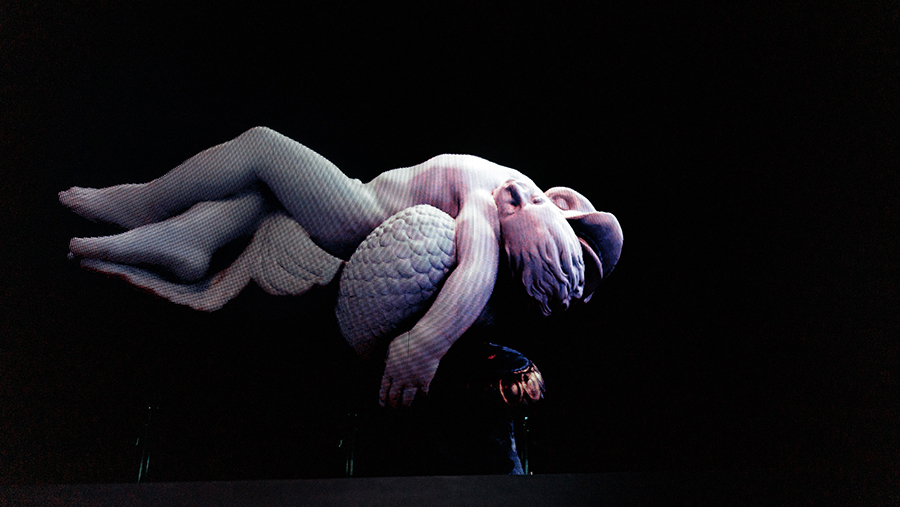
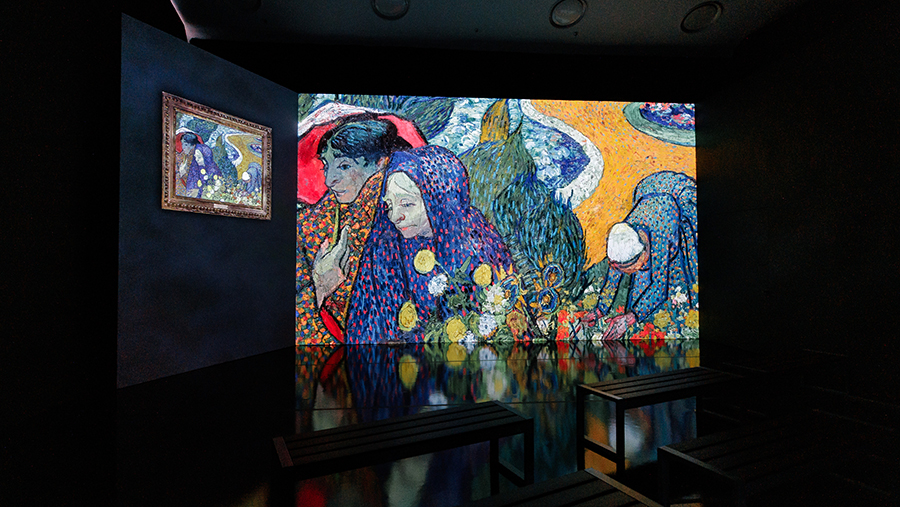
The exhibition has become a space where the traditions of patronage meet with the high-tech formats of the future. This is a kind of manifesto: academic art can and should be carefully maintained, including with modern tools. It is important that the technological solutions here are hidden in a semantic shell. They work to deepen perception: in some cases, the algorithm allows you to view craquelures that are inaccessible to the eye, to see the famous museum stairs in a way that ordinary visitors cannot see them; in others, a digital avatar gives a new life to a historical character.
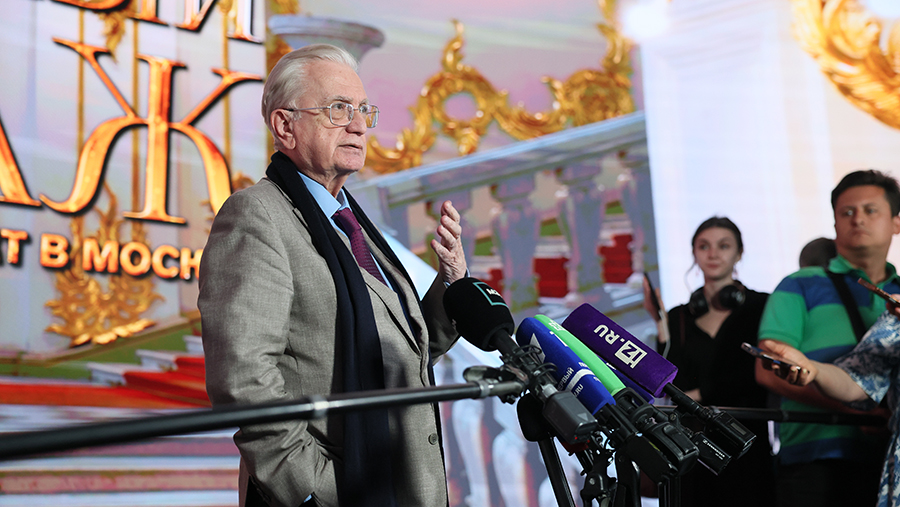
— In this exhibition, all existing new technologies of telling about the museum outside its permanent space are played out, as well as some technologies of the future are outlined. The viewer participates in a rich feast for the eyes and mind," said Mikhail Piotrovsky, General Director of the State Hermitage Museum.
The Magnificent Hermitage, with the support of a large intellectual business, proves that patronage today is an opportunity to ask questions that humanity does not yet have answers to. And while classical statues cast digital shadows on the walls of the New Arena, it becomes obvious that art is not dying, it is waiting to be translated into a language understandable to a new generation. And this transfer is impossible without those who are willing to invest not only funds, but also their own technologies and business approaches in the development of the cultural code of the nation.
Переведено сервисом «Яндекс Переводчик»
