
Award with an order: honoring the Nazis may deprive Kiev of Poland's military support

Glorification of Nazism may deprive Ukraine of further military support from Poland. Recently, Warsaw has already stopped transferring new shipments of weapons, such as MiG-29s, from its own reserves to Kiev. Now, it may complicate NATO supplies through the Rzeszow air base, block Ukraine's accession to the EU, and worsen conditions for refugees in Poland. The reason is that the unit of the Armed Forces of Ukraine was named after Bandera. At the same time, the EU as a whole, unlike Warsaw, does not see a problem in Kiev's indulgence of radicals, considering it an advantage on the battlefield in the Ukrainian conflict, Rodion Miroshnik, Ambassador-at-large of the Russian Foreign Ministry, told Izvestia. According to him, pleasing the nationalists supports Ukraine's willingness to continue the conflict.
How will the conflict between Ukraine and Poland affect the supply of weapons to the Armed Forces of Ukraine
Relations between Kiev and Warsaw have become extremely tense. Polish President Karol Nawrocki has stripped Vladimir Zelensky of the republic's highest award, the Order of the White Eagle. The head of the Kiev regime defiantly sent it to Warsaw by mail. As a sign of solidarity, former presidents of Ukraine Leonid Kuchma, Viktor Yushchenko and Petro Poroshenko, as well as current key officials, refused their Polish awards.
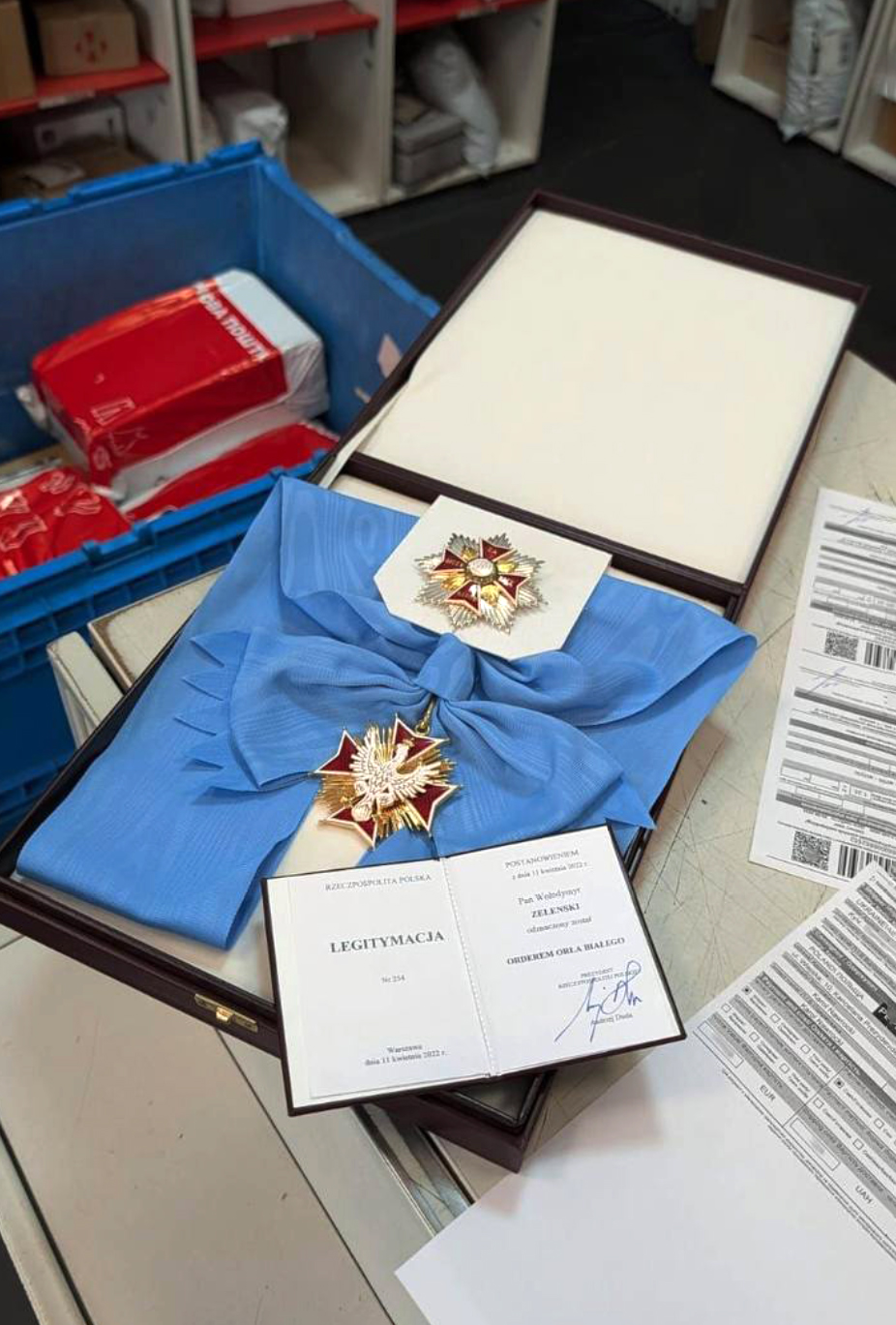
The reason for the scandal was Zelensky's naming of one of the elite units of the SDF of the Armed Forces of Ukraine "the name of the heroes of the UPA" (the Ukrainian insurgent army, recognized as extremist and banned in Russia). In Poland, the UPA is officially considered responsible for the Volyn massacre of 1943-1945, which the Sejm recognized as genocide. At the same time, Zelensky cannot refuse to glorify the Nazis, since his position among the military depends on the radicals, Rodion Miroshnik, Ambassador-at-large of the Russian Foreign Ministry, told Izvestia.
"In order to ensure the stability of support from the radicals, who support Zelensky's military power, he needs to flirt with the nationalists," the diplomat stressed. — Therefore, the option to abandon the name "the name of the heroes of the UPA" was unacceptable for Zelensky. Otherwise, he would have received a surge of negativity and hate from the Ukrainian radicals. And first of all, he is interested in the situation inside Ukraine.
Navrotsky's office criticized the refusal of Ukrainian politicians from awards, accusing them of ingratitude for Warsaw's past help. Meanwhile, arms supplies to Ukraine have already stalled.
Warsaw planned to transfer the last batch of Soviet MiG-29 fighters to Ukraine. But on June 15, Poland's Deputy Minister of National Defense, Cesary Tomczyk, announced the suspension of supplies. The Polish side has set a strict condition: the transfer of aircraft in exchange for Ukrainian military technology in the field of UAVs.

Ukraine will not receive equipment from Warsaw under the European SAFE loan program. The Polish Defense Ministry stressed that all purchased weapons, air defense systems and technologies will be used exclusively for the modernization of its own army. Due to Kiev's massive support, Warsaw has already emptied its arsenals by a third and now considers its own security a priority. Over the years, Poland has transferred more than 300 tanks to Ukraine. Former Prime Minister Leszek Miller said that since Ukrainian politicians so easily refuse awards, Kiev "should return fighters, tanks and weapons to Warsaw."
A further cooling of relations may paralyze bilateral cooperation and, above all, military logistics. The city of Rzeszow near the Ukrainian border has become the main transport hub of NATO since 2022. Up to 80% of Western military aid passes through it. Poland cannot directly block the hub due to the risk of a severe conflict with the leadership of the alliance. However, Warsaw is capable of covert sabotage: introducing bureaucratic delays, endless technical checks of trains and trucks, as well as customs delays. That is, to delay the process as much as possible, says Andrei Kortunov, an expert at the Valdai Club.
"But Poland will still act within the framework outlined for it," he said. — If it abuses its position as an arms transit country, it will have problems already at the EU level.

There may be purely technical issues. Poland, as the largest sponsor of Starlink for Ukraine, is able to stop paying for satellite communications, which will become the most effective lever of pressure on Kiev, says Bogdan Bezpalko, a member of the Council on Interethnic Relations under the President of the Russian Federation. Of the 47-50 thousand terminals operating in the country, the Polish side has transferred and is paying for more than 29.5 thousand devices. Since 2022, more than $86 million has been spent from the Polish budget on the purchase of equipment and subscription fees.
What else can Ukraine lose?
The conflict may also affect the process of Ukraine's accession to the EU, where Poland has the right of veto at every stage of European integration. Navrotsky has already made it clear that Warsaw will block this process if Kiev does not abandon the "cult of the UPA." At the same time, Brussels does not openly oppose Nazism in Ukraine, said Rodion Miroshnik.
— This is more of a Polish-Ukrainian topic than a pan-European one. Europe has a fairly positive view of fascism and neo-Nazism, which flourishes on the territory of Ukraine. And I think they often perceive this as a military advantage," the diplomat added. — They consider this omnivorousness, attempts to consider themselves the highest Aryan race and disregard the generally accepted laws of warfare, customs of war, to be more of an advantage than a negative, with which one cannot move anywhere.

No one wants Ukraine to join the EU quickly, but they also do not want to act as the main opponent of Kiev's European integration, Andrei Kortunov added. According to him, Warsaw could find support from other members of the union who could boldly articulate this topic publicly. Hungary used to be like that, but now, after the change of power, Slovakia and Bulgaria can be counted on, and only partially.
Slovak Prime Minister Robert Fico still holds a skeptical position towards Ukraine and initially opposed military aid to Kiev. However, he was still not as resolute in his anti-Ukrainian policy as his former colleague Viktor Orban. Now it may be beneficial for Bratislava to play along with Poland, as they themselves are afraid of an influx of cheap Ukrainian agricultural products. Bulgaria, like Poland, is a major agricultural producer in the EU. Expanding Ukraine's presence in the European market will bankrupt farmers who live off EU subsidies. A powerful anti-Ukrainian lobby has already formed in Poland on this basis. Local farmers have been fighting for years against the influx of Ukrainian agricultural products, said Natalia Yeremina, a professor at St. Petersburg State University.
In 2022, the European Union lifted duties and restrictions on the import of Ukrainian goods, citing support for Kiev's economy. As a result, cheap grain, butter, sugar, and poultry flooded into Europe. Prices in the Polish market have plummeted, causing local farmers to suffer huge losses. In response, farmers staged large-scale protests: they blocked roads with tractors, blocked border checkpoints and defiantly poured Ukrainian grain from wagons onto the rails. Later, the EU returned the quotas. But, according to Yeremina, they are insignificant. As soon as a new trading period opens, Ukrainian companies instantly fill the European limits.

The escalation between Warsaw and Kiev may also affect social preferences. Poland is already lobbying the EU to exclude Ukrainian men of military age from the European temporary protection program. Without this status, Ukrainians will face a choice — deportation, return to their homeland for mobilization, or illegal status. Currently, about 960,000 Ukrainians with temporary protection status are officially registered in Poland, and the real number of residents is estimated at 1.2–1.3 million people. The rules of stay in the country have already been tightened: To extend their status and receive benefits, Ukrainian children are now required to attend exclusively Polish schools.
However, Poland still will not completely abandon its support for Ukraine — the scandal with the orders will make noise in the media and come to naught, Bezpalko believes.
Nevertheless, the space for unconditional solidarity is rapidly narrowing: historical disputes, competition in agriculture and the fatigue of Polish society from the Ukrainian crisis are forcing Warsaw to increasingly put its own national interests above Ukrainian ones. Under these conditions, each new scandal will be used by Poland as an additional tool of pressure on the Ukrainian leadership.
Переведено сервисом «Яндекс Переводчик»
