Zobmi in the box: the author of "Train to Busan" has introduced a new zombie horror


The director of the iconic "Busan Train," Yong Sang-ho, returns to the theme of the zombie apocalypse. "Colony" tells the story of a terrorist scientist who deliberately infected a crowd of people with a zombie virus. After the premiere at the Cannes Film Festival, the release became the most successful start of the year at home, where it managed to raise $33 million in three weeks. It's officially coming out in Russia this weekend. Izvestia tells us what happened at the Colony and what didn't work out very well, and what Michael Jackson has to do with it.
The philosophy of the new horror
When you start watching Colony, it seems like there's a political metaphor hiding behind the zombie apocalypse. The venue is a skyscraper, where a new biotech project is being presented. We are immediately made aware that this project is being led by predatory capitalists who prefer to cynically go over each other's heads and devour each other much more effectively than the unfortunate zombies. On the eve of the conference, a mad scientist, Dr. Soo Young-chul, calls the police and threatens a terrorist attack. He's going to attack the conference with biological weapons, and he's the only one with the serum, or rather, he's the only one with it, so if he's killed, the situation will spiral out of control.
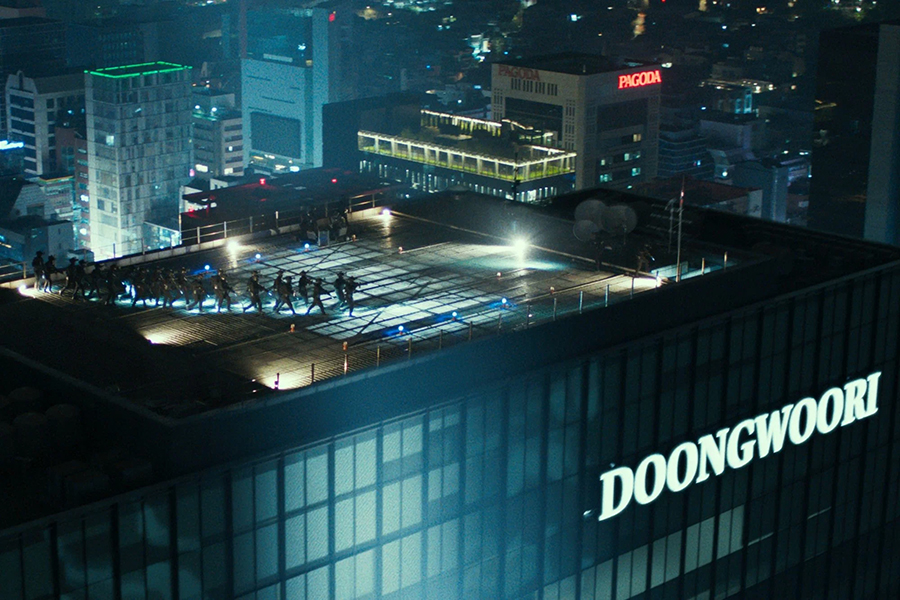
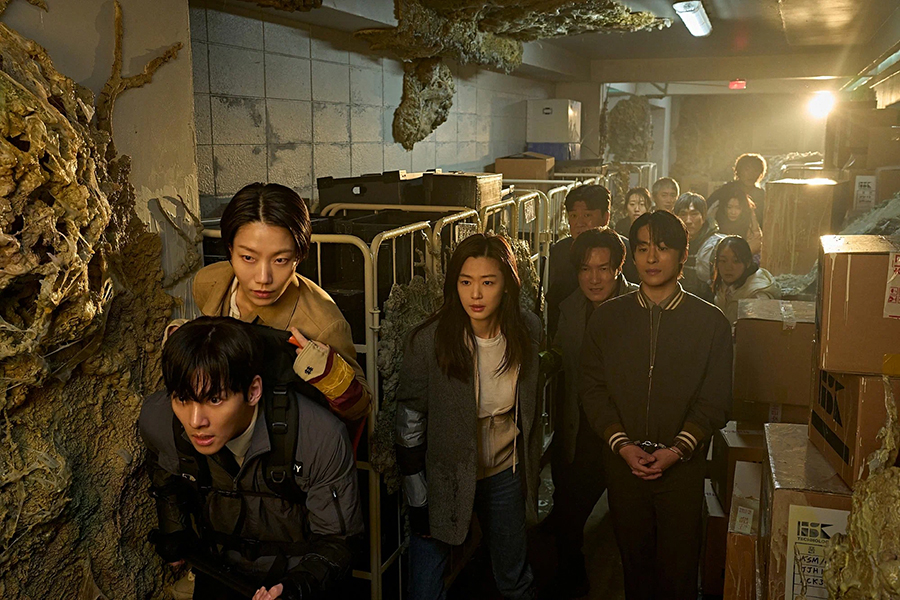
When Soo Yong-chol launches a zombie virus in the building, the skyscraper is immediately blocked by the police, but there are still several uninfected people inside among the raging living dead. They need to unite and break out, but the main problem will not even be the lack of team spirit: the audience is too diverse. Something else is worse. Zombies evolve rapidly and learn to communicate telepathically with each other. And Soo Yong-chol sees through their eyes and hears through their ears, controlling this mass madness.
Of course, you can't help but decipher the message of the movie. Let's say there's capitalist zombie farming, where money, success, and power drive the masses crazy, and the elite takes advantage of it. But totalitarian zombification is coming to replace it, when everyone is like one, and the leader is at the head. The mass becomes a single entity, a fist that breaks through any obstacle, and if there is a synchronous exchange of experience between everyone and everyone, such a breed of new creatures with a ruthless leader becomes a new stage of evolution. "What can you oppose to this power, only the right to be an outcast?" one of the characters asks sarcastically. However, the collective mind is still vulnerable, it just has different weaknesses than individualism.
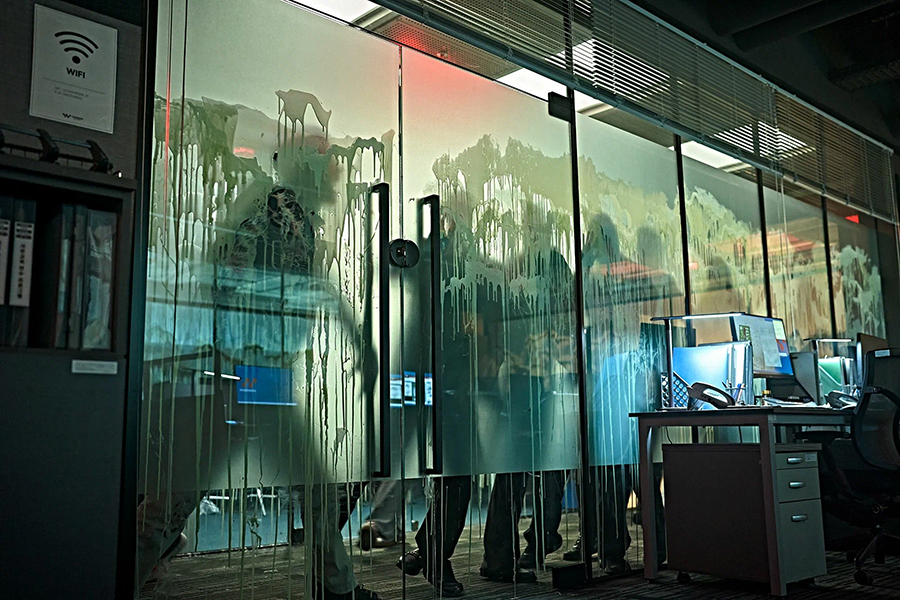
Here, the authors of the film even made some witty remarks. For example, when everyone is in sync, creativity and any creative idea in general are replaced by copying, parodying, and aping. There are some great episodes in "Colony," for example, when a brother drags a non-walking sister on his back, and the zombies probably decide that this is a fighting technique and start carrying each other on their backs, too.

The Deadly Dances of the Colony
The film thus has a philosophy, and it greatly enlivens a completely schematic plot and a system of characters, which are also given for the most part very approximately. Perhaps this can be attributed to the distinctive feature of the parable — so that the details do not interfere with following the main idea.
Yong Sang-ho is very cruel towards both the characters and the audience. Those who, in theory, should have survived die here, and they often die stupidly, incompetently, unexpectedly. He very accurately shows the logic of officials who least of all think about saving infected people or fugitives. They are interested in who will be the scapegoat in the event of an unsuccessful assault or the spread of the virus. It's like the world is asking for an evil genius to punish it. To be honest, the audience's sympathies here will be on the side of the zombie masses no less often than in Apple's hit "Out of Many," with which the film is rightly compared, as well as with "Some of Us."
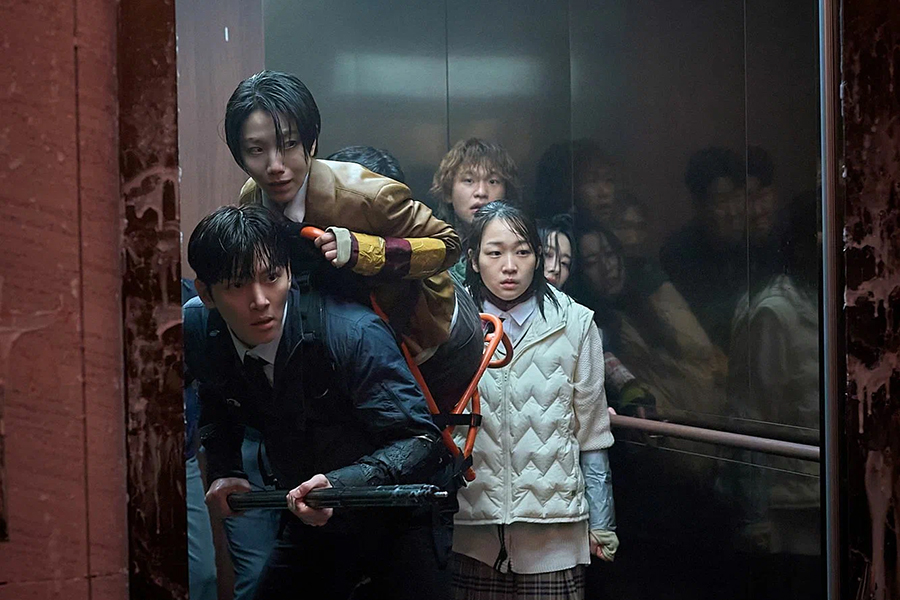
The most touching characters are the already mentioned brother—guard (Chi Chang-wook) and his wheelchair-bound sister (Kim Shin-nok). There is also a very cute elderly athlete, a not too heroic policeman, a wayward but very talented female scientist, who, according to the habits of zombies, must expose the bioterrorist's plan. It's not always possible to connect to these characters, and the film lasts two hours, you can't get far on philosophy alone.
That's why Yong Sang-ho decided to push the choreography of zombies. She's beautiful. The walking Dead here move like they're learning it from scratch. If at first they move jerkily, jump like animals and think poorly, then gradually their movements become smooth and meaningful. As long as they can't be mistaken for ordinary people from afar. But what is even more interesting is that the choreographers have achieved a special effect when the zombies do not duplicate each other's movements and still act in a single rhythm, as if this is not a horror, but a recording of modern dance. Perhaps the creators of "Colony" were inspired by Michael Jackson's "Thriller" or real contemporary, but it is impossible to break away from this spectacle. And it completely redeems the insufficient elaboration of the script and dialogues, which are too formulaic not to cause irritation at times.
It is not yet clear whether "Colony" will become a global hit and breakthrough like "Train to Busan." But this zombie apocalypse definitely won't get lost among the competition. The Korean audience is so excited that they chose it over the long-awaited sequel "The Devil Wears Prada," which has been at the top of the national box office for several weeks. Following the results of the Cannes film market, it was sold to 120 countries, including Russia, and among the Cannes premieres of 2026, this is the first to be released in our cinemas. We love zombie movies as much as we do in South Korea.
Переведено сервисом «Яндекс Переводчик»
