
Seasickness: the cost of shipping goods from the UAE to Russia is breaking records

The cost of shipping goods from the UAE to Russia (the port of Novorossiysk) has almost tripled from February to early June. According to market participants, import freight may rise in price by about 6% in July. The reason is the redirection of part of the cargo flows through the ports of Oman and Saudi Arabia, which faced congestion. Against this background, the delivery time increased to 35 days, and the demand for transportation decreased by about 30%, logistics companies told Izvestia. How the situation affects consumers and the cost of which goods may be affected by an increase in transportation costs is described in the Izvestia article.
What happens to shipping prices
During the period from February to early June 2026, sea transportation from Jebel Ali (UAE) to Novorossiysk increased 2.7 times in price to $10,360 per 20-foot container (TEU). The cost of shipping a 40-foot container increased almost 2.8 times and reached $14,270, subject to FILO delivery (loading at the port of departure is carried out at the expense of the shipper, and unloading at the destination is included in the cost of shipping services), Sovfracht told Izvestia.

At the same time, they clarified that tariffs for the sea transportation of goods in the spring changed upward on an almost weekly basis, and the difference and spread of rates depending on the lines and route during this period were quite large.
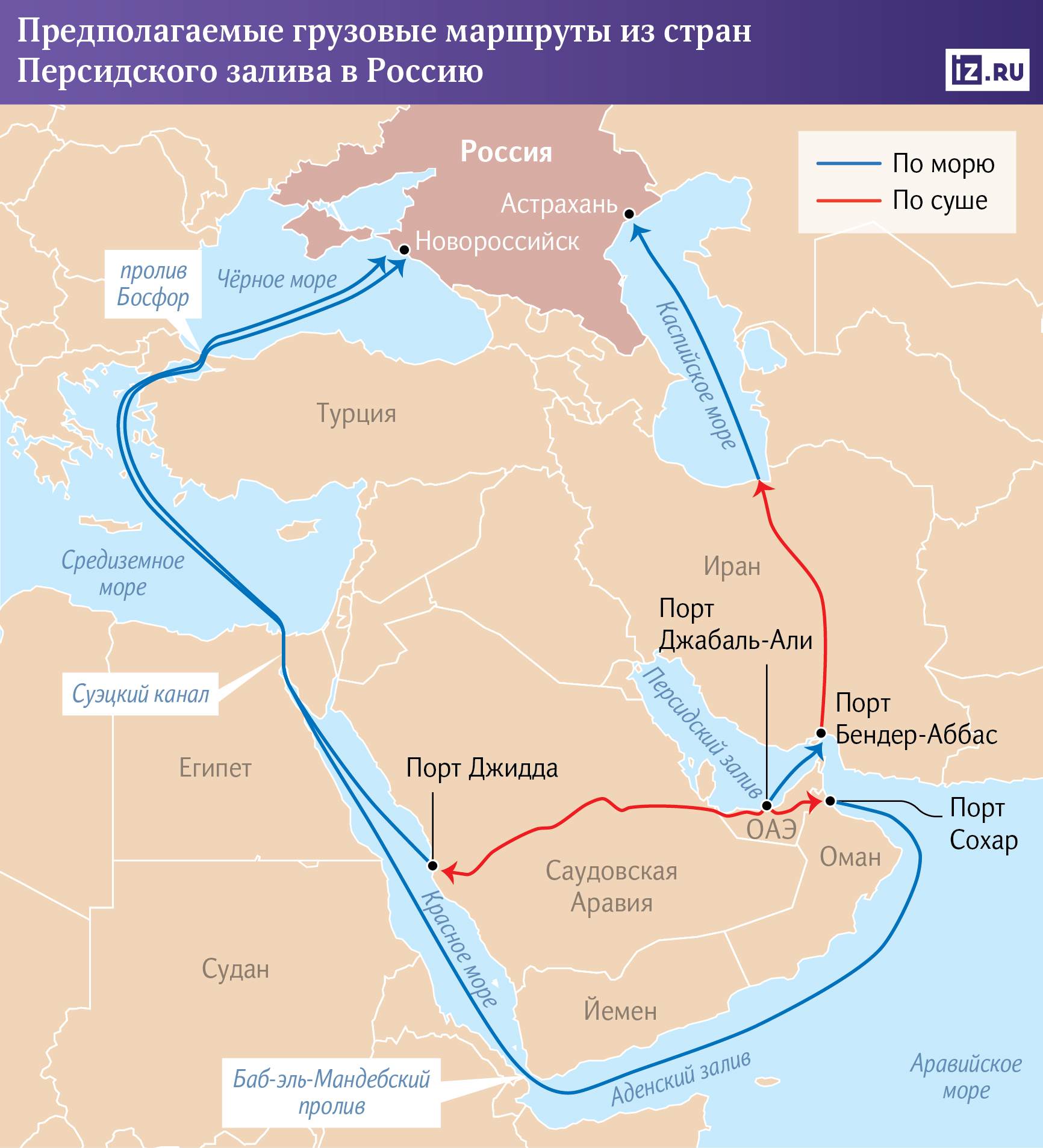
The company also explained that currently transportation from Jebel Ali to Novorossiysk is carried out through the port of Jeddah in Saudi Arabia, located on the coast of the Red Sea. As a result, the goods are first delivered overland through the kingdom, then loaded onto ships in Jeddah and then proceed to Novorossiysk through the Suez Canal and the Bosphorus Strait.
"Almost all container lines have announced an increase in import freight for July to Russian ports in the amount of $150 to $600 per TEU, depending on the port of departure and route," Sovfracht emphasized.

In fact, this means an increase in the cost of transportation by about 1.5–5.8%. According to the company, the increase will affect all major Russian ports — Vladivostok, Novorossiysk, St. Petersburg. The specific size of the increase will depend on the shipping line and the direction of transportation.

What is the reason for the rise in the cost of shipping
The wave-like dynamics of freight rates against the background of geopolitical events is explained by the peculiarities of the market reaction, said Vitaly Chernov, Head of the PortNews IA Analytics Department. According to him, after an initial sharp increase in tariffs, a correction usually follows, but if market participants realize that the conflict is dragging on, carriers begin to place additional risks in the cost of services. So, in February, rates on the Asia-Pacific region — Jeddah route increased by 85%, after which they adjusted down by 14%.
The expert stressed that the situation in the Middle East affects not only the routes directly connected to the region. Shipping companies are redistributing their fleets, removing container ships from the most risky destinations and transferring them to other lines, which is reflected in the global transportation market.
It follows from the review of the PEC and the Prime Shipping Agency logistics company that the restrictions associated with the Strait of Hormuz have led to a change in logistics routes and an increase in the delivery time of goods from the UAE to Russia by more than half — up to 35 days. Against this background, the demand for transportation decreased by about 30%.

According to Vadim Filatov, co-owner and deputy director of the PEC, the ports of Sohar (Oman) and Jeddah are not designed for the volume of cargo traffic that previously passed through Jebel Ali. The founder of Prime Shipping Agency, Serdar Dzhumaev, noted that a large volume of supplies from the Persian Gulf countries still goes to Central Asia and Russia through Iran and this route is more profitable than alternative supplies from Oman through India and China.
According to expert estimates, the cost of transporting a 20-foot container from Jebel Ali to the Iranian port of Bandar Abbas, through which goods then proceed, including to Russia, increased 24 times in the spring compared to the second half of February - up to $ 6 thousand. Transportation of a 40-foot container increased in price 20 times over the same period and reached $10 thousand.
In addition to the restrictions in the Strait of Hormuz, the increase in shipping costs is also affected by the introduction of fuel charges of $200-400 per container by some global shipping lines since June, and customers do not always receive warnings about this, explained Gennady Chichin, director of PEC: GLOBAL. According to him, the business is also facing a shortage of marine vessel capacity — most lines have reserved seats until the end of June. An additional impact on the market is provided by the traditional seasonal growth in demand for transportation from China and the UAE, which is usually observed between the beginning of summer and the end of the year.
—The increase in fuel charges, as well as the introduction of military risk charges, leads to the fact that even if the base rate is maintained, the final cost for the client may increase by 10-25%,— Sovfracht noted.

The increase in freight may be more significant in some cases, especially when it comes to urgent shipments or routes with limited availability of ships, they added.
Alexey Shpikelman, director of the federal transport and logistics company Byte Transit, attributes the reasons for the increase in freight costs not only to the situation in the Middle East, but also to exchange rate instability, rising fuel prices, insurance risks, and general uncertainty in the transportation market.
"Market participants are starting to factor these risks into the cost of services in advance so as not to incur losses when the exchange rate changes or fuel prices rise," he explained.

How the situation affects consumers
The rising cost of shipping to Russian ports may affect the prices of consumer goods, but the impact will be heterogeneous and will not affect all product categories, said Evgeny Berezin, Director of Strategic Development at Railship. According to him, retail prices are affected by a number of factors, including exchange rates and the tax burden.
He also drew attention to the high occupancy of warehouses at many trading companies. Against the background of declining consumer demand and falling sales, retailers have accumulated significant inventories. In such circumstances, businesses are often interested not in raising prices, but in lowering them to stimulate sales and reduce inventory balances.

— With an increase in freight itself by 5-10%, the cost of goods increases not by a mirror, but by less than 1-2%, and goods in the expensive segment are even less susceptible to this volatility, — the expert noted.
The more expensive the product, the less impact the rising rates will have on it, agrees Pontis Expedition CEO Andrey Zelinsky.
This is due to the fact that transportation costs take up a smaller share of the cost of expensive products, whereas for cheaper goods logistics can account for a significant part of the cost.
According to Evgeny Berezin, first of all, an increase in logistics costs may affect the cost of automotive components and spare parts. In addition, the price increase may affect electronics and household appliances. Prices in these segments are simultaneously affected by high interest rates, regulatory requirements, processes of legalizing previously "gray" supplies, as well as increased transportation costs. Price increases are also possible in the categories of cosmetics, perfumes and chemical products — these goods are actively re-exported through the UAE.
At the same time, the degree of influence of logistics on the final cost of a product depends on its price, Gennady Chichin noted. According to him, if lumber worth about $100,000 is transported in a 20-foot container, then an increase in the cost of transportation by $1-1.5 thousand will increase the price of goods by only 1-2%. However, for a batch of clothing worth about $10,000, a similar increase in transportation costs can increase costs by about 10%.
The more expensive the product, the less impact freight rates will have on it, agreed Pontis Expedition CEO Andrey Zelinsky. According to him, during periods of seasonal increase in demand, their increase is reflected in the cost of goods on store shelves.
Переведено сервисом «Яндекс Переводчик»
