Tactical care: how to evacuate the wounded in a special operation area


As the "kill zone" around the line of contact grows, the work of evacuation groups and military medics is constantly changing. In today's conditions, the road to first aid is fraught with dangers for dozens of kilometers. Often in the first stages of evacuation, which takes place on a buggy, the skills of working with a gun are more important for rescue than with bandaging. Izvestia saw how the wounded were being received and sent to the rear at the medical stabilization center of the 61st Guards Marine Brigade of the Center group of forces in the Dobropolsky direction.
How to evacuate the wounded in the Dobropolsky area
Under the drizzling rain, we arrive at a small camouflaged shelter of the stabilization point. If it hadn't been for the doctor who met us, it would have been impossible to find him even from a few meters away.
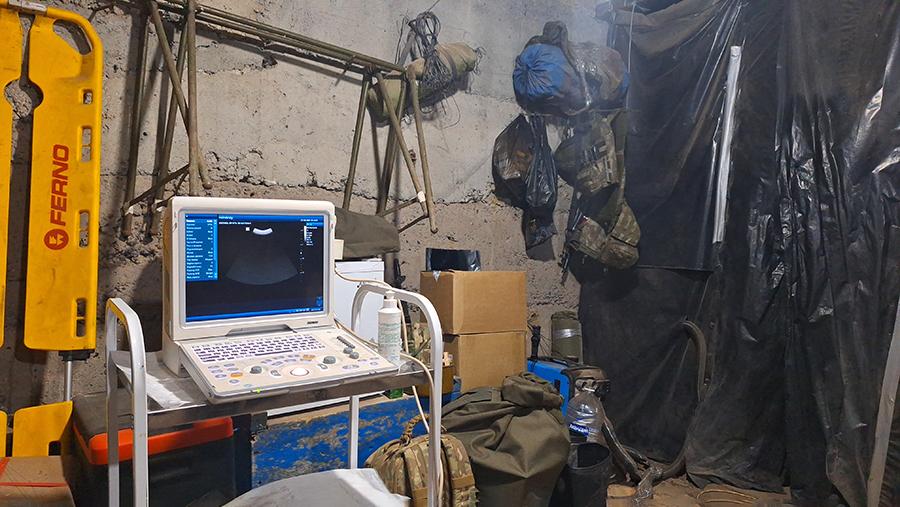
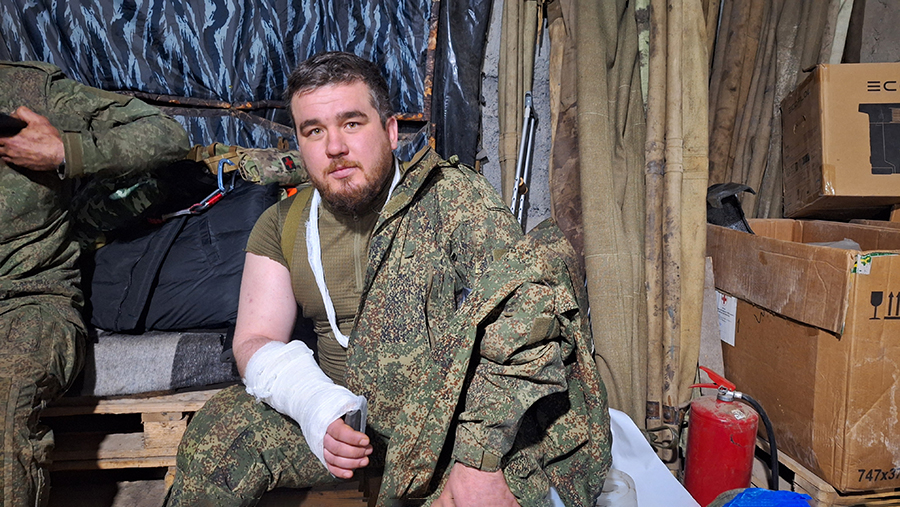
While inside, over a cup of coffee, we are discussing that it is unlikely that we will be able to see the work of the medics — fortunately, no evacuation of the wounded is expected today — a message arrives: the first fighter will be delivered soon. A Marine in a mask and full gear leads a young, sturdy serviceman inside, who holds his wounded right arm motionless. Despite the pain, a smile is visible on his face. The most dangerous part of the journey is already behind us: doctors are nearby, and the weather has allowed for evacuation.
— On the way from the positions, I was wounded by an enemy drone. We waited out the danger and were able to evacuate today," says Mikhail.
He serves as a UAV operator in the engineering department and is engaged in mine clearance using drones. He has been in the army for three years and has been serving since the age of 19.

On the way, he and his partner noticed an enemy drone, managed to dismount and take cover. Mikhail was injured after an FPV drone exploded in the branches of a nearby tree. Having kept in touch, the servicemen reported the situation to the commanders and waited for the scheduled evacuation. They were picked up at 4:30 a.m., the "golden hour" when dusk still obscures the movement of vehicles.
By this time, Mikhail is already being sent for an X-ray.
— They got to the point on an ATV, picked him up and brought him to me. They provided first aid there, bandaged him up and brought him here. I behaved normally on the way, the condition allowed. But there are cases when a fighter has to be carried only lying down, strapped in the back," the medical instructor of the evacuation group with the call sign Winter, who accompanied the wounded man, continues Mikhail's story.
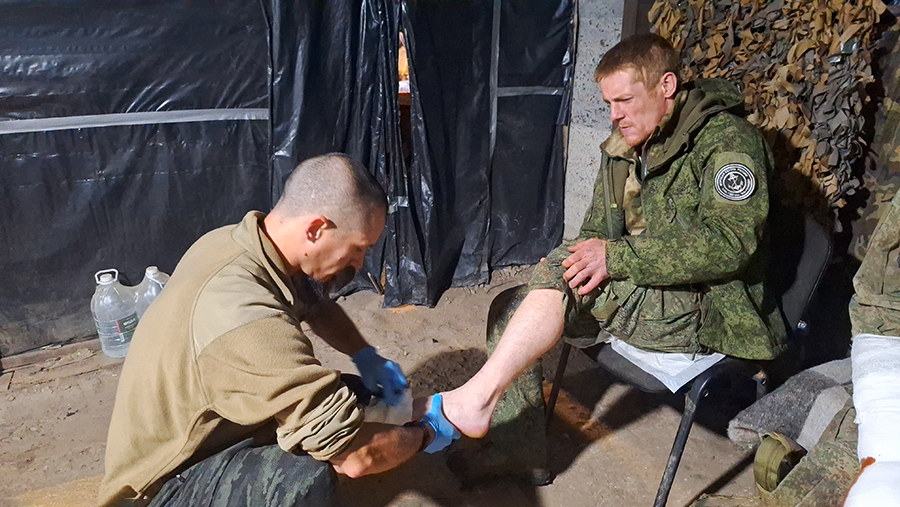
Winter has been involved in the evacuation of the wounded for more than six months — since arriving at the Dobropolsky area. Prior to that, he served as a navigator on a boat on the Dnieper River in one of the groups of marines who worked between the river islands on speedboats. He was also wounded there.
— There's water there, and there's nowhere to hide, but there are more shelters on the steppe roads here. But it's the same thing, the same way the "birds" fly in twos and threes," Winter says. He remembers shooting down attacking drones while escorting the wounded. When asked how he learned all this, Zima says: he came as a volunteer in 2014, fought in both the LPR and the DPR.
How does the evacuation point in the Dobropolsky direction work?
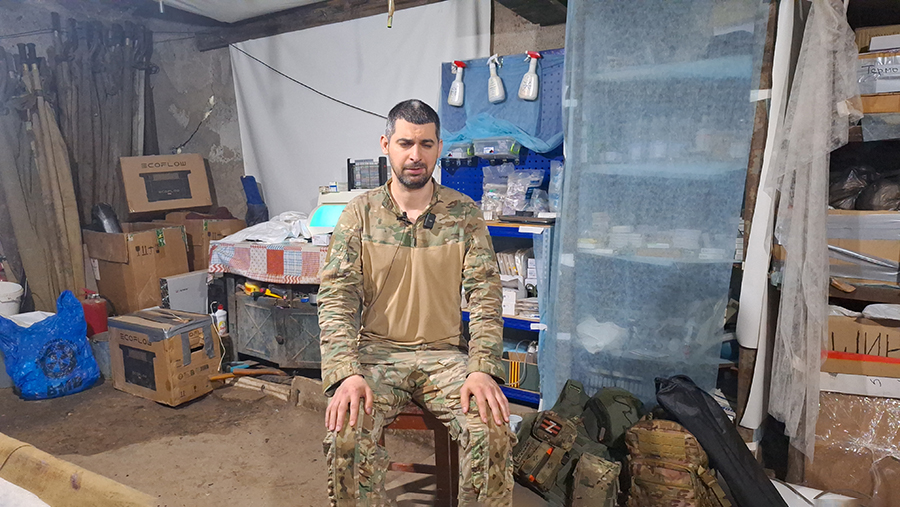
Mikhail, after a quick treatment and clarification of the nature of the injury, gets dressed and in a few minutes goes to the rear. And we will learn more about the work of the evacuation center from the guard-lieutenant of the medical service Ildar Gadimov. In 2019, he graduated from university as a general practitioner and began his work in the ambulance, but his interest in military medicine led him to contract service in 2021 in the 61st Marine Brigade, which already received the rank of Guards during a special operation. He began his military career as a secondment paramedic in an airborne assault battalion, and later returned to the medical brigade.
— In the Kherson area, the wounded were mostly taken out from remote islands, further north along the Dnieper River. Gradually, I got used to it and improved my skills. Practice leads to perfection," says Ildar.
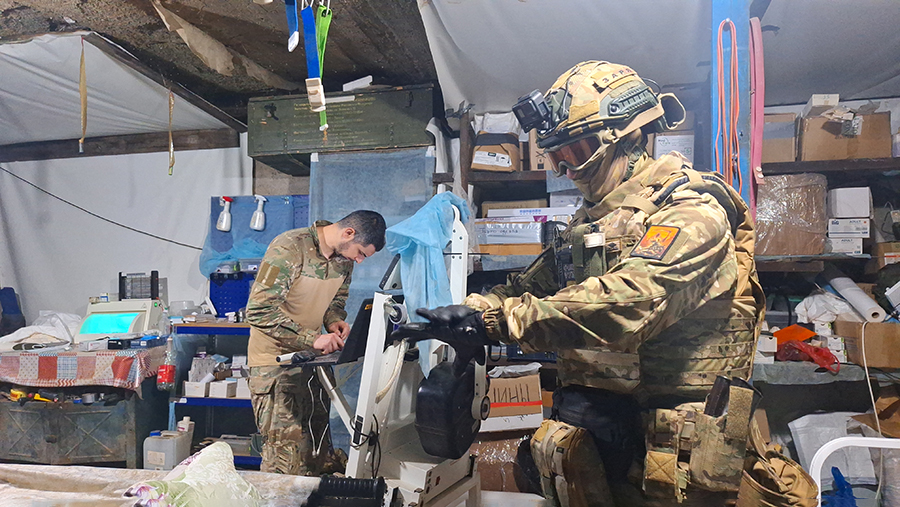
Our interlocutor says that since 2024, injuries from classic weapons have almost disappeared. The vast majority of military personnel are injured by UAV attacks, which changes the nature of the damage. And the doctors had to adapt to the changed conditions.
— Both high-explosive and fragmentation shells are attached to drones. Some explode above the ground. Not to mention FPV drones that explode near a soldier, and fragments fall even under protective equipment, under armor and helmets, from exposed sides, respectively, there are cases in which it is impossible to avoid injury, - says the commander of the medical platoon.

Almost immediately after the end of our inquiries, three lightly wounded Marines are brought in. The picture is similar: Two have wounds to their arms, one to their feet. There's no point even asking if they're drones. Everyone already understands what is the main threat in landings and on the roads.
The fighters were delivered by Sergey Vasilenko with the call sign Aramis, an orderly driver of the Ulan car.
When asked if the road was hard, he just grins.:
— The roads are heavy in principle.
But today, according to him, it was possible to complete the route without shelling.
— Lucky: cloudy, raining. This weather helps. There are always arrows in the car. How else? If we are moving towards the front line, two people are required — one controls the situation in front, the other in the back. In addition, air surveillance posts help," says Sergey.
He has been in this position for three and a half years. He volunteered at the beginning of the special operation and has since made hundreds of evacuation flights.
While the three wounded are being treated, Sergei and I go out to see his Ulan-2 modified with anti-drone arrays. One of the shooters draws water from the well before the next departure, and the driver tells how the paramedics monitor the condition of the wounded right while driving. The main difference between such trips is that usually, when threatened from the air, everyone jumps to the ground and takes cover by the car. But this is impossible with the wounded — only to shoot back from the truck, protecting their passengers.
The returning shooter, whom Sergey introduces, as is customary among doctors, by the name and patronymic "Alexander Konstantinovich", climbs into the back with his gun and shows how they act during the trip. Aramis, with a noticeable love for cars and speed, lists everything he has driven — from the ninth Lada model on the Citizen to the Arctic all-terrain vehicle. That's where we say goodbye — it's time for them to get back with the car.
Meanwhile, work with the wounded has been completed at the evacuation center and they are already preparing to make a flight to the hospital. One of the medics puts on a tactical belt and puts out the magazines, adjusts the mask and wipes the protective glasses on the helmet, turns on the collimator sight on the tuned automatic machine: now even medical UAZs at this stage of evacuation do not travel without an orderly in the hatch.
Переведено сервисом «Яндекс Переводчик»
