We found the effects: 4D scanner will help create light airplanes and racing cars
- Статьи
- Science and technology
- We found the effects: 4D scanner will help create light airplanes and racing cars


Russia has developed a miniature bursting machine for testing composite materials, which allows both stretching and compressing samples, as well as X-ray scanning during loading. This makes it possible to track in detail the origin and development of defects in the structure of the material. Microscopic fragments are used for research, which simplifies sample preparation and speeds up experiments. The technology will help in the creation of lighter aircraft and space structures without loss of strength, and is already being tested in applied projects. However, experts interviewed by Izvestia note that the behavior of miniature samples does not always fully reflect the properties of large structures. In addition, neural network algorithms will be needed to decrypt 4D data.
How a 4D scanner detects defects with a history
Engineers at the Moscow Aviation Institute have proposed a new test method for composite materials that operate under heavy loads. The innovation allows you to track changes in the internal structure in real time and record the full history of the development of defects. The implementation of the development will help to create light and durable airplanes, rockets, racing cars and other structures designed for extreme conditions.
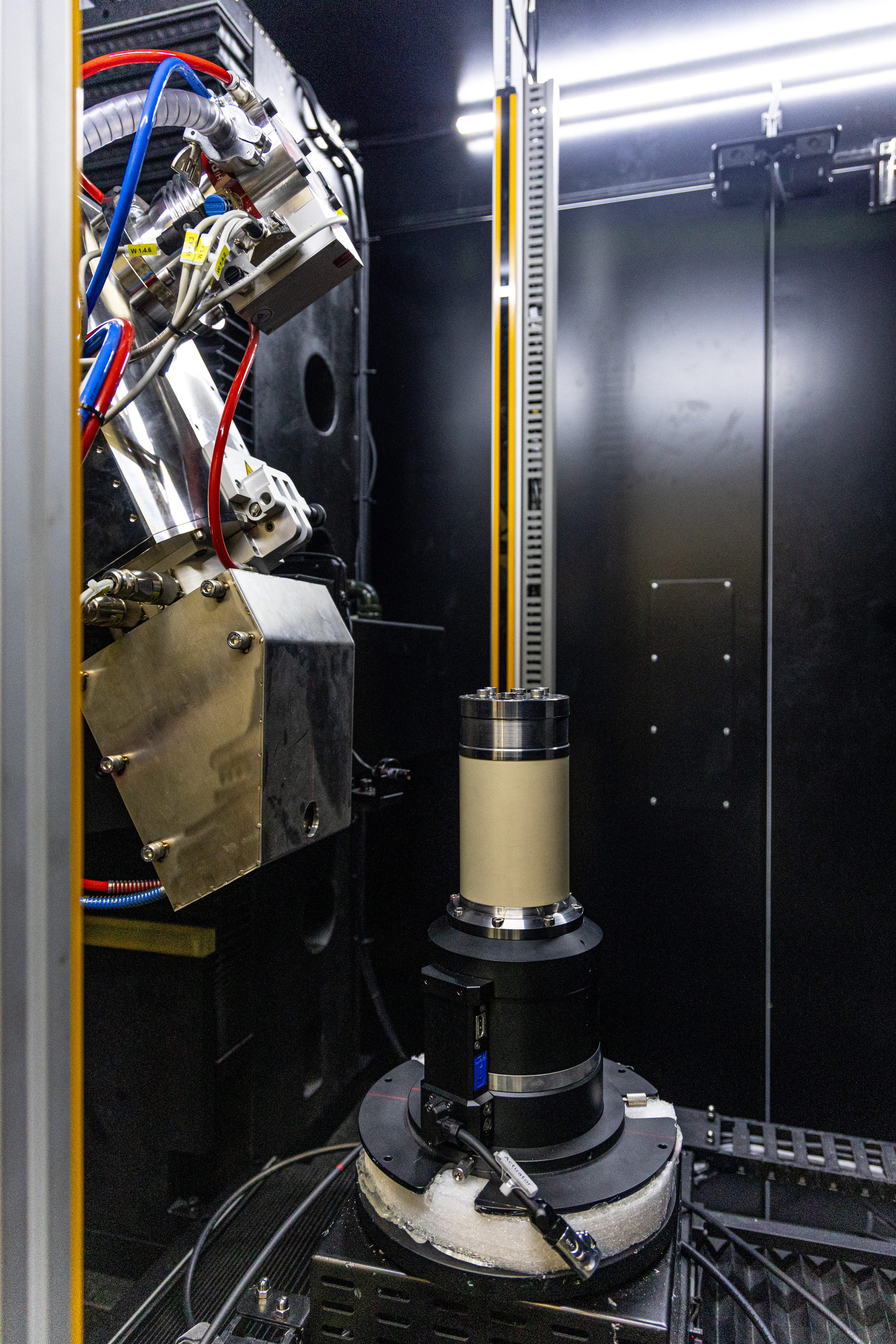
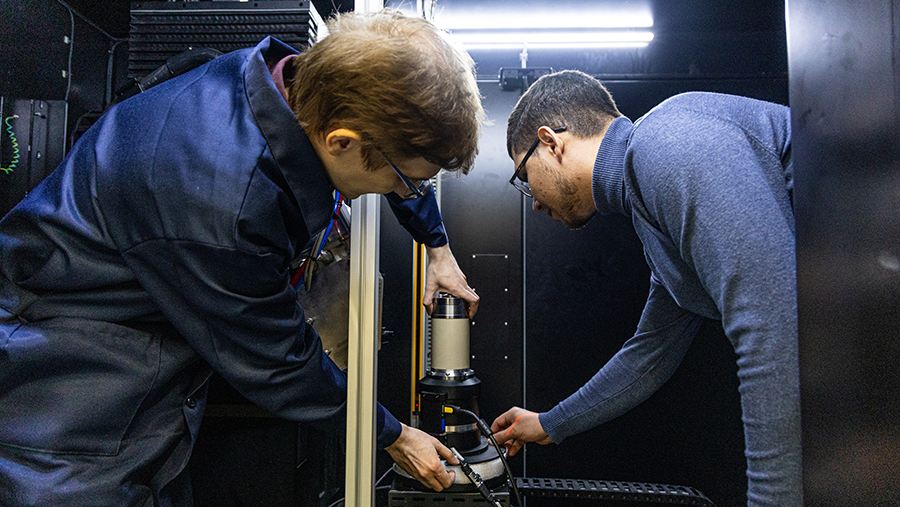
As the authors of the project explained, the innovation is based on a miniature bursting machine. It is placed on a rotating platform in the chamber of an industrial tomograph, an apparatus that creates detailed images of the internal structure of various objects.
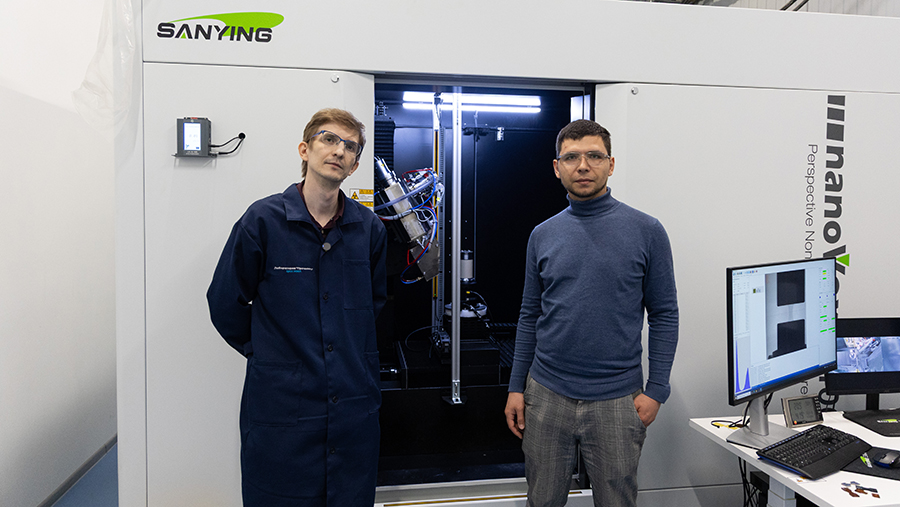
— In the device, the sample is subjected to stretching, compression or bending. At this time, X-rays scan its internal structure. This allows us to obtain three—dimensional visualization — we see the growth of stratification or cracks inside the sample in three-dimensional format over time - a 4D scan is obtained. It's like taking an X—ray of an athlete's bone right during a race," Konstantin Shramko, a leading engineer at the MAI Center for Composite Structures, told Izvestia.
Previously, to understand how strong a material was, it was loaded or stretched until it collapsed, after which the parameters were measured. For example, microscopy of the section was performed. However, these studies showed only the final stage of destruction. The proposed solution makes it possible to switch from static "snapshots" to real-time monitoring of the process, he said.
— The new method captures the stratification, cracking or separation of fibers long before the defect progresses. At the same time, the entire damage history — from the first load to the final destruction — is examined on a single copy. This eliminates errors related to the difference in samples," the scientist explained.
How to prevent accidents in time
According to Konstantin Shramko, the device is made of radio-transparent materials, they do not interfere with scanning and do not distort the result. The data obtained can be immediately uploaded to engineering programs, which allows you to compare virtual calculations with reality and make digital models as accurate as possible. During testing, microscopic doses of the material are used, which can be obtained from finished parts. This makes it possible to check real products directly during their operation.
In mechanical engineering, the development implements an approach that is called "personalized medicine" in the human sciences, and makes it possible to obtain a "diagnosis" for specific nodes. For example, you can take a sample from an aircraft wing after thousands of hours of flight time and see if it is safe to extend its service life.
— Our goal is not to observe the destruction of the material, but to learn how to prevent it in time. When an engineer sees how and where a crack originates, he can change the design so that it simply has nowhere to appear. This is a step towards future technologies," Konstantin Shramko added.
According to him, unlike analogues, the development is compact and can work in a conventional industrial enterprise. The technique is currently being tested in real projects.
— The decision of the MAI scientists closes one of the "white spots" of materials science — the opportunity to observe the mechanics of destruction without destroying the picture of the experiment. This is likely to give an impetus to the design of new high-tech materials. For example, carbon fiber, metal matrix and ceramic matrix composites for hot engine areas. At the same time, designers will be able to consciously manage the process, rather than act by trial and error," Evgeny Vishnevsky, an expert at the National Technology Initiative for New Materials and Technologies, explained to Izvestia.
A separate benefit is for additive manufacturing, as the technique will allow us to understand how pores and non—alloys affect the fatigue failure of a part during 3D printing, he added.
However, it is important to take into account that miniature samples are not always representative of the behavior of large structures. In addition, due to the limitations of tomography methods, high-speed processes, including impact fracture, are difficult to capture in full. Finally, 4D data is terabytes of information, which will require the development of new neural network algorithms to process.
Experts call its integration with digital twins and AI analytics technologies a promising area for the development of the methodology.
—The innovation will allow us to study the interaction of the composite matrix with the binder in order to determine more precisely which fibers and what percentage of them are needed to achieve the desired strength," commented Sergey Kholmogorov, head of the sector of the Testing Laboratory for Strength and Reliability of Aircraft Structures at the Institute of Aviation Engineering and Technology of the Kazan National Research Technological University named after A.N. Tupolev — KAI.
However, in aviation, strength tests are carried out at the macro level, that is, the material is considered as a single whole. In his opinion, the methodology is rather in demand in the field of scientific research and design.
— Long-term tests (for example, creep studies) will not replace the technique, but this does not detract from its value. Visualization of the microstructure under load will help to adjust models of composite mechanics by comparing experimental and calculated deformations," said Evgeny Kurkin, Associate Professor of the Department of Aircraft Construction and Design at Samara University named after S.P. Korolev, senior researcher at the world—class scientific center for Intelligent Unmanned Aircraft Systems.
Fine-tuning, he added, will increase the accuracy of predicting the bearing capacity of products, which means reducing the need for excessive structural strength. As a result, they will become lighter and more efficient, which will affect the cost of operating the equipment.
Переведено сервисом «Яндекс Переводчик»
