Without unnecessary biomusor: processing of organic waste into fertilizers accelerated 60 times
- Статьи
- Science and technology
- Without unnecessary biomusor: processing of organic waste into fertilizers accelerated 60 times


A unique fermenter has been created in Russia, which accelerates the processing of biomusor and animal waste by 60 times. The equipment makes it possible to process manure, manure, and food residues faster than traditional methods into safe organic fertilizer, animal litter, or feed additives. About 600 million tons of animal by-products accumulate annually in our country. The new installation consumes ten times less energy than its foreign counterparts. At the same time, for the widespread implementation of the solution, it is necessary to reduce its cost so that the equipment becomes available not only to large agricultural holdings, but also to small farms, experts interviewed by Izvestia noted.
The problem of organic waste in Russia
ITMO ecologists have developed a series of fermenter plants that accelerate the processing of organic waste by 30-60 times and consume 10 times less energy than their foreign counterparts. At the same time, safe organic fertilizer, animal bedding or feed additives are obtained at the output.
According to expert estimates, about 600 million tons of animal by-products are produced annually in Russia. At the same time, traditional composting of waste in the field takes from three to 12 months and is accompanied by significant losses of nutrients: half of the nitrogen escapes into the atmosphere, and phosphorus is leached into the soil and groundwater. In addition, in Russia, PPW is classified as waste of hazard classes 3-4, for the release of which enterprises pay fees for the negative impact on the environment.
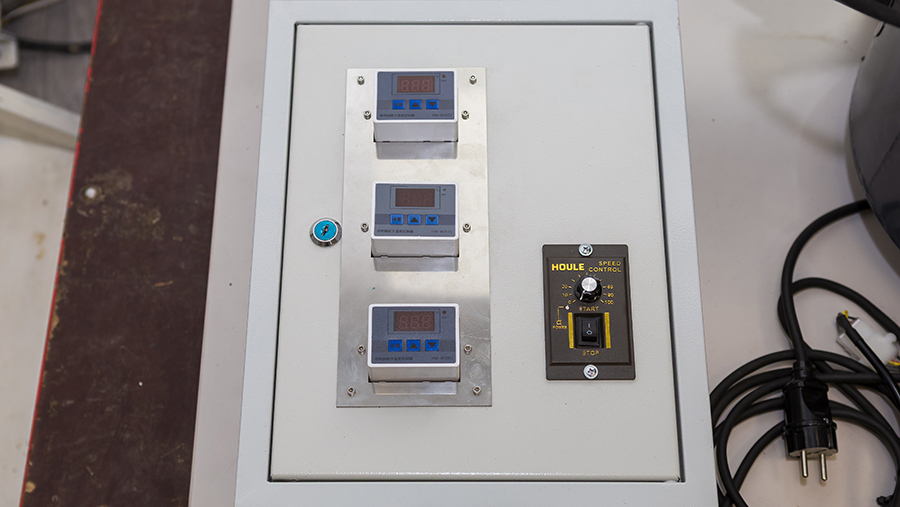
Recycling plants can be a solution to several problems at once. However, foreign systems, such as Austrian or American ones, are expensive and often turn out to be unsuitable for the specifics of Russian waste types due to their high humidity, heterogeneity and fibrousness. Domestic developments in this field often do not go beyond patents or prototypes and do not become mass-produced equipment.
— Organic matter is the most massive type of waste, but also the most difficult to recycle, as its composition is extremely heterogeneous. For example, in the same restaurant, the composition of waste may vary greatly on different days: today fruits with the same acidity predominate, tomorrow meat and fish with completely different properties. At the same time, any fermentation is carried out at the expense of microorganisms, and our task is to create a comfortable regime for them in terms of oxygen, temperature and humidity, so that they can cope with any composition equally effectively," explained Roman Uvarov, the creator of the biofermenter and associate professor at the ITMO Faculty of Environmental Technologies.
The scientist, together with colleagues from the Megafacultet of Life Sciences, assembled an automated closed—type biofermenter based on a rotating drum with periodic mixing of waste. Unlike analogues, where the drive operates continuously, this installation uses a cyclic mode.
Organic matter self-heats up to 55 degrees due to the vital activity of microorganisms and is kept in this mode from 24 to 72 hours. This mode destroys pathogenic microflora, weed seeds and parasite eggs, and the closed working chamber prevents dangerous ammonia, methane and mercaptans from escaping.
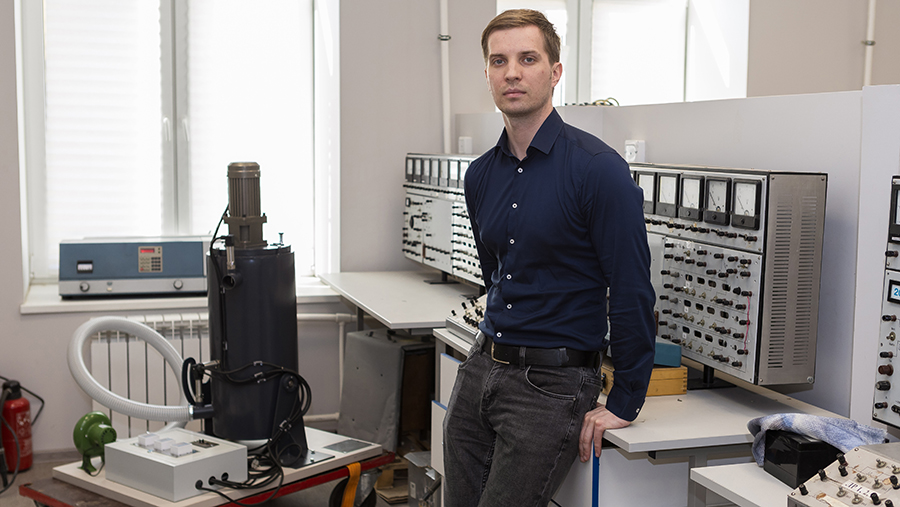
The fermenter consists of several modules, so it is mobile, and it can even be placed in a standard cabin in shift camps and in remote areas where equipment delivery and waste disposal are expensive. After processing, fertilizer is formed, which can remain on the ground without harm to the environment. The final product is certified according to GOST as an organic fertilizer.
An important step for ecology and waste recycling
The technology has passed expert reviews and is included in three best available directories — for poultry, pig farming and municipal solid waste processing — approved by the Ministry of Industry and Trade. The project was also presented at the St. Petersburg International Environmental Forum "Ecology of the Big City", which was held on March 24-25, and in 2025, a team of scientists won a grant from the Russian Science Foundation. The amount of financing is 1.5 million rubles.
The next stage of the project's development is the integration of artificial intelligence systems into the fermenter for online monitoring and automatic control of the processing process. Together with ITMO programmers, computer vision algorithms are being developed that can determine the fermentation phase from mass images and predict the optimal time of unloading. This will further reduce cycle time by 15-20% and reduce energy consumption by turning on the drive and fans.
The installation developed by ITMO has great prospects in terms of creating closed-loop production sites and an advantage over competitors, said the head of the Smart Supply Chain segment of the FoodNet working group NTI Sergey Kosogor. It is fast fermentation, low energy consumption and closed type, which means that there are no odors and emissions. Due to this, the installation can be safely used in urban areas on the territory of wholesale distribution centers, for waste disposal.
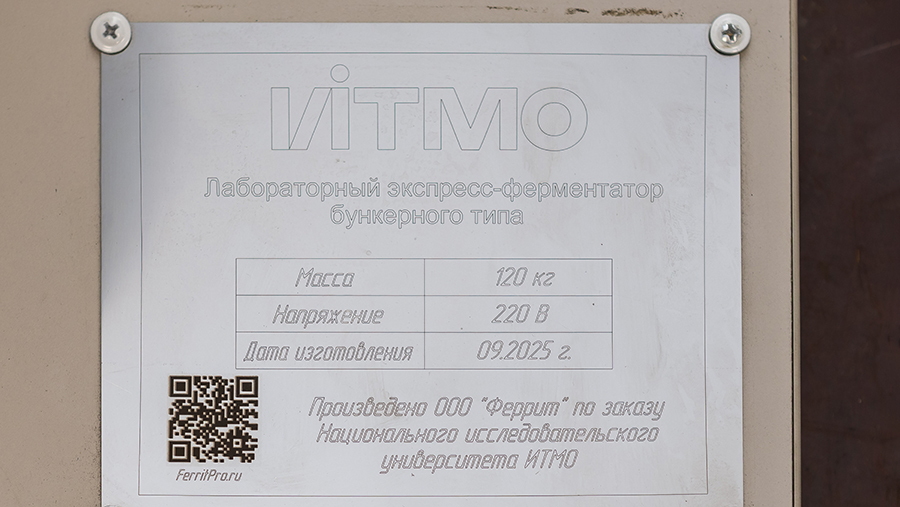
— The installation, due to its cost-effectiveness and closed cycle, can be useful for breweries, oil extraction plants and sugar factories. Greenhouse farms can be users of this development for obtaining CO2 — fertilizing plants and fertilizers. The project is also of great importance for the environment, as part of the national project, it is possible to place such developments in regional towns and villages, recycle organic fractions, and reduce the load on landfills," the specialist noted.
However, in order to advance the development, it is necessary to resolve the issue of price so that the installation becomes affordable for small farms, Sergey Kosogor noted.
High processing speed is important in large agricultural enterprises, where it is difficult to dispose of waste and have to pay for its transfer to landfills and recycling. And organic processing methods that do not emit greenhouse gases may be welcome, as they comply with Russian climate policy, said Tatiana Ledashcheva, associate professor at the Department of Environmental Safety and Product Quality Management at the Patrice Lumumba Institute of Ecology at the RUDN University.
— If we talk about the use of food waste, it should be collected from households. But at the moment, Russia does not have a program for collecting organic waste in households, as in Germany or in some periods in the Soviet Union," said Vladimir Pinaev, member of the Public Council of the Basic Organization of the CIS Member States for Environmental Education, editor—in—chief of the scientific online magazine Resources.
According to him, the technology can be used quite simply in agriculture, and when processing food waste, a system for collecting and sending it to such fermentation stations is needed.
Переведено сервисом «Яндекс Переводчик»
