The Itch of Four Films: Why Marilyn Monroe Was a Great Dramatic Actress

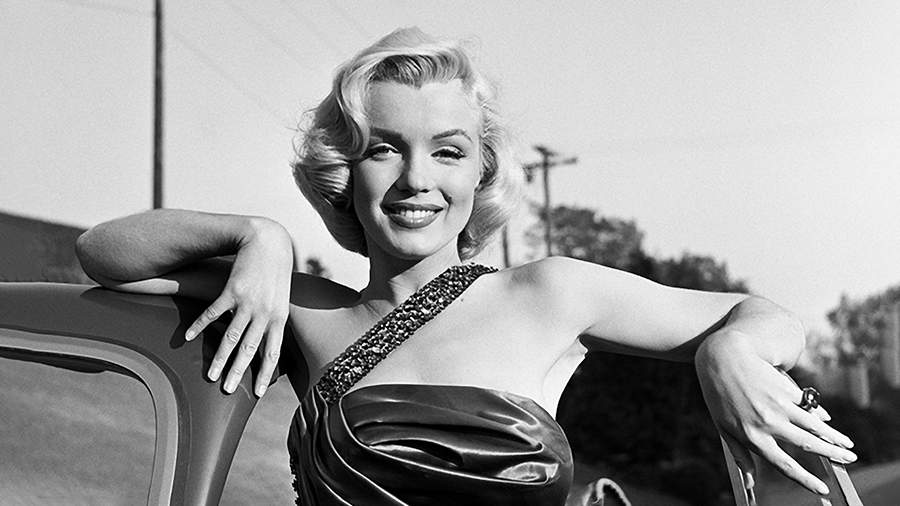
Marilyn Monroe had a decade and a half in the cinema. Of these, a little more than 10 years can be considered a truly serious work. Until now, for most viewers, Monroe is primarily an actress of ageless comedies, but for Marilyn herself, her profession was much more important than the status of the most desirable woman in the world. On the centenary of Norma Jean's birth, Izvestia tells about four films where Monroe showed dramatic talent, and it is noteworthy that all these pictures have not become outdated over the years.
The beginning of Monroe's dramatic career
Gentlemen prefer blondes, and some like it hot. Blondes, in turn, know how to marry a millionaire and make love to him. All this has been known for a long time, because we are talking about the films that made Marilyn Monroe a global sex symbol and the most successful actress of the fifties. And far fewer viewers remember that Marilyn Monroe, who went to her cherished dream — Grushenka in the film adaptation of The Brothers Karamazov. In the end, she couldn't play it: Maria Schell got the role. Marilyn, who in the forced chaste cinema of the Hayes code era embodied not just beauties, but women who were ready to do anything for their goals. Passionate, treacherous, dangerous, and defenseless at the same time. Victims who had to become predators.
The first such notable work was Nell in the noir thriller "You Don't Have to Knock" in 1952. Moreover, the film begins almost like a romantic comedy. A pretty girl's uncle, an elevator operator in a posh hotel, gets a part-time job as a nurse. The village beauty, in the absence of the owners, quickly sends the child to bed, dresses up in other people's clothes and sees the "prince" through the window — a handsome man in the next room. And decides to impersonate a rich woman so that the "prince" turns into a husband.
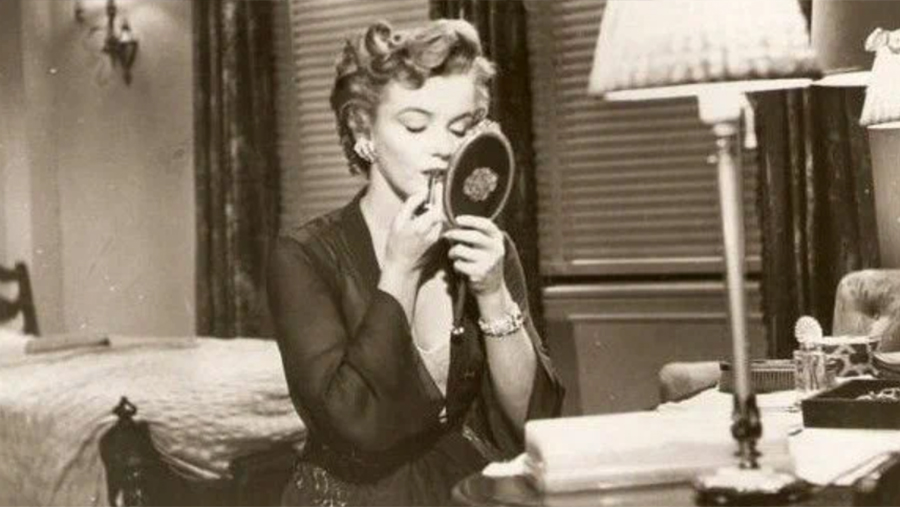
Marilyn Monroe introduces us to her character here, stroke by stroke. Nell is too nervous, the child she needs to sit with infuriates her, and the scars characteristic of suicides are visible on her wrists. Then the image of her ex-fiance appears, who either died or disappeared, then Nell becomes completely entangled in lies and pretense. And at some point, Monroe stops hiding the essence of her character. She spent several years in a mental hospital for a reason — she is capable of killing not only herself, but anyone, and at some point the "prince" is practically in her captivity. It is noteworthy that in the script, the heroine's last name was Munro — it was then specially changed to Forbes so that unnecessary associations would not arise.
Critics were skeptical of this role at the time, although today it is considered one of the best in Marilyn's career. And for Monroe herself, the risk seemed obvious: she had the image of a pin-up model who really wanted to become an actress and starred in everything, and it was necessary to make the world perceive her as a dramatic actress. Therefore, you can see how she gives her best in every scene, and for some reason you forgive her for all the episodes where she slightly overplays.
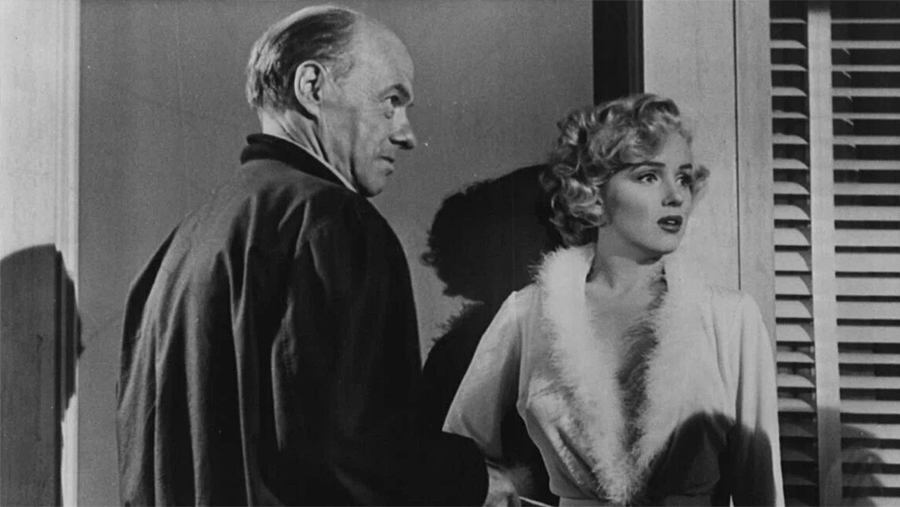
In 1953, a much more commercially successful thriller noir starring Monroe, Niagara, was released. All the handles are turned out to the fullest. Magnificent colorful locations of Niagara Falls. An equally magnificent scene of Marilyn's passage down the street: Monroe just goes for 26 seconds, and it is considered that this is the most famous and erotic passage in the history of cinema. Her character, Rose, is portrayed as a neurotic and villainous woman, an unfaithful wife, and an instigator of murder. She's seductive and vulgar at the same time. And this, by the way, is the only film in Monroe's career where her character dies.

By the standards of those years, Monroe behaved too boldly in the frame — and this was a sober calculation for a male audience. There are many scenes in the film where it is clearly visible that the actress is completely naked under the sheet, and the scene where Rose takes a shower had to be artificially darkened, otherwise the American censors simply would not allow the picture to be released. Of course, Monroe plays a Hitchcockian blonde here, and one can only regret that she never starred with the master himself, "Niagara" clearly proves this.
Monroe's Late Roles that You Need to Know
"Bus Stop" is, of course, a comedy by genre. An uncouth young cowboy arrives at a rodeo in the city and falls in love with the first person he meets, mistaking her for an angel. The irony is that Shari (the cowboy calls her Cherry Cherry) is not an angel at all. This is a rather shabby singer in a local pub, who capriciously disguises herself from a bathrobe into a vulgar green stage swimsuit, and then tries to promote the guests for a treat. Unaccustomed to tenderness, the cowboy treats Shari like a mustang, and the woman has only one thing in mind: a plan that leads her by devious paths and wrong stops towards Los Angeles and a truly sweet life. The cowboy grabs Shari all the time and drags her to the rodeo, then onto the bus in the direction of his snowy ranch.
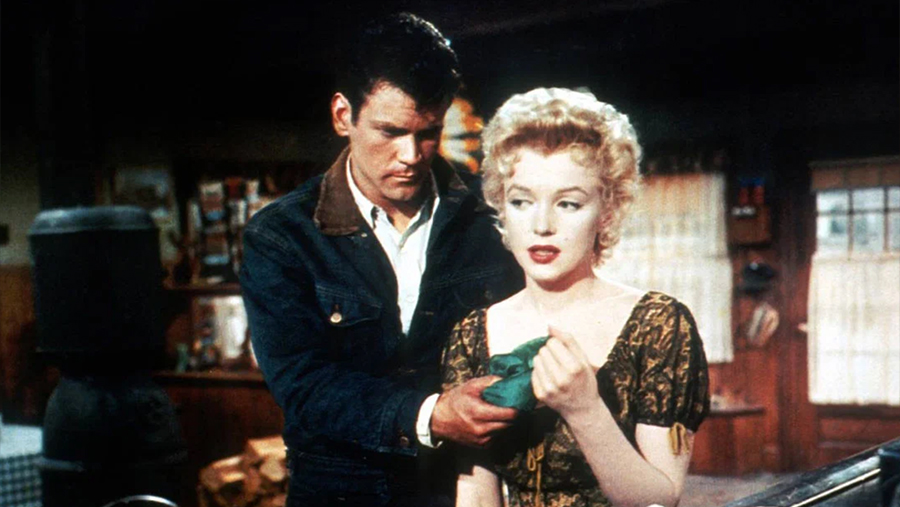
Monroe is both touching and pathetic here, she was nominated for a Golden Globe for this role. And the actress herself plays as if it's not about a romcom, but about a Streetcar named Desire. And it's clear that the rest of the film can't reach the level of her acting.
The pinnacle of Marilyn Monroe's acting skills (she studied with Lee Strasberg) was her last film, "The Misfits" in 1961. Monroe plays a thirty-year-old divorcee who decides to unwind in the company of three cowboys. She prefers one or the other, clearly enjoying her newfound freedom. And, as she says, she doesn't know yet if she will choose any of them. The oldest one has the best chance (played by Clark Gable), but the woman is not going to give any guarantees. She flirts with everyone at once, seeing in everyone a potential companion for life or just a partner for an incendiary dance.
There's a rodeo here too, but it doesn't culminate in it, but in a mustang hunt. It turns out that cowboys catch them and sell them for slaughter.: the meat is used for animal feed. Naturally, the heroine compares herself to a mustang, and so the story, written by Arthur Miller and adapted by John Huston, turns into a parable about the "male" world of permissiveness, the cult of force and cruelty, where women can only fight back or agree. The heroine knows how to hit, and Monroe has a great scene where her heroine strikes a tennis ball dozens of times with great speed with a wooden racket. But the ball is tied to the racket, and no matter how much you hit it, it won't fly far.
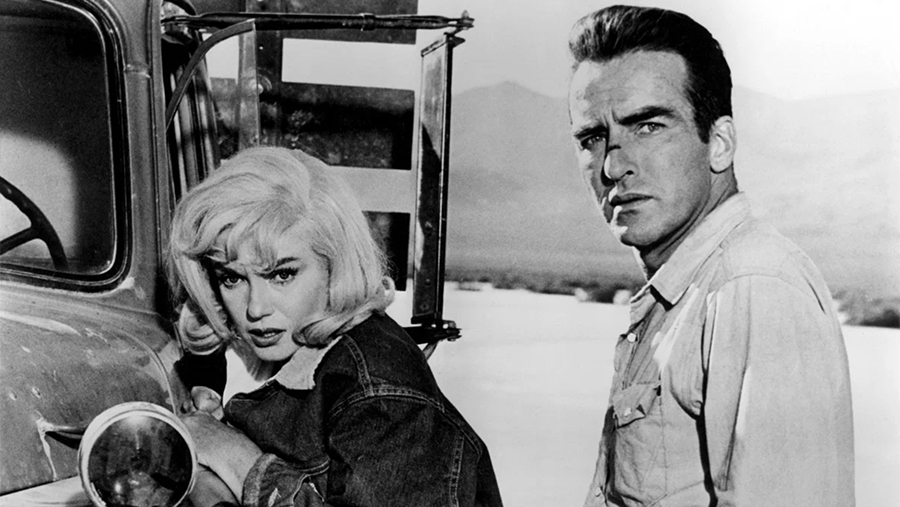
The audience did not need such a Monroe, the film failed at the box office. Clark Gable did not live to see the premiere, but Monroe received awards from critics and was found dead a year and a half after the film was released. But in this tape we see her as the most alive, closest and most unhappy woman in the world. Elusive and desirable. And, what was especially important to her, a personality and a really great actress who just didn't have time to prove it to the world: he adored her too much to appreciate her.
Переведено сервисом «Яндекс Переводчик»
