- Статьи
- World
- The force of the escalation: Slovakia is against Ukraine's admission to the EU before settling with the Russian Federation

The force of the escalation: Slovakia is against Ukraine's admission to the EU before settling with the Russian Federation

Bratislava will not allow Kiev to join the EU until the end of the Ukrainian conflict, deputy head of the ruling Smer party, MEP Lubos Blaha, told Izvestia. Slovakia, after the change of power in Hungary, may assume the role of the main opponent of the immediate expansion of the EU at the expense of Ukraine. Earlier, German Chancellor Friedrich Merz proposed to admit her to the EU without the right to vote. Kiev insists on full membership with access to euro funds. However, before Ukraine, the countries of the Western Balkans are in line to join the union, which may also lose the opportunity to block decisions. An attempt to circumvent the established norms of enlargement threatens a crisis within the European Union and a decline in its authority among the candidate countries.
Conditions for Ukraine's accession to the European Union
The EU is trying to find a format for Ukraine's admission to the union, bypassing the mandatory requirements. German Chancellor Friedrich Merz proposed the concept of "associate membership" — the country's entry without voting rights with gradual access to financing. According to media reports, France also offers a similar option. The bottom line is that Kiev will first be granted formal membership in the EU, and it will fulfill the conditions for joining later.

German Chancellor Friedrich Merz
However, such ideas are not supported by all the members of the association. In particular, Slovakia will not allow Ukraine to join the EU until the conflict with Russia is resolved, deputy head of the ruling Smer party Lubos Blaha told Izvestia.
— Our position is that ending the war is only the first of a number of conditions that must be fulfilled so that we can even consider the issue of joining this country (Ukraine. — Ed.) in the EU, — said the MEP.

According to Lubos Blahi, Slovakia is outraged by the proposal to admit Ukraine to the EU as a matter of priority and outside the standard accession process. This is necessary in order to use Kiev in the fight against the Russian Federation, the deputy head of the ruling party believes. Bratislava itself "literally bled to death when it joined the EU due to unfavorable and often frankly unfair starting conditions."
"I personally — and now I speak exclusively for myself — believe that at least a significant part of Ukraine is part of the Russian world and simply should not join the EU," the Slovak politician stressed.

Prime Minister of Slovakia Robert Fico
The Slovak authorities do not object to Ukraine's European integration, but insist on meeting all the requirements for candidates to join the EU. Prime Minister Robert Fico noted that Kiev cannot bypass those who are already well prepared for accession — Albania, Serbia and Montenegro. According to him, Ukraine must make concessions "for the sake of peace" in order to be able to join the EU.
The country received the status of a candidate for EU membership in 2022. In four years, Kiev has fulfilled the conditions necessary to launch a dialogue on three out of six clusters. The accession negotiations were never officially conducted due to Hungary's veto. At an informal meeting of the heads of the EU Foreign Ministries in Cyprus on May 27-28, the diplomats discussed this issue again. The head of the European Diplomacy, Kaya Kallas, said that she was working with Budapest to lift the veto on negotiations with Ukraine. At the same time, after the more accommodating Peter Magyar came to power in Hungary to replace Viktor Orban, Slovakia may become the main opponent of Ukraine's rapid accession to the EU, bypassing the established rules.
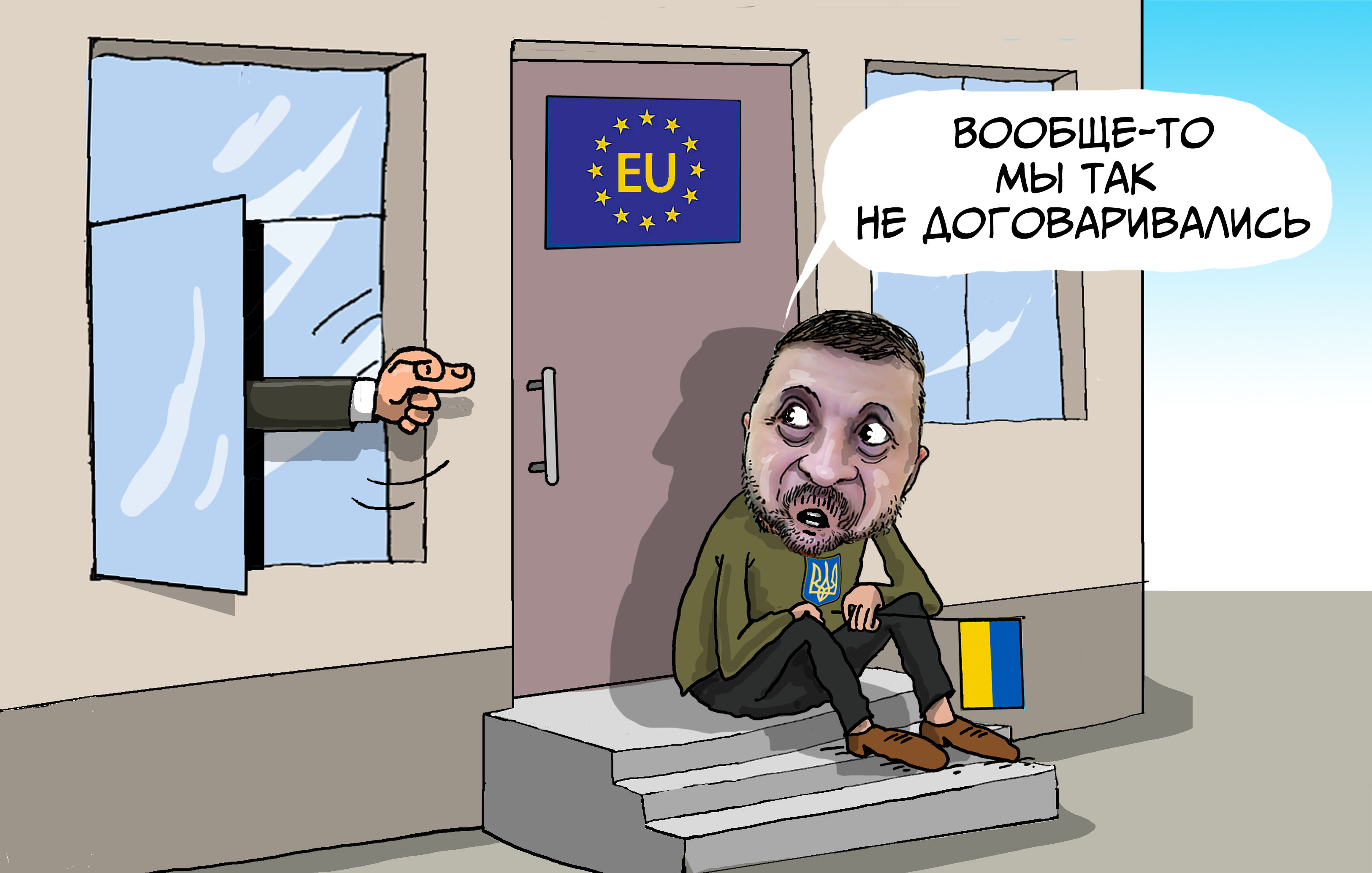
However, Vladimir Zelensky confronted the EU with the fact that the country will be "technically ready" for full-fledged EU membership by 2027. European Commissioner for Enlargement Marta Kos called his admission requirements impossible. Moreover, the Ukrainian side agrees exclusively to full membership in the EU, and not to an interim or limited status.

Russia has never objected to Ukraine's membership in the European Union, Moscow considers Kiev's accession to NATO a threat to its security, Vladimir Putin said last year. However, the Russian Foreign Ministry has repeatedly noted: The EU is increasingly becoming a military-political bloc. Therefore, Moscow may reconsider its attitude towards attempts by neighboring states to join it.

New format for EU candidates
The emergence of various initiatives on incomplete membership in the European Union indicates a crisis in the model of expansion of the association. Albania, Bosnia and Herzegovina, North Macedonia, Serbia and Montenegro are currently waiting to join the EU. In addition, candidate status was granted to Moldova, Georgia and Turkey. Kosovo is considered a potential candidate, but five EU countries — Romania, Slovakia, Spain, Cyprus and Greece - do not recognize the independence of the self-proclaimed republic.

Previously, the scheme was as follows: The country submits an application, receives candidate status, and gradually implements reforms and brings policies and laws in line with those of the EU. Applicants for membership must meet the basic contours of the Copenhagen criteria, that is, support democratic institutions and a market economy. At the end, an agreement is drawn up, which must be signed and ratified (through parliament or a referendum) by the candidate country itself and each of the 27 countries already part of the EU.
So far, Montenegro is the closest to the coveted accession to the EU, whose authorities expect to become the 28th member of the union by 2028. However, the European Commission is considering the possibility of including a temporary absence of the right of veto in the agreement with Podgorica, The Guardian writes, citing sources. According to the newspaper's interlocutors, this could become a model for other agreements.
The "associate membership" model offered to Ukraine provides even fewer opportunities and actually means observer status: the country can send its representatives to EU bodies, but without the right to vote and the ability to veto. At the same time, Ukraine is promised gradual access to the union's funds in the future. Kiev will be an official member of the EU and will be able to turn to other countries for military support.
— Merz's initiative can be considered as part of Germany's active foreign policy in a situation of internal political crisis, aggravated by extremely low ratings of the ruling coalition. This initiative is partly related to the position of France, which has a law providing for a referendum on the admission of new members to the EU in special cases," German political scientist Egor Belyachkov told Izvestia.

Egor Sergeev, a senior researcher at the MGIMO Institute of International Studies at the Russian Foreign Ministry, told Izvestia that the procedure for joining the EU is lengthy and complicated, and there are no legal ways to circumvent it.
— As soon as it comes to practical issues, it immediately becomes clear that there are a million barriers to such procedures. And most likely, no one is seriously talking about full-fledged membership of Ukraine yet. This is a tool for influencing the situation in Ukraine," Sergeyev said.

According to the expert, a number of EU states are taking a cautious position on the need to expand the association. These include Italy, the Netherlands, and Central European countries, including Hungary under the new leadership. By the way, Peter Magyar's government has put forward 11 demands for Kiev to resume negotiations on EU membership.
In Germany and France, the opposition opposes Ukraine's immediate accession to the EU. The Alternative for Germany party believes that Kiev will not be ready for membership in the union for another decade. In France, the National Association, led by Marine Le Pen, fears the negative impact of Ukraine's accession to the EU on the local agricultural sector.

Croatia was the last country to successfully join the European Union in 2013. Since then, there has been a serious queue at its gates, which could get even bigger — in August, Iceland will hold a referendum on resuming EU accession negotiations. However, all the attention of Brussels is focused on Ukraine. If Kiev nevertheless decides to drag into the union, bypassing all procedures, trust in the union will be undermined, and some of the candidates may consider withdrawing the application. This will be especially a serious blow to Serbia, whose accession is moving away due to the situation around Kosovo and Belgrade's accusations of a "pro-Russian" foreign policy. Although in terms of reforms and the level of economic development, the Balkan country meets the requirements of the EU much more.
Переведено сервисом «Яндекс Переводчик»
