Raw material deposit: Europe will have to buy gas at inflated prices for at least six months
- Статьи
- Economy
- Raw material deposit: Europe will have to buy gas at inflated prices for at least six months


Even if the war in the Middle East ends, European countries will be forced to buy gas at inflated prices for at least six months, analysts interviewed by Izvestia believe. The main LNG producers, including the largest QatarEnergy complex, have been seriously affected: at least 17% of liquefied natural gas exports have been withdrawn. In the next six months, gas prices in Europe may rise by another 20-30% amid competition with Asia for free LNG shipments. How this situation affects Russia is in the Izvestia article.
Why have gas prices skyrocketed
Since the beginning of the military conflict in the Persian Gulf, market prices for gas in Europe have increased by more than 50%. In February 2026, it was trading around $350-400 per thousand cubic meters, and now it is at $600. Even if the fighting stops right now, European countries will have to buy gas at an inflated cost for at least six months, experts say. It's all about large-scale damage to the LNG infrastructure, which cannot be repaired quickly.
Qatar, one of the world's largest producers of liquefied natural gas, suffered the main blow. During the war, the QatarEnergy complex suffered: at least 17% of the country's LNG exports were disabled. These are tens of millions of tons of gas that disappeared from the global market overnight. Direct damage is estimated at $20-25 billion. But the main problem is not money, but time.
New large-scale turbines are needed to repair two damaged LNG production lines in Qatar, which are currently in high demand, said Philip Muradian, Senior Director for Corporate Ratings at Expert RA agency. Taking into account the expectation of their delivery, it may take from three to five years to restore production.
The five-year forecast is absolutely realistic, agreed Olga Gogaladze, an expert on financial markets. The damage is estimated at at least $25 billion, but the problem is that there is simply no place to get critical equipment quickly. Only three plants in the world produce such gas turbines for compressors, and their order queues are already scheduled for two to four years in advance.
Even with the immediate start of construction, the restoration of damaged lines in Qatar will take at least three years, said Mikhail Nikitin, Head of International Business and Finance Practice, partner at 5D Consulting. At the same time, a real return to previous production facilities is possible no earlier than 2029-2031, said Dmitry Kasatkin, Managing Partner of Kasatkin Consulting.

It is noteworthy that even Exxon Mobil, a partner of Qatar Energy, which can be considered the most knowledgeable source, indicates a repair period of three to five years, added Sergey Kaufman, an analyst at Finam. At the same time, the conflict not only damaged the existing capacities of the manufacturer, but also forced the deadline for the introduction of new ones to be postponed, the analyst added. Before the crisis in the region, Qatar could become the second country after the United States in terms of LNG capacity commissioning in 2025-2030.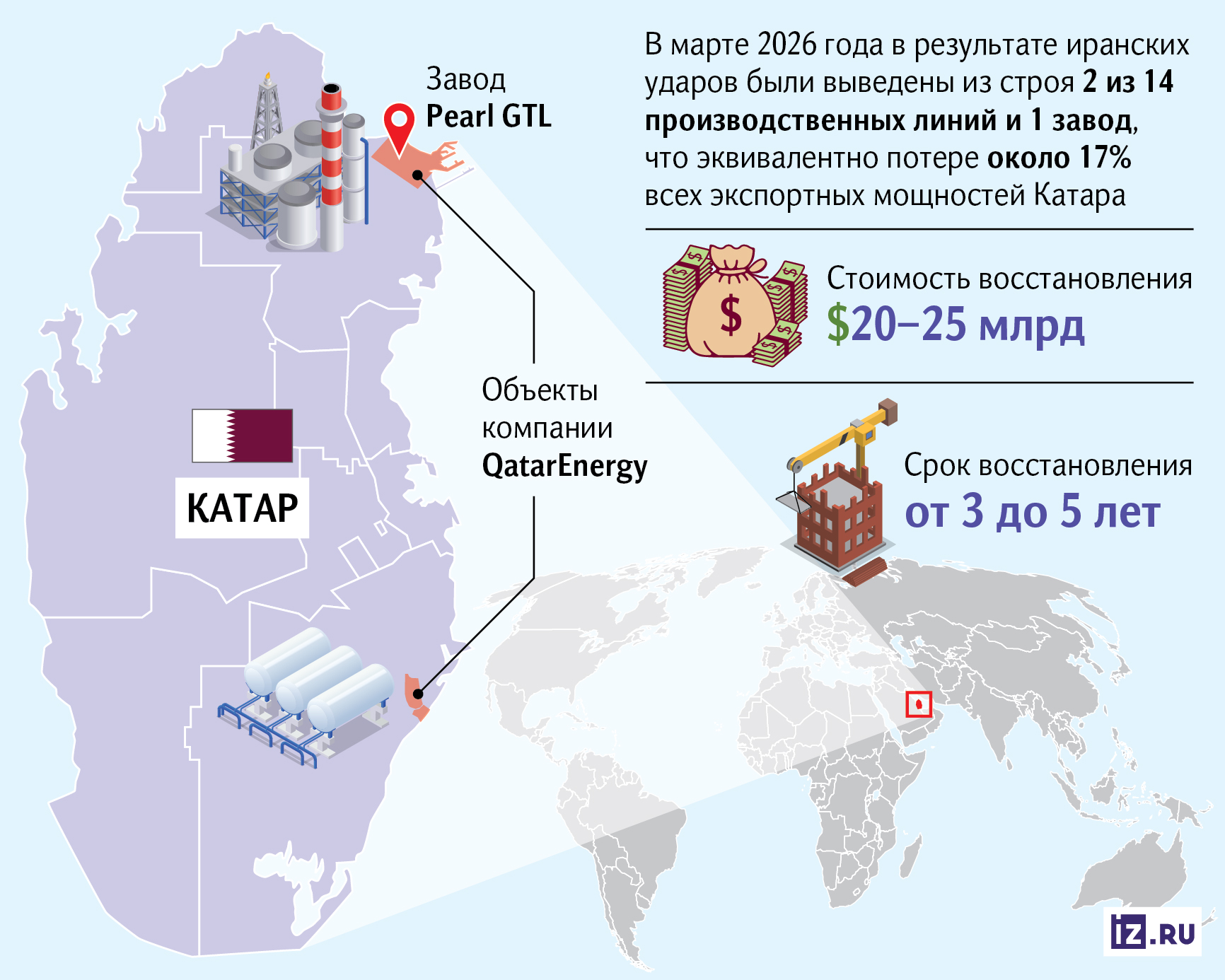
Who can replace the Qatari gas
The price situation is aggravated by the state of European gas storage facilities. According to the Norwegian energy company Equinor, they are now only 35% full, which is almost half below the average level over the past five years. By October and December, EU countries need to accumulate at least 90% of their reserves in order to pass the winter without widespread industrial shutdowns. Given the shortage of LNG on the global market and fierce competition with Asia for free shipments, it will be extremely difficult to replenish the storage facilities on time. This will inevitably push prices up.
No one will be able to quickly and completely replace the Qatari gas that has fallen out, Olga Gogaladze is sure. This country supplied about 20% of the world's LNG, and the deficit is too great. The US facilities, although the largest in the world, are almost fully loaded, and most of the supplies are linked to long-term contracts. Australia is also working to the limit. The new American liquefaction line, which may be activated in the near future, can only partially compensate for Qatar's losses, the expert noted.
Even increasing exports will not allow the Americans to completely replace Qatar on the world market, Mikhail Nikitin agreed. Australia is traditionally focused on Asia, there are almost no available resources for supplies to Europe, and logistical costs make such supplies economically unprofitable. Despite the fact that the EU suffers less from supply problems from the Persian Gulf than Asia, competition for resources between regions will continue to drive up prices, said financial adviser and founder of Rodin.Capital Alexey Rodin.

What will happen to the prices of raw materials next
It is difficult to accurately predict future gas prices, Mikhail Nikitin noted. The World Bank estimates that prices in Europe may rise by 25% in 2026 relative to 2025, provided that the acute phase of supply disruptions ends in May and exports through the Strait of Hormuz return to pre-war levels by October. In March 2026, quotations at the European TTF hub (the main virtual natural gas trading hub in Europe) averaged about $640 per 1,000 cubic meters, in April — about $550.
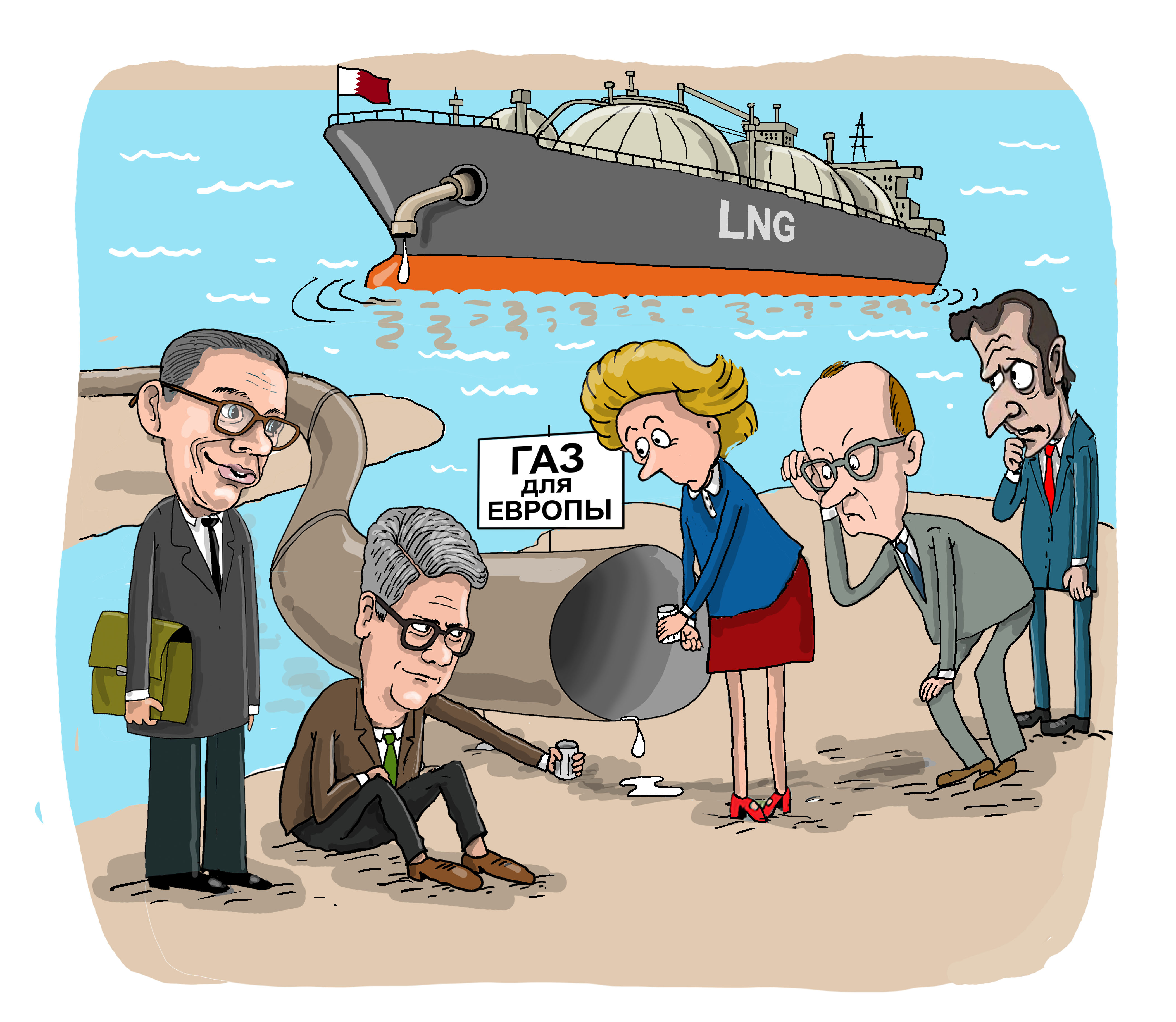
It is impossible to quickly replace the missing volumes, therefore, in the next six months, European companies will have to pay an increased premium for gas, competing with Asian buyers for spot LNG shipments (one—time - they are sold for immediate delivery at the current market price). Against this background, prices may rise by another 20-30% from current levels in the next six months, Olga Gogaladze predicts.
The restoration of the region's capacities will take at least two and a half years, and everything will depend on new infrastructure damage, said economist Andrei Barkhota. He called a 15-25% increase in LNG prices in the EU the most likely scenario.
Further price movement will be determined by the success of negotiations between Iran and the United States, Sergey Kaufman believes. If the Strait of Hormuz can be opened in the next one to two months, he predicts a reduction in cost to $450-500 per thousand cubic meters. At the same time, a new escalation could lead to an increase in the price of raw materials to $ 800 per thousand cubic meters, that is, to the March highs. The expert does not expect prices to return to February levels, even if the conflict ends soon, as large volumes have already been lost to the market.
It is highly likely that the European gas market will face a protracted crisis with continued shortages and high prices in the medium term, Mikhail Nikitin believes. Even if the conflict subsides, a rapid return to stability is unlikely: it will take time to restore supply chains, restart damaged facilities and build up new capacities.
What Russia gets from the conflict
On the one hand, Russia benefits from high prices, Olga Gogaladze noted. In March, when the crisis disrupted supplies from the Middle East, imports of Russian pipeline and liquefied natural gas to Europe reached record levels. Since the beginning of the conflict, our LNG supplies to the region have jumped by almost 30%. This brings additional revenue to the budget, she noted.
But the situation does not cancel out Europe's long-term policy of abandoning Russian gas, the expert recalled. The EU's plan to completely end purchases by 2027 has not gone away. Russia is winning tactically right now, but strategically its position in the European market remains in question.
The crisis in the Middle East is turning into short-term budgetary benefits for Russia, experts agree. And while Europe is phasing out Russian gas, Moscow is betting on reorienting exports to Asia, where competition for LNG is also intensifying amid shortages. But the Europeans will have to pay more than usual for raw materials for a long time.
Переведено сервисом «Яндекс Переводчик»
