- Статьи
- Economy
- Stagnant future: the Central Bank's lawsuit against the European Union will complicate the transfer of Russian assets to Kiev

Stagnant future: the Central Bank's lawsuit against the European Union will complicate the transfer of Russian assets to Kiev

The Central Bank has launched a new lawsuit against the European Union, challenging the mechanism that allows the proceeds from frozen Russian reserves to be used to support Ukraine. Experts interviewed by Izvestia believe that this dispute may significantly complicate the further transfer of funds to Kiev and increase pressure on the EU and the Belgian depository Euroclear. At the same time, it is not only about money, but also about the principles of international law, the protection of property and the status of reserves of central banks. Even if the process drags on for years and does not lead to the rapid unblocking of assets, the very fact of the trial already creates additional risks for the EU.
What is the essence of the Central Bank's new lawsuit against the EU
The Bank of Russia filed a lawsuit with the General Court of the European Union on May 22, challenging the EU regulation that considers Russian sovereign assets as part of the financial support mechanism for Ukraine. Experts interviewed by Izvestia believe that this process may significantly complicate the implementation of the scheme for transferring funds to Kiev, up to its partial revision.

The Central Bank is challenging the regulations, which are formally dedicated to financial assistance to Ukraine. It is on its basis that the European Union is building the Ukraine Support Loan mechanism, a loan program for Kiev with a volume of up to €90 billion for 2026-2027. The document allows for the use of Russian assets and income from them to service this loan.
Formally, there is no confiscation yet, but the scheme itself looks like the state reserves are actually being used as collateral for a loan to a third party, the head of the international service explained. Razmorozka.com Alexey Bogdanov. It is precisely this design that the Bank of Russia is currently opposing.

The regulator creates serious legal obstacles for the EU, said Oleg Abelev, head of the analytical department at the Rikom-Trust investment company. According to him, the process itself is already capable of slowing down the implementation of the Kiev support mechanism and damaging the reputation of the European legal system.
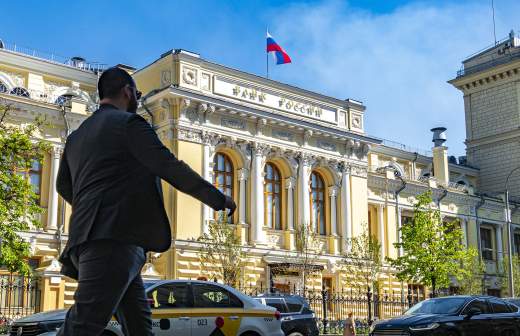
Many perceive this lawsuit as an attempt by the Central Bank to simply "return the money," but in reality the dispute is much broader, said Evgenia Amelkina, director of the Eastern Legal Alliance. According to her, the General Court of the EU verifies the legality of the acts of the European Union itself, so now we are talking primarily about verifying the principles of the European legal system.

This is the second process of the Bank of Russia in the European jurisdiction. The Central Bank filed its first lawsuit in February 2026, when the regulator challenged the indefinite freezing of Russian reserves.
At the same time, the regulator continues the dispute with Euroclear in the Russian jurisdiction. Back in December 2025, the Central Bank demanded to recover about €200.1 billion in losses from the depository, including €181.46 billion in direct damage and €18.64 billion in lost profits. In May 2026, the Moscow Arbitration Court fully satisfied the claim. After that, Euroclear announced its intention to appeal the decision, and the Central Bank demanded the immediate execution of the judicial act. On May 26, the court granted this petition of the Russian Central Bank.
How will the Central Bank fight for the blocked assets
From a legal point of view, the Bank of Russia's position cannot be called weak, Anastasia Feinberg, a consultant at the Estonian Legal Alliance, is convinced. According to her, we are talking about the sovereign reserves of the Central Bank, which is one of the most protected categories of state property in international practice.

The main problem for the EU is that the European scheme is already going beyond a simple asset freeze, Anastasia Feinberg added. Now, foreign reserves are actually becoming part of the financial support mechanism for Ukraine — this is a new practice for European law.

The process is likely to be long and difficult, Evgenia Amelkina noted. According to statistics from European courts, the average duration of such cases is about 16 months, but politically sensitive disputes with appeals can last much longer.
At the same time, the very fact of filing a claim does not suspend the EU regulations, Alexey Bogdanov emphasized. The European Union may still try to use the proceeds from the frozen assets. Theoretically, the Bank of Russia is able to temporarily stop the mechanism, but for this it is necessary to prove the risk of urgent and irreparable damage, and European courts rarely satisfy such requirements.

Further, the Central Bank is likely to continue both processes in the EU and, if necessary, will appeal, says financial lawyer Olga Plekhanova. At the same time, the regulator is likely to try to use the decisions of Russian courts in third countries outside the European Union.
After receiving the writ of execution with the recovery of €200 billion from Euroclear, the Bank of Russia will most likely begin to seek recognition of this decision in friendly jurisdictions, Alexey Bogdanov explained. We can talk about Hong Kong, the UAE, China and other countries where Euroclear has assets, accounts or financial connections.

The Central Bank is also able to appeal to the courts of Turkey, India and individual European countries outside the EU, said Natalia Milchakova, a leading analyst at Freedom Finance Global. However, the success of such processes will depend primarily on the political position of specific countries.
What are the consequences of the process for the EU
This dispute is important not only for Russian market participants, Alexey Bogdanov noted. According to him, the Central Bank is actually forcing the European Union to publicly verify the legality of its own decisions.
Even the very fact of the claim is already complicating the actions of the EU and Euroclear, Evgenia Amelkina added. Now, any further steps to use Russian assets will take place against the background of a court case on the legality of the entire structure.

Such processes are important not only for states, but also for investors around the world, Olga Plekhanova emphasized. Even if the Central Bank does not get a refund, the European court will have to formulate legal positions that will then become arguments in other cases.
"The risk for the European Union is that partial recognition of the controversial scheme may affect the entire system of using Russian reserves,— Anastasia Feinberg said.

A blow to the principle of inviolability of property will lead to a decrease in investor confidence in the European financial system, Oleg Abelev from Rikom-Trust believes. According to him, some countries will become more cautious about placing reserves in the EU.
At the same time, the European Union is unlikely to quickly abandon the idea of using Russian assets, the expert noted. For Brussels, this is not only a legal, but also a political issue related to financing the Ukrainian economy.

In addition, European taxpayers are already reacting painfully to rising costs and the economic consequences of the conflict, Oleg Abelev added. Against the background of high energy prices, industrial problems and an increasing social burden in the EU, fatigue from the protracted crisis is increasing.
The dispute over Russian reserves will remain part of a major international conflict for a long time, says Artem Kasumyan, senior associate at the Delcredere Bar Association. Discussions about the fate of frozen assets in the European Union continue, and the lawsuits surrounding them are only expanding.
The main risk for the EU lies not so much in the process itself as in the need to explain to the world why the inviolability of central bank reserves now depends on the political situation, Olga Plekhanova concluded.
Переведено сервисом «Яндекс Переводчик»
