A set of strains: tourists in Russia warned about the risks of traveling to Uganda due to Ebola
- Статьи
- World
- A set of strains: tourists in Russia warned about the risks of traveling to Uganda due to Ebola


The Ebola epidemic is at risk of spiraling out of control. The virus may spread from DR Congo and Uganda to other African countries, experts say. Russian tourists have already been warned about the risks of traveling to Uganda due to the rapid spread of fever, the Russian Embassy in the country told Izvestia. The number of deaths rose to 220, and the infected — to almost 1 thousand, which is why the WHO declared an emergency. The fight against the epidemic is complicated by the actions of militants, who prevent doctors and humanitarian groups from delivering the necessary drugs and aid.
Authorities are strengthening measures to combat fever
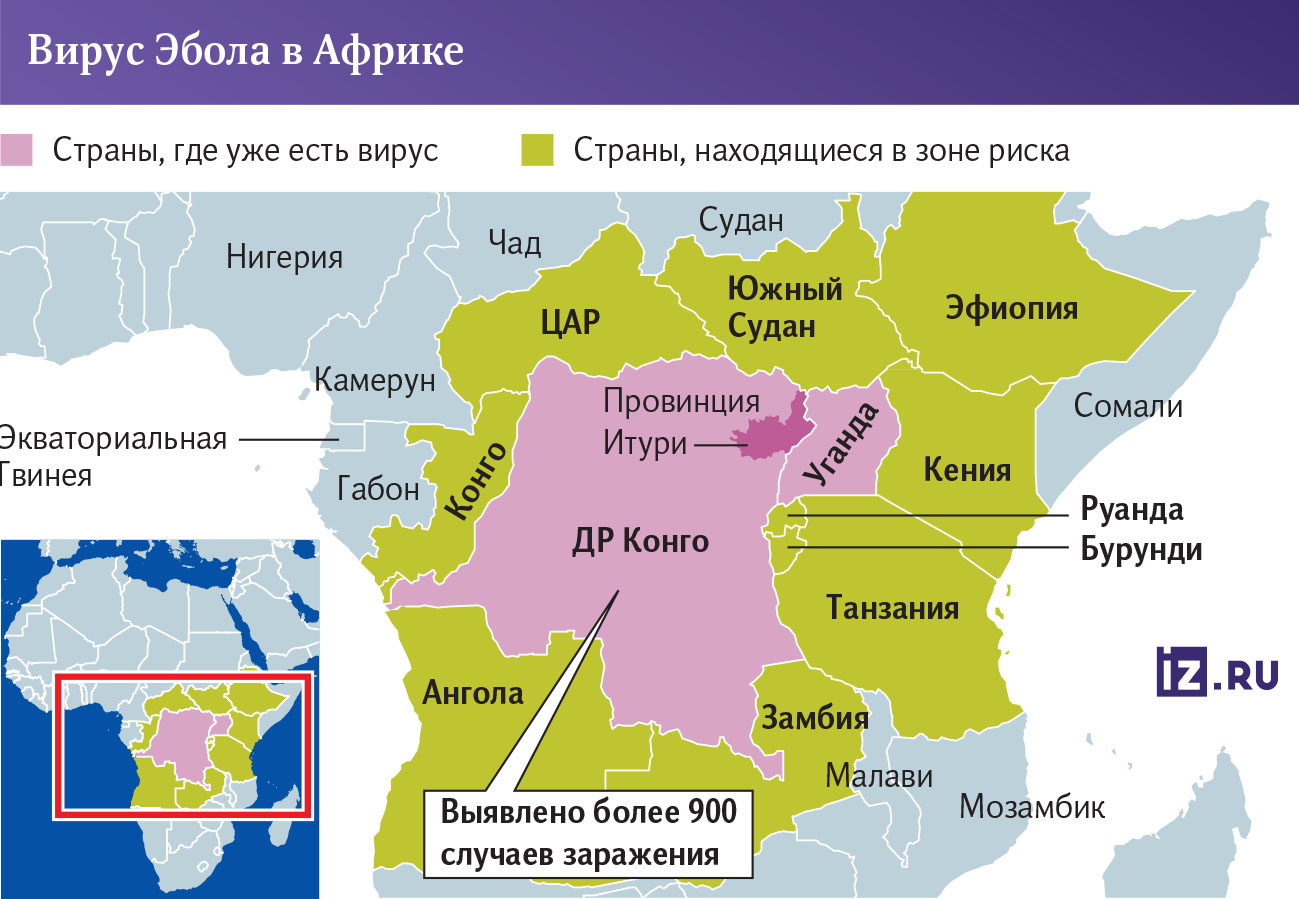
The situation with the new Ebola strain has become a threat on a global scale. The Bundibugio virus, for which there is no vaccine or special medicines, immediately swept through the province of Ituri in the east of the Democratic Republic of the Congo (DRC). The head of the World Health Organization (WHO), Tedros Adhanom Ghebreyesus, said that the number of suspected deaths due to the virus had increased to 220, and more than 900 people could have been infected in total. "We are urgently scaling up operations, but at the moment the epidemic is ahead of us," he said.
Following the DRC, the virus spread to neighboring Uganda, where five cases of infection have already been officially recorded. The African authorities have stated that the situation is under control and the necessary measures are being taken. Nevertheless, Russian tourists were warned about the risks of traveling to Uganda due to the rapid spread of Ebola, the Russian Embassy told Izvestia.
— The movement of tourists in the country is not limited. The issuance of visas by the consular department of the Russian Embassy continues as usual, there are currently no grounds for its termination. However, Russian tourists are advised to weigh the possible risks when planning trips to Uganda. The embassy is taking appropriate measures to ensure the safety of the diplomatic mission staff," they said.
At the same time, there have been no requests from Russian citizens for help in connection with the spread of fever. The Ugandan Ministry of Health has issued recommendations on citizens' compliance with basic sanitary and hygienic standards, including thorough hand washing with soap. On May 17, WHO declared a state of emergency due to the outbreak of Ebola in the DRC and Uganda. On May 22, the organization raised the risk level in the DRC from "high" to "very high".
"It's scary, I'm afraid to just go out into the city on business, bring the virus with me and infect the whole family with it, I'm also afraid to die," REN TV reports the words of one of the residents of the DRC.
Meanwhile, there are currently no risks of Ebola spreading in the Russian Federation, Rospotrebnadzor said. Enhanced sanitary and quarantine control is being carried out at all checkpoints, and the Russian side has also sent specialists to Uganda to help in the fight against the virus.

How the virus outbreak turned into an epidemic
Doctors say that the disease is quite severe and often leads to death. At first, the symptoms are very similar to the flu — a sharp rise in temperature to 38-40 degrees, severe headache, weakness, muscle and throat pain, nausea, vomiting, diarrhea. Then subcutaneous hemorrhages begin, and then internal bleeding — intestinal and uterine.
Experts say the main reason for the outbreak is the delayed reaction of the local Ministry of Health and the residents themselves. So, the first deaths from fever in the DRC were initially mistaken for a curse and raised the alarm too late, starting to turn not to doctors, but to shamans.
— Unfortunately, anxiety spread slowly in society, as people believed that they were suffering from a "mystical disease," DRC Minister of Health Samuel Roger Kamba explained.
A representative of the hospital in the town of Rwampare said that people were sure that they had been cursed by local sorcerers at the instigation of the leaders. "After that, deaths began to recur, sometimes from three to five people a day," he said.
The delayed reaction is also influenced by factors of heat, crowding in villages, cities and local traditions that violate all sanitation rules, Mikhail Bolkov, senior researcher at the Institute of Immunology and Physiology of the Ural Branch of the Russian Academy of Sciences, told Izvestia. For example, during the burial of those who died from the virus, locals often come into contact with the body and become infected.
— When we talk about our society in Russia, we have an idea about sanitation, hygiene, and so on. It may not be there, which turns out to be an obstacle to basic proliferation control," the expert explained.
For example, relatives of the deceased from the Congolese family clan demanded that the health services give them the body, and when they refused, they burned down the medical center.
Do not forget that the province of Ituri in the DRC, where 5 million people live, is a remote territory where medicine and basic epidemiological control are unavailable, Vsevolod Sviridov, an expert at the HSE Center for African Studies, reminded Izvestia. According to him, any outbreaks of diseases are much more difficult to stop due to the lack of infrastructure, which eventually leads to the spread of fever. In addition to Uganda, the virus may spread to Rwanda and further east to Tanzania and Kenya, which will also be at risk, he stressed.
According to the African Centers for Disease Control and Prevention (Africa CDC), the list of countries at high risk of Ebola infection includes 10 countries: Angola, Burundi, Zambia, Kenya, Republic of Congo, Rwanda, Tanzania, Central African Republic (CAR), Ethiopia, South Sudan.
How terrorism complicates the fight against the epidemic
One in four residents of the Democratic Republic of the Congo and Uganda needs humanitarian assistance, and one in five is forced to flee due to the activities of terrorist groups, said WHO Chief Tedros Ghebreyesus.
— Violence forces people to leave their homes, including medical and humanitarian workers. This seriously hinders the expansion of the contact tracking system and the early detection of infections," he said.
The epicenter of the spread of the virus, the province of Ituri, has remained a zone of activity of radical groups for many years, including the Alliance of Democratic Forces, which has sworn allegiance to ISIS (both organizations are recognized as terrorist and banned in Russia). Firstly, the militants sometimes do not allow doctors to see patients. They can block roads to infected villages, which is why international organizations cannot bring tests and medicines there.
Secondly, due to the constant raids of militants in the region, local residents are forced to leave their homes, becoming, in fact, refugees. Chaotic migration makes it impossible to follow the main rule of fever control — tracking the chain of contacts. Infected people who have not yet shown obvious symptoms are fleeing inland, accumulating in overcrowded camps without access to clean water.
At the same time, regular gunfights by militants, although they complicate the work of WHO and the Red Cross, do not completely hinder it, says Vsevolod Sviridov.
— There are focal points in the region, sometimes there are roadblocks. Taxes are collected somewhere, robbed somewhere, trucks are burned. But there are no full—scale contact lines," the expert explained. — That is, there is no full-scale war in the country and the region.
Therefore, terrorists are unlikely to be the main catalyst for the spread of fever. One way or another, a global pandemic should not be expected, because over the past time, African countries have learned how to cope with viral outbreaks, Sviridov concluded.
In order to suppress epidemics and fight terrorism, the world community needs to solve another task — to improve the quality of education in African countries. According to the UN, there are between 5.2 million and 7.6 million children and adolescents between the ages of 5 and 17 in the DRC who do not attend school at all or have dropped out without receiving primary education. At the same time, access to quality education reduces the risk of radicalization and support for extremist groups. This is due to the elimination of social and economic prerequisites. In addition, education gives a person critical thinking: it is likely that instead of blindly following the advice of "shamans", he will choose evidence-based medicine and timely medical care.
Переведено сервисом «Яндекс Переводчик»
