The tick season is in full swing in Russia. What you need to know

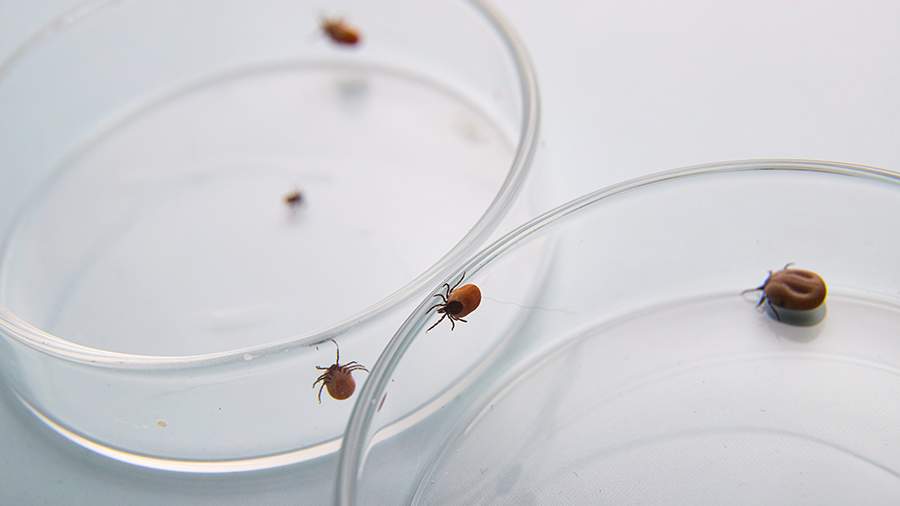
In Russia, the peak tick season has begun — more than 43 thousand people have already turned to doctors after bites. These parasites carry dangerous infections, including tick-borne encephalitis and Lyme disease. The list of regions with an increased risk of infection includes 49 regions of the country. At the same time, experts advise taking care in advance to protect not only people, but also dogs, for whom tick bites can also be deadly. What you need to know about the tick season, as well as how to protect yourself and your pets, is in the Izvestia article.
Dangerous season
• Every year, with the arrival of heat in Russia, the season of tick activity begins. In Russia, more than 43 thousand people have already turned to doctors for bites.
• Ticks belong to arachnids. More than 48,000 species are known to science, but Ixodes and argasse ticks are mainly dangerous to humans. They carry tick-borne encephalitis, borreliosis, anaplasmosis, ehrlichiosis and other infections. Encephalitis affects the nervous system and can lead to paralysis, while Lyme disease, without treatment, affects the joints, heart, and nervous system.
Tick-borne encephalitis is transmitted to humans almost immediately after being bitten by an infected tick along with the parasite's saliva. Usually, the latent period of the disease lasts 10-14 days. The infection develops abruptly: chills appear, severe headache, temperature rises to 39 degrees, nausea and vomiting occur.

Distribution by region
• In Russia, 49 regions are included in the list of territories with an increased risk of infection with tick-borne encephalitis. In a number of regions, certain districts and cities are recognized as dangerous, and some regions are fully included in the list of endemic territories. The latter include Kostroma, Vologda, Kaliningrad, Leningrad, Novgorod, Pskov, Kemerovo, Tomsk, Tyumen, Kirov, Sverdlovsk, Chelyabinsk Regions, Sevastopol, Perm, Altai and Primorsky Territories, Udmurtia, the Republic of Altai, Buryatia, and the Jewish Autonomous Region.
• In other regions, certain territories are considered endemic. For example, 18 districts and cities are considered dangerous in the Yaroslavl Region, 22 in the Arkhangelsk Region, and 42 in Bashkortostan.
• At the same time, some regions were not included in the list of endemic zones. Among them are the Belgorod, Kursk, Murmansk and Saratov regions, Kamchatka Territory, Chukotka, as well as the DPR, LPR, Zaporizhia and Kherson regions.
How to protect yourself from ticks
• Doctors call vaccination the main method of prevention. Vaccinations are recommended for residents of dangerous territories and tourists who are going to go there.
• In addition, it is recommended to use repellents, wear light-colored closed clothes with tight cuffs and tuck trousers into socks. For additional protection, you can wrap the legs with adhesive tape with the sticky side facing out. Before going to the forest, it is allowed to treat clothes with essential oils of eucalyptus or cloves, but such products are weaker than special preparations against ticks.
• Ticks are most often found in tall grass, on the edges, meadows, suburban areas and in forest parks. They are most active from April to October, and peak in May-June. European forest, taiga, meadow and steppe ticks are widespread in Russia.
• After a bite, experts recommend removing the tick as soon as possible and sending it for analysis. The maximum effect of prevention is achieved in the first 72-96 hours. Immunoglobulin is used against tick-borne encephalitis, and antibiotics help reduce the risk of borreliosis.
Why it's important to protect pets
• The main danger to dogs is not the tick bites themselves, but the babesia parasites that enter the bloodstream through the tick's saliva. They affect red blood cells and can cause pyroplasmosis, a deadly disease. The main symptoms include weakness, fever, darkening of urine and jaundice.

• From March to October, animals should be treated monthly with anti-tick products. The drugs begin to act 5-7 days after application. The most reliable is considered to be a combination of several methods of protection — for example, drops along with a collar or spray. After walking, the dog should be carefully examined, especially the area of the ears, neck and chest.
• The incubation period of pyroplasmosis lasts from 10 to 21 days, therefore, at the first symptoms of a pet, you should immediately show it to a doctor. Vaccination is considered an additional preventive measure. It does not guarantee full protection, but it helps to reduce the risk of animal death.
• The most vulnerable to ticks are poodles and breeds bred on their basis. Much less often, ticks bite Labrador retrievers, Staffordshire Bull Terriers, Jack Russell Terriers and Chihuahuas. At the same time, the risk of a bite is 1.24 times higher in males, and 1.13 times higher in neutered animals. Despite the statistics, veterinarians recommend that all dog owners take care of protecting their pets in advance.
Переведено сервисом «Яндекс Переводчик»
