Nakhodok Trunk: how Hyacinth calculations work near Dobropolye


Hyacinth-B howitzers of 152 mm caliber remain one of the most long-range and massive guns of the Russian artillery. At various stages of the special operation, they were used to strike at the Ukrainian rear and fight Western artillery systems. And now, in conjunction with reconnaissance UAVs, they destroy valuable or well-protected targets. Their work is especially important in cases where a quick and powerful strike is needed, which will reach the target regardless of the enemy's electronic environment and air defense systems. Izvestia learned about how the gunners of the 9th brigade of the Center group of forces are working in the Dobropolsky direction.
How to equip positions for Hyacinth-B guns
Towed guns, such as the Hyacinth-B, have long been operating from permanent firing positions, which, according to the requirements of the time, first acquired more and more dense camouflage, then anti-border nets, and then full-fledged shelter structures. They resemble small houses, of which only the muzzle brake compensator of the gun is often visible.
A change of positions, which is commonly referred to as a "rollover" command, remains necessary, but heavy guns are required to transport the appropriate trucks. And if you can supply positions on buggies or ATVs, bringing up several shells, then the gun cannot be "reduced" in any way, so the rolls turn into separate complex "combat operations".
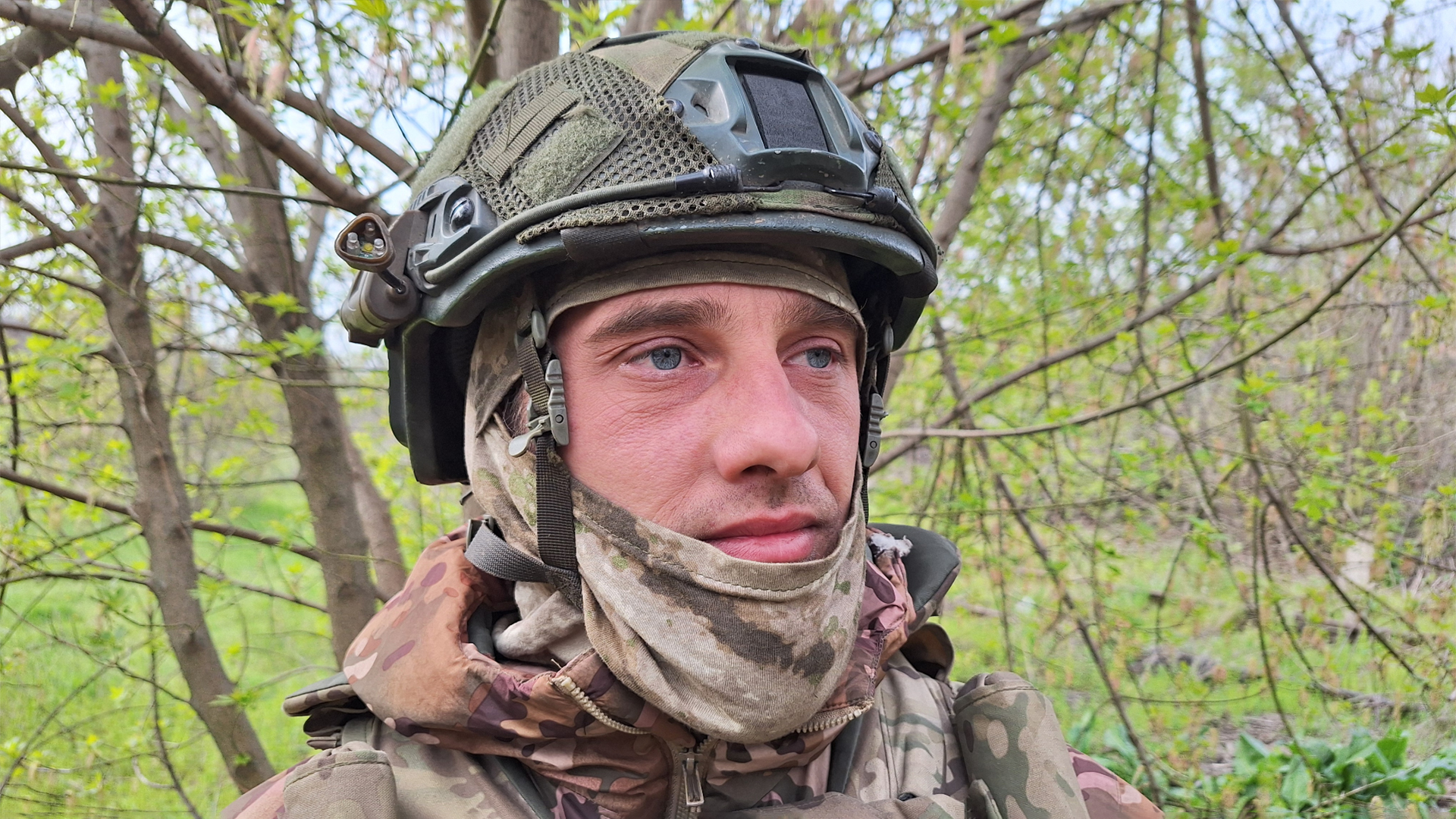
— The enemy launches reconnaissance drones, performs a square search, and searches for weapons. Then he launches a kamikaze FPV. Baba Yaga flies at night. We use electronic warfare equipment, we allocate two people from the calculation of the gun for the air surveillance point with guns. When shooting, if the sky is "dirty", then we tell them that we cannot work, and take cover until a safe moment," says senior gunner Alexander Markin.
One of the features noticeable from under the "brazier", which completely covers the gun, is the cable on the barrel. For this, when quickly folding and masking, two people can lower the barrel faster against the force of pneumatics, gaining valuable seconds, especially in cold weather. A technique used by experienced gunners.
— Basically, our targets are vehicles, we hit UAV control points or valuable fortifications in landings, recently one point of drones was destroyed. But, as a rule, when our intelligence sees moving equipment, it transmits the coordinates to us, and we work until we hit the target. These are not only "rolls", but also movements or rotations can be, — says Alexander.
He himself hails from the Irkutsk region, joined the army in 2022 during the mobilization. He began serving in anti-tank artillery, which by now has become irrelevant due to its short firing range. And after the unit was disbanded, he joined the 9th brigade, where he worked on such guns as D-30, D-20, and after that on Hyacinths. Thus, it turned out that he passed most of the calibers of the Soviet artillery.

How do the calculations of the Hyacinth-B guns work?
— We basically have five rounds per target. The first two are for adjustments, and the third one, as a rule, is already being worked out on target. I think this is a good result for the Hyacinth at its ranges, but it's not a sniper rifle after all. When we work out the dugouts, it is unlikely that anyone will be alive there after 152 mm," Alexander explains.
The 100-millimeter MT-12 Rapier anti-tank guns were called the "Sniper rifle of artillery", with which he began his combat career.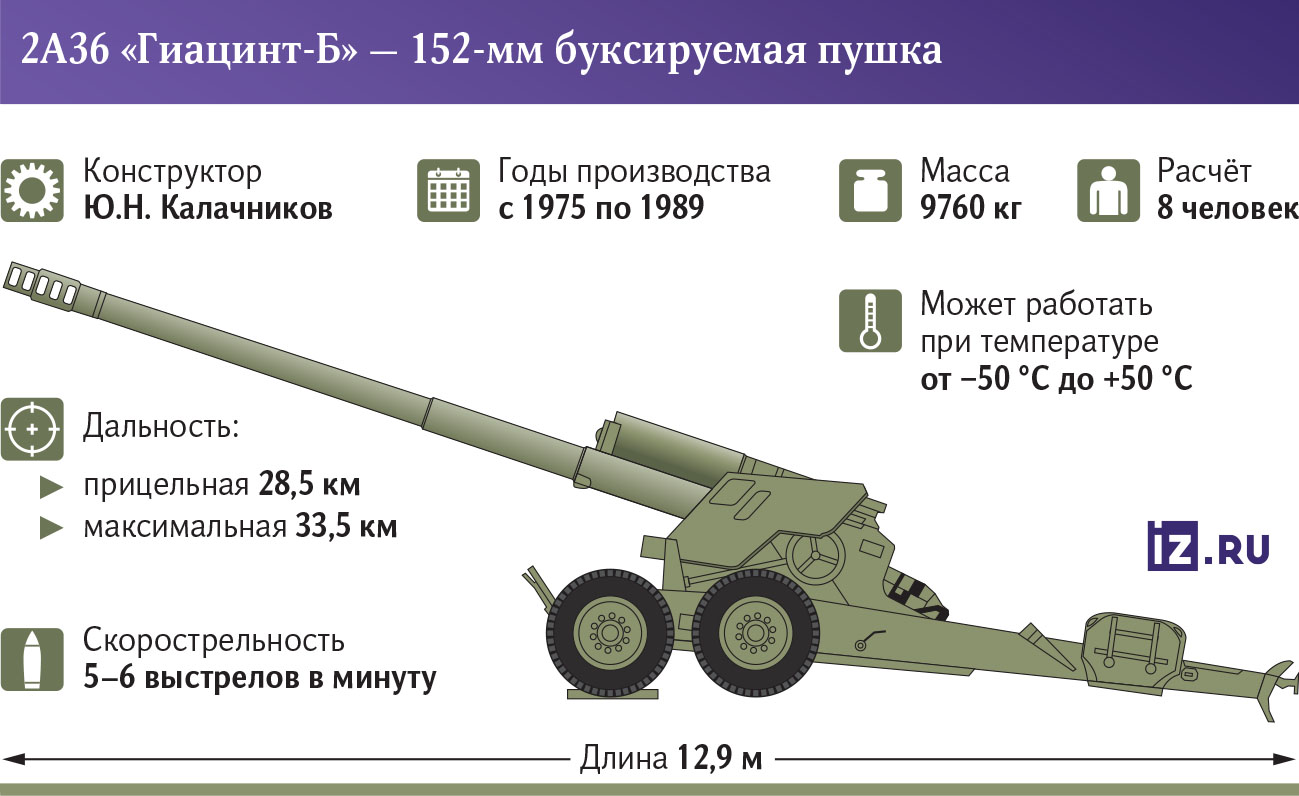
Alexander also says that no matter how well the defense of the gun from the UAV and its disguise are organized, it is impossible to stay in one position for too long. The new one is equipped in advance, shelters are needed there for both people and guns, and then, with the involvement of additional personnel, it is moved at dusk. Interestingly, the first thing to do after rolling is to almost always remove the wheels from the guns and hide them in the dugouts so that small fragments do not damage the tires, which cannot be repaired in positions and are difficult to remove from there.
— Before the army, he worked as an auto mechanic and a builder, so the experience of handling machinery was useful here. My wife, eight-year-old child, parents, brother and sister are waiting at home. I was on vacation this year, taking my child to first grade," says Alexander.
It is worth noting that although an increasing number of firing tasks are being transferred to UAVs, the range of which has gradually increased and exceeded the range of classical artillery, there remain situations where it is more convenient to operate with large-caliber guns. In particular, this is work in severe weather conditions, when the actions of attack UAVs are difficult, and the enemy is trying to organize rapid movements.
Earlier, Izvestia told how rocket artillery works in the Dnepropetrovsk direction. At the firing position, the topogeodesist and the platoon commander jump out of the car, and while the crew is deploying the Grad, work begins with the instruments. Except for the gunner, all the others scattered around with personal weapons, the car was covered by five shooters. Having finished working with the device and radioed the air spotters ready to fire, the platoon commander waited for confirmation that the "bird" saw the target and was ready to observe the first arrivals. After that, he ordered a series of 10 sighting missiles. Then the command "fire with the rest" came, that is, nothing needs to be adjusted, you can finish off the target. A couple of seconds after the last shot, the entire crew took off from their seats to the car at the same time. The collapse and rapid withdrawal from the position began.
Переведено сервисом «Яндекс Переводчик»
