
Debut and credit: why 19-year-old Shostakovich was called a genius

Exactly 100 years ago, the public learned about composer Dmitry Shostakovich. The premiere of his First Symphony, which took place on May 12, 1926 at the Leningrad Philharmonic, made the 19-year-old graduate of the Conservatory one of the most promising figures of Russian music. And the subsequent performances abroad introduced the whole world to the young genius. Celebrating the anniversary date, Izvestia reflects on why Shostakovich's music became a true sound portrait of the 20th century and how this ability to express his time manifested itself in the master's landmark opus.
The Age of Shostakovich
If you ask yourself who was the main Soviet composer, the answer is unequivocal: Shostakovich. The main thing is not in terms of formal status (although when the Union of Composers was created in the USSR, Dmitry Dmitrievich was at the helm), not in terms of the number of awards (and this was also in abundance), but in terms of the significance of the legacy, the creative scale, and also because the word "Soviet" with the name of Shostakovich is inextricably linked. And this is his difference from Sergei Prokofiev, a musician, perhaps no less important, but who declared himself even before the revolution, and then successfully worked in exile for a long time.
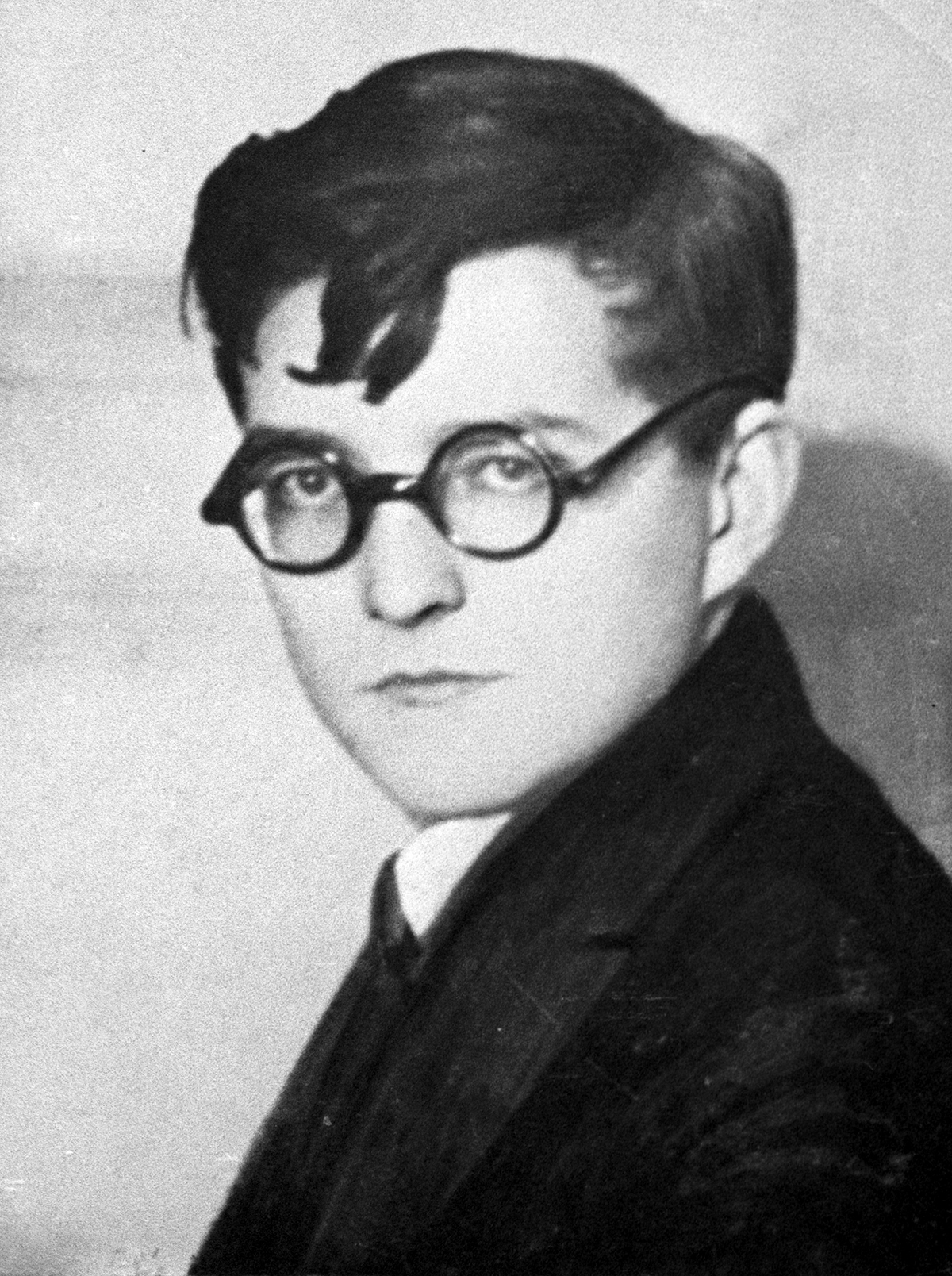
It was Shostakovich who went through almost all the stages of its history with the Soviet country and captured them in music: the revolutionary enthusiasm and hurricane freedom of the 1920s, the horror of the repressions of the 1930s, the heroic impulse of the Great Patriotic War, the difficult post-war years, the bright hopes of the thaw, the gray times of stagnation… With his writings, Dmitry Dmitrievich talked to his compatriots about what was not always possible to say out loud. For example, it is known that at the premiere of the Fifth Symphony in 1937, many in the audience sobbed: the slow movement of the work was perceived by the public as a requiem for the victims of the NKVD.
But Shostakovich's music is no less appreciated abroad. Why is that? Perhaps the reason is that her tragedy, sharp contrasts, paradoxical and at the same time desperate desire for humanism turned out to be consonant and understandable to people all over the globe. Like no one else, Shostakovich managed to create a sound portrait of the 20th century — a century of the bloodiest wars, revolutions, great atrocities and great victories.

A symphony instead of a movie
It became clear that he was capable of this already then, on May 12, 1926, when the orchestra conducted by Nikolai Malko performed Shostakovich's First Symphony. While creating it, the author barely made ends meet and found time to compose between the tedious tap work in Leningrad cinemas: the composer's main income at that time was playing the piano during the screening of silent films. By the way, Lyubov Orlova (the future Soviet star No. 1, the muse of Grigory Alexandrov, the favorite of Stalin and the whole country), and Leo Arnstam, the director of the film Zoya about Kosmodemyanskaya (the music for it was written by none other than Shostakovich), earned their bread in the same way. It was not a particularly creative business, and Mitya Shostakovich was burdened by it. Although sometimes inspiration came to him there, too.

In a letter to Lev Oborin, Shostakovich said:
"Yesterday there was a view painting "Wading and waterbirds of Sweden." I sat down to illustrate it. He got into a rage and began to depict such birds that the sky became hot. Suddenly, there is a great roar of applause in the hall, with whistles blowing. They usually applaud in the cinema, protesting, and not admiring at all. I thought: "We must assume that the painting is rubbish, so the public is protesting." Then everything went quiet. After a while, there was another round of applause. Then the painting ended. A certain Schaeffer came up to me and said, "The public is told to run away from such music." Then the head of the theater approached Vladimirov (the conductor) and began to say something. Then I went up to Vladimirov and asked him what the head of the department had told him. Vladimirov laughed and said, "The audience came to Zava during the painting and said that the pianist was probably drunk." And Vladimirov told the head of the department: "The illustration is excellent, and your audience does not understand anything."
The incident described occurred about six months before the premiere of the First Symphony. It was not until early February 1926 that Shostakovich decided to leave his piano job. And it is not known how his fate would have turned out if not for the upcoming triumph, which immediately provided the young man with orders and allowed him to never return to his unloved business. However, the composer will be connected with cinema, already sound, for the rest of his life. More than any other classic. And this is also a sign of his special "affinity" with his era — the age of cinema.
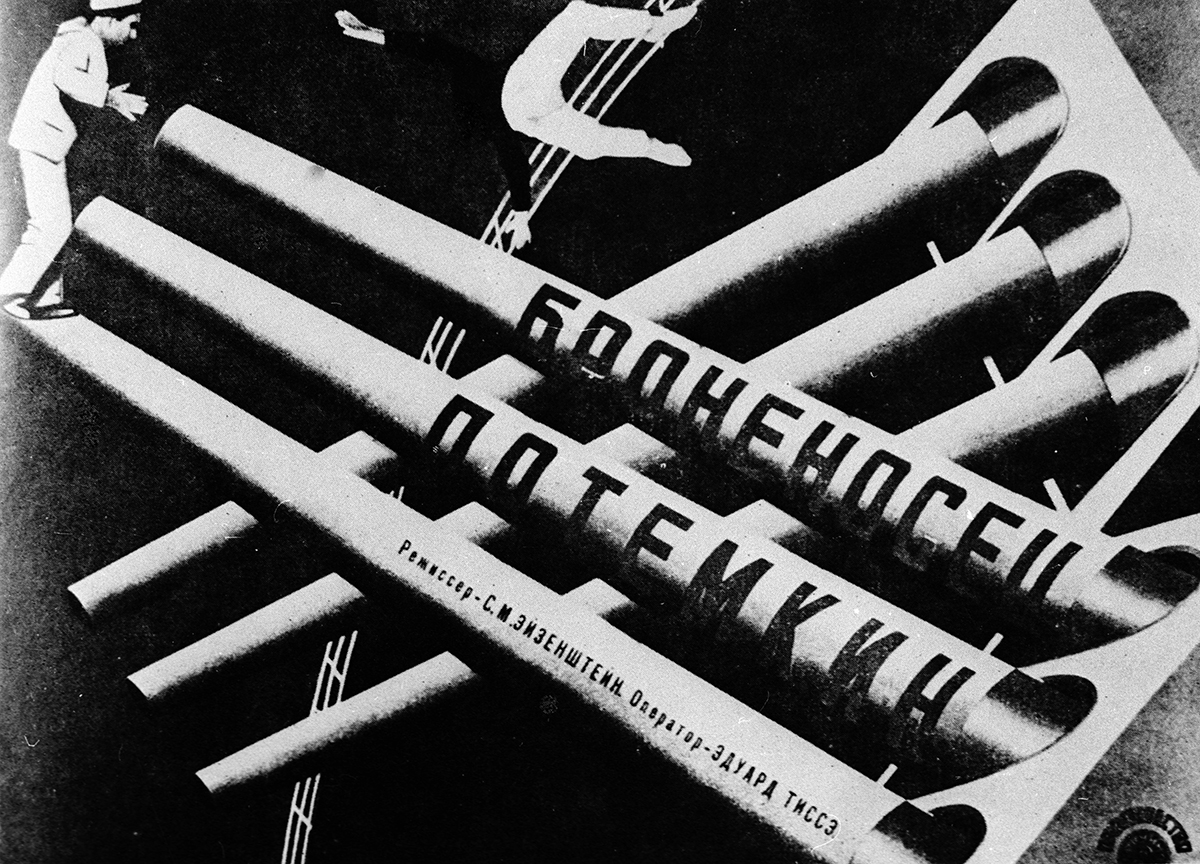
Even his academic music is extremely cinematic (it's not for nothing that fragments from Shostakovich's symphonies were so successfully used in the film "Battleship Potemkin" by Eisenstein, the sound version of which was prepared in 1975 for a new rental). In the First Symphony, one can already feel that "plot", aggravated by unexpected contrasts, collisions of different themes, rapid, almost montage transitions between episodes completely different in emotional content.
Contrasts of music and life
In the first movement of the First Symphony, we hear a paradoxical combination of frivolous playfulness and drama, gentle lyrics and horror, open struggle and concealment. In the second movement, Shostakovich begins to dance: he gallops rapidly in a kind of unrestrained oblivion, but this is suddenly replaced by a slow contemplative theme, only to give way to dance again, which has become not carefree, but frighteningly phantasmagorical, like an obsession, a terrible dream.

The third, the only slow movement, becomes the lyrical center. But even here, everything is not cloudless. The apparent calm is now and then overshadowed by doubts and hidden threats. Well, in the finale, the former effectiveness returns: the formidable storm in the orchestra is suddenly replaced by the gentle lyrical theme of the solo violin, after which a whirlwind of dramatic events swirls again, but it is replaced by the pathetic "utterance" of brass, and then by the roar of percussion.… And even if this eventually leads to victorious jubilation, full of the energy of struggle, it is impossible to get rid of the thought that new upheavals await us ahead, "behind the scenes."
Shostakovich's childhood and teenage years fell during the most dynamic period of modern Russian history. At the age of 10-11, he experienced two Russian revolutions, entered the Petrograd Conservatory during the Civil War, and completed his studies and began his adult career during the NEP era. During this time, the country has changed beyond recognition. And this dynamism, coupled with the instability of life, the feeling of complete uncertainty of the future and the ever-present subconscious fear (as if not to fall under this roller coaster of history) fully embodied in his work.

Vladimir Mayakovsky, Dmitry Shostakovich, Alexander Rodchenko, Vsevolod Meyerhold while working on the play "The Bug", 1929
Although it is in the First Symphony that, perhaps, there is more excitement of life than fear; thirst for existence than suffering from it. Shostakovich seems to foresee that he is entering the happiest time of his life. Ahead of him is an incredible creative rise, his first marriage (Mitya met Nina Varzar in 1927), friendship and work with the greatest contemporaries (Mayakovsky, Meyerhold, Kozintsev and others), universal recognition. The first is played by Bruno Walter, Artur Rodzinsky, and finally by Arturo Toscanini himself; and Leopold Stokowski bluntly calls Shostakovich a genius. He will fully justify this unprecedented credit of trust from the world music community.

The New Century
The triumph will last 10 years, until the devastating Pravda article "Confusion instead of music" breaks out — a menacing shout from the authorities, which negated his previous successes and forced not Mitya, but Dmitry Dmitrievich to fear arrest for the rest of his life, keeping a packed bundle of things at home. And then there will be a war, then there will be accusations of formalism and a new disgrace, then there will be the need to be hypocritical and speak official language at official events...

Composer Dmitry Dmitrievich Shostakovich during the exercises of the fire brigade from the faculty of the Leningrad Conservatory during the Great Patriotic War
Shostakovich fully experienced the hardships, sorrows, and worries of both his people and the generation as a whole. And he found a universal language that is understandable to everyone — but at the same time full of allegories, ciphers, omissions, ritual "phrases" that hide something fundamentally different. But isn't this also a vivid characteristic of his time, when even in art a person could not be fully honest?
For example, it was customary to interpret the finale of the already mentioned Fifth Symphony as optimistic. But after the author's death, musicologists came to the conclusion that there was no joy here, but a grimace of joy; a procession to the execution, rejoicing from under the stick. Today, it is considered that the entire opus is ambivalent. This is far from the only example of Shostakovich. A master of the Aesopian language, he spoke much more by the very fact of omission than by direct utterance.

Composer Dmitry Shostakovich
That's just not to consider such phenomena as diplomatic caution. Shostakovich's "conformism", which was later repeatedly reproached by composers of subsequent generations, "nonconformists", was not a result of ambition and the search for benefits, but of the fear that always (at least from "Confusion instead of music") followed him relentlessly. And for all its allegories, Shostakovich's music is much more sincere than many avant-garde and seemingly censorship-defying searches. Because she was born not with a cold mind and creative passion, but with life itself in this difficult time, her perception and awareness of herself as a grain of sand in the whirlpool of the ocean called the "XX century".
However, the century ended, but Shostakovich's music remained. And it turned out to be no less relevant for the new age, the new century. Today, when we celebrate the 100th anniversary of the premiere of the First Symphony, you can feel it especially clearly.
Переведено сервисом «Яндекс Переводчик»
