Save before birth: an intrauterine surgery center will open in the Far East


In the Far East, according to statistics, from 3% to 5% of pregnancies per year, which range from 2,280 to 3,800 cases, are accompanied by congenital malformations or intrauterine complications. Sometimes, in order to save a child, a woman has to travel 9,000 km to the federal center ― and this is an additional stress for the mother and child. To remedy this situation, the charity foundation "Light in the Hands" is starting to create a center for early diagnosis and intrauterine surgery in the Far East as part of the T-Bank's "Course of Kindness" project. For more information, see the Izvestia publication.
Numbers and risks
There are 1.25 million women of childbearing age in the Far Eastern Federal District. About 76,000 pregnancies are registered here every year. Approximately 760 cases per year belong to the high-risk group, where the outcome directly depends on early detection and proper routing of patients, and from 228 to 380 cases per year potentially require intrauterine (fetal) surgery. In Primorsky Krai and neighboring regions of the Far Eastern Federal District, there is an acute shortage of capacities and specialists to work with these diagnoses.
— Fetal medicine is actively developing in Russia today: strong expertise has been accumulated in leading federal centers, and complex intrauterine interventions are already being performed to preserve pregnancy and the health of the child. However, access to these opportunities is unevenly distributed. Currently, the main infrastructure and competencies are concentrated in several federal centers in the European part of the country. For the Far Eastern Federal District, this means that when complex fetal pathology is detected, families need to route to other regions, often thousands of kilometers away. In some cases, such logistical and time constraints become critical," Alexandra Kraus, president and founder of the Light in Hand Foundation, explains why the choice fell on the Far East.
The price of the distance
Distance directly affects the timeliness of care, and in fetal medicine it is one of the key factors of pregnancy outcome.
— A number of intrauterine conditions have a so—called "intervention window" — a period in which treatment is as effective as possible and allows you to preserve pregnancy and the health of the child, - emphasizes Alexandra Kraus. — When a flight of thousands of kilometers is required, the stages of coordination, transportation, and waiting are added, and this can lead to a shift in the timing of assistance. In addition, the road itself is an additional burden on a woman with a complicated pregnancy. Flights or long-term travel are not always possible for medical reasons, and in some cases this restricts access to necessary treatment. There is also a psychological factor: a woman finds herself in another part of the country, far from her family and the usual support system, which also affects her general condition and ability to undergo treatment."
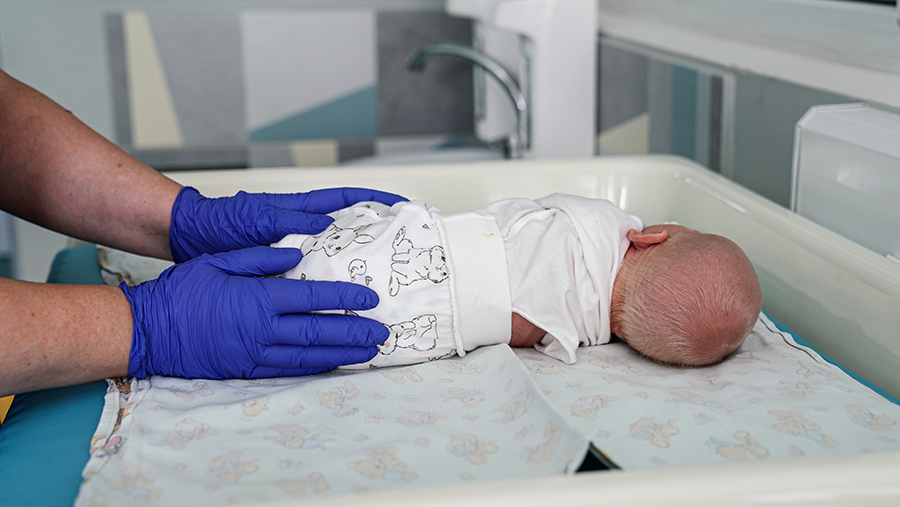
Together, the expert notes, this creates a situation in which even with the availability of high-quality care in the country, access to it is difficult. That is why the development of such opportunities on the ground is not only about convenience, but about increasing the likelihood of timely intervention and, as a result, more favorable pregnancy outcomes.
Don't miss the moment
Olga Topchaya is an obstetrician—gynecologist, hemostasis specialist, and a specialist in high-risk pregnancy management. She works at a Moscow clinic, where the country's first intrauterine operation was performed in 2005. Now, according to her, such interventions have become a routine part of the work.
— We have knowledge, experience, and advanced technologies. Moscow can handle many difficult cases. With timely diagnosis, which is available in large federal centers, you can help with almost any high—risk pregnancy," says the doctor.
At the same time, Topchaya emphasizes that the most important thing in obstetrics is the timing of treatment.
— A child in utero does not just grow, its development goes through many stages, stages and critical moments that must occur at a specific time of pregnancy. The gynecologist leading the pregnancy monitors exactly these moments and, if necessary, decides on help. And it is very important that the help be as prompt as possible. Otherwise, we will miss the moment," the expert notes.
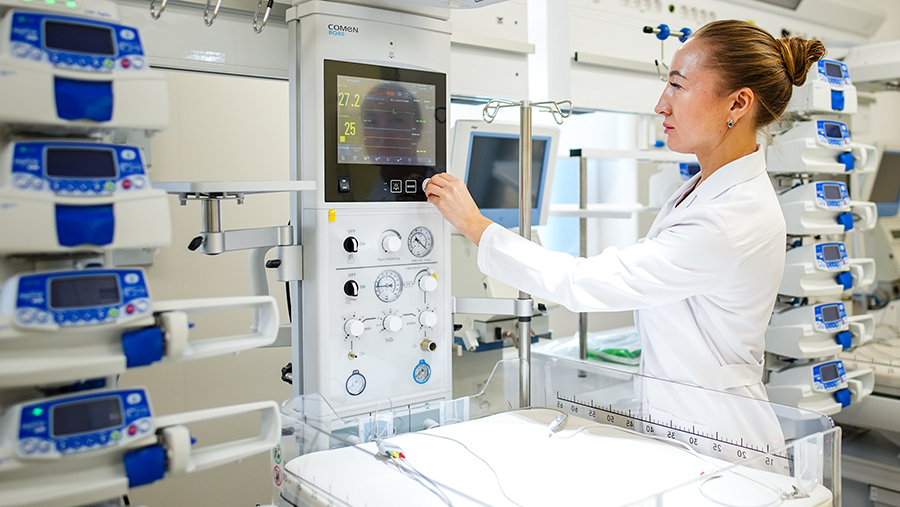
Modern medical knowledge and experience make it possible to help children with malformations even before birth. According to Topchey, fetal surgery is resorted to when a child is guaranteed not to survive without such an operation (for example, with feto-fetal transfusion syndrome or hemolytic disease) or will be born with seriously limited health, as in the case of spina bifida.
— Such operations are performed at 20-24 weeks or even 16 weeks of pregnancy. These are the periods at which a woman is just beginning to feel the movements of her baby," explains the doctor. — And in case of such a problem, she should have time to see a doctor, be fully examined, and undergo a consultation. And this is not a whim or a red tape of the system, but a medical necessity for the sake of successful surgical care. A timely operation can guarantee the birth of a healthy baby. In case of delay, at best, we get the need for repeated operations after birth — and this is with the most optimistic forecast. It is especially insulting and dramatic when this delay in assistance occurs due to the physical distance of a pregnant woman from a place where she can be helped.
The first steps
To speed up the opening of the expert center for early diagnosis and fetal surgery on the basis of the existing medical institution — Primorsky Regional Perinatal Center, the charity foundation "Light in Hands" became a participant in the All-Russian social initiative of T-Bank "Course of Kindness". By the end of May, T-Bank is doubling its clients' donations to the foundation, regardless of the amount. The funds raised under the project will be used to create a center. This will make high-tech assistance available to families in the Far East.
Since June 2025, thanks to this project, 749 million rubles have already been allocated to finance infrastructure projects of various funds.
Tatiana Kurleeva, Chief physician of the Primorsky Regional Perinatal Center, says that the first intrauterine surgical interventions are already being performed in the region.
— Of course, we plan to develop further in this direction, — she notes. — The implementation of the new project will allow us to develop this area and carry out a number of surgical intrauterine interventions here, on site, without leaving the region.
At the first stage, it is planned to introduce several key techniques, including laser coagulation of fetal anastomoses, coagulation of acardial fetal vessels, and destruction of amniotic cords. This will require specialized equipment: fetoscopic systems, laser installations, expert-class ultrasound machines, fetal monitors and dopplers, as well as an MRI machine for diagnosing fetal pathologies.
— The planned project will ensure early detection, initial expert assessment, selection of cases that can be solved in the region, and sustainable routing to federal centers for cases where a higher level of intervention is required. All this means reducing time losses and increasing the availability of medical care," explains Kurleeva.
The main "teacher" for Primorsky doctors will be one of the federal centers. Tatiana Kurleeva is confident that the project will continue the trend of reducing perinatal mortality in the region.
— In Primorsky Krai, over the past few years, or to be more precise, since the opening of the perinatal center almost 12 years ago on behalf of Russian President Vladimir Putin, perinatal mortality rates have been significantly reduced and are at a historical minimum.
Joining forces
Alexandra Kraus emphasizes that for the fund, partnership with the bank is not only about money, although financial support is important.
— Something else is very valuable to me: thanks to this partnership, many more people will learn about the project. We see how those who simply had no contact with this topic before are getting involved, and they begin to feel that they can also be part of a big decision," the director of the foundation notes.
According to her, the mechanics of doubling donations work not only as a tool, but rather as an emotional gesture — a person understands that his contribution is being strengthened, and this creates a sense of a common cause in which there is support from other people. In addition, the participation of large businesses increases the visibility and credibility of the initiative, which is important for attracting partners and generating sustained interest in the project.
— At the same time, it is fundamentally important for us that the project relies on strong medical expertise. This gives us confidence that we are not developing a separate initiative, but a continuation of an existing professional school.
The creation of a medical infrastructure is always the result of joint efforts by different participants. The state forms the system and ensures its sustainability, medical institutions develop clinical practice, business and the non-profit sector complement these processes, attracting additional resources and attention to important areas.
"In this kind of interaction, projects appear that expand the availability of care and strengthen the existing healthcare system," concludes Alexandra Kraus. "This develops into a living process where everyone has their own role, and it is through this that progress becomes possible.
About the "Course of Goodness
The Course of Kindness is an All—Russian large-scale charity project launched by T-Bank on June 1, 2025. Every two months, the initiative's partner fund changes on a rotating basis. All customer donations to the T-Bank partner fund are doubled, regardless of the amount and quantity. Light in the Hands became the sixth charitable foundation partner of the social initiative, replacing the Oncologica Foundation, which received double donations from T―Bank customers in February and March 2026. Earlier, the foundations "Life as a Miracle", "Anton is here nearby", "Vera" and "Big Change" also participated in the initiative.
Переведено сервисом «Яндекс Переводчик»
