- Статьи
- Culture
- The Tree of Consciousness: Russia returned to the Venice Biennale despite the scandals

The Tree of Consciousness: Russia returned to the Venice Biennale despite the scandals

The Russian pavilion at the Venice Biennale has opened — despite all obstacles and provocations. The world's largest show in the field of contemporary art ignored the threats of politicians and went on to lose an impressive grant from the European Commission, opposing the "culture of cancellation." At the same time, Russia has developed an original format that takes into account logistical difficulties: instead of works of fine art, the "Tree Rooted in the Sky" project demonstrates musical performances. The details are in Izvestia.
"Everyone likes it"
The days of the pre-screening have started at the Venice Biennale: from May 6 to May 8, guests and media representatives will be able to visit the national pavilions, and from May 9, the gardens where the screening takes place will be open to all comers. And although this event attracts a lot of attention and causes controversy every year, especially in the art community, this year real battles are unfolding around it. It's all about the organizers' decision to allow Russia to participate.
The last time our country presented its project at the biennale was in 2019. Then the pandemic struck, and the reconstruction of the Russian pavilion began in parallel. And in 2022, when the work was completed, Russia had to withdraw from participation due to Western sanctions imposed after the start of its military operation. And now, seven years later, the long-awaited return took place. It turned out to be as loud as possible, and not so much for artistic as for political reasons.
— Even if there was nothing on display in the pavilion, its very presence means the presence of Russia. However, this year Russia participates in the 61st Venice Biennale of Contemporary Art in the full sense of the word. Russia has prepared and presented its exposition. This is a project by a group of young authors who, in my opinion, convey the image of today's and, to some extent, future Russia, a country that is quite broad in its essence, open to the world; a power that is not only European, but also a leading Eurasian force," the Russian Ambassador to Italy shared with Izvestia Alexey Paramonov.

The European Commission sharply criticized the organizers and promised to deprive the biennale of a grant of € 2 million. Their politicians also put pressure on Venice: Italian Culture Minister Alessandro Giuli said he would refuse to attend the opening ceremony if the decision to admit Russia was not changed. At some point, it seemed that the proud defenders of freedom of art would put the squeeze on them after all. But in the end, no threats had any effect.: As planned, the Russian pavilion has opened and, moreover, the local police are vigilantly guarding it from all kinds of provocateurs.
For example, Pussy Riot (recognized as an extremist organization in Russia) and Femen staged a protest in front of the pavilion and tried to get inside, unsuccessfully. But the organizers cleverly beat their plans by making a parody of dancing in balaclavas and signing the video "Everyone likes it!".
The Music Ring
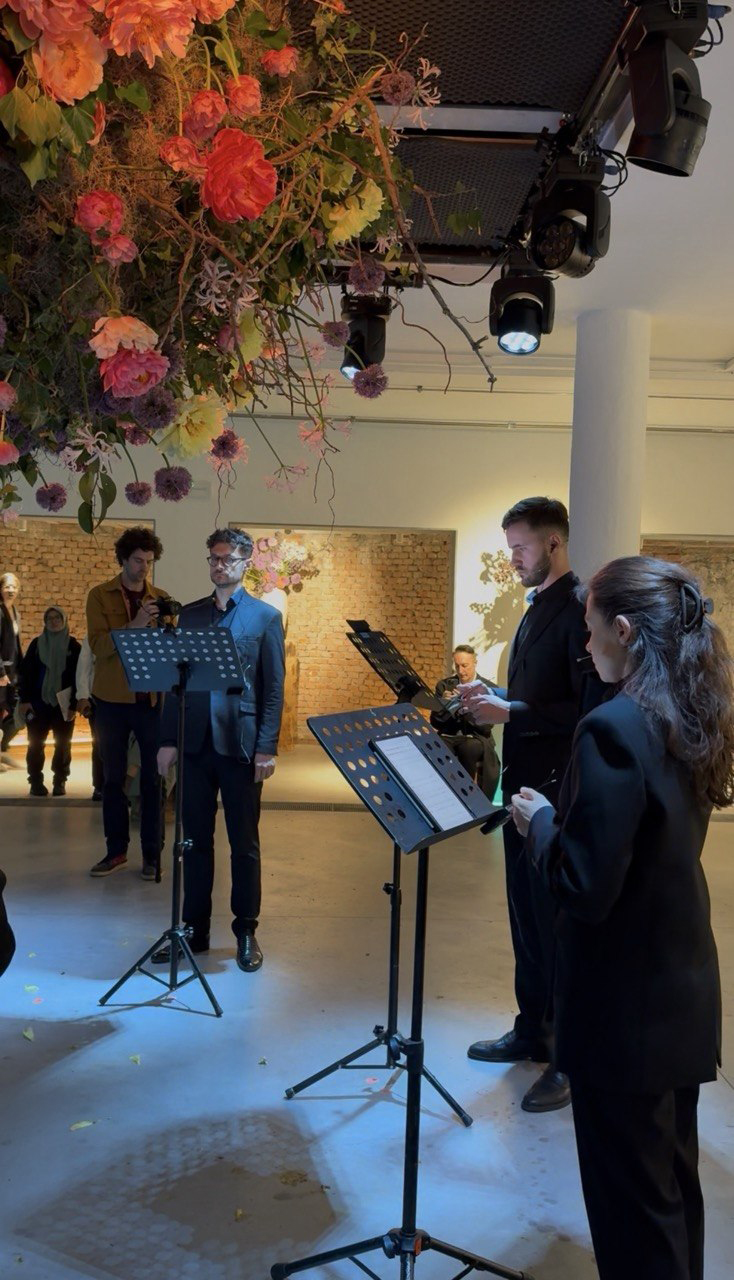
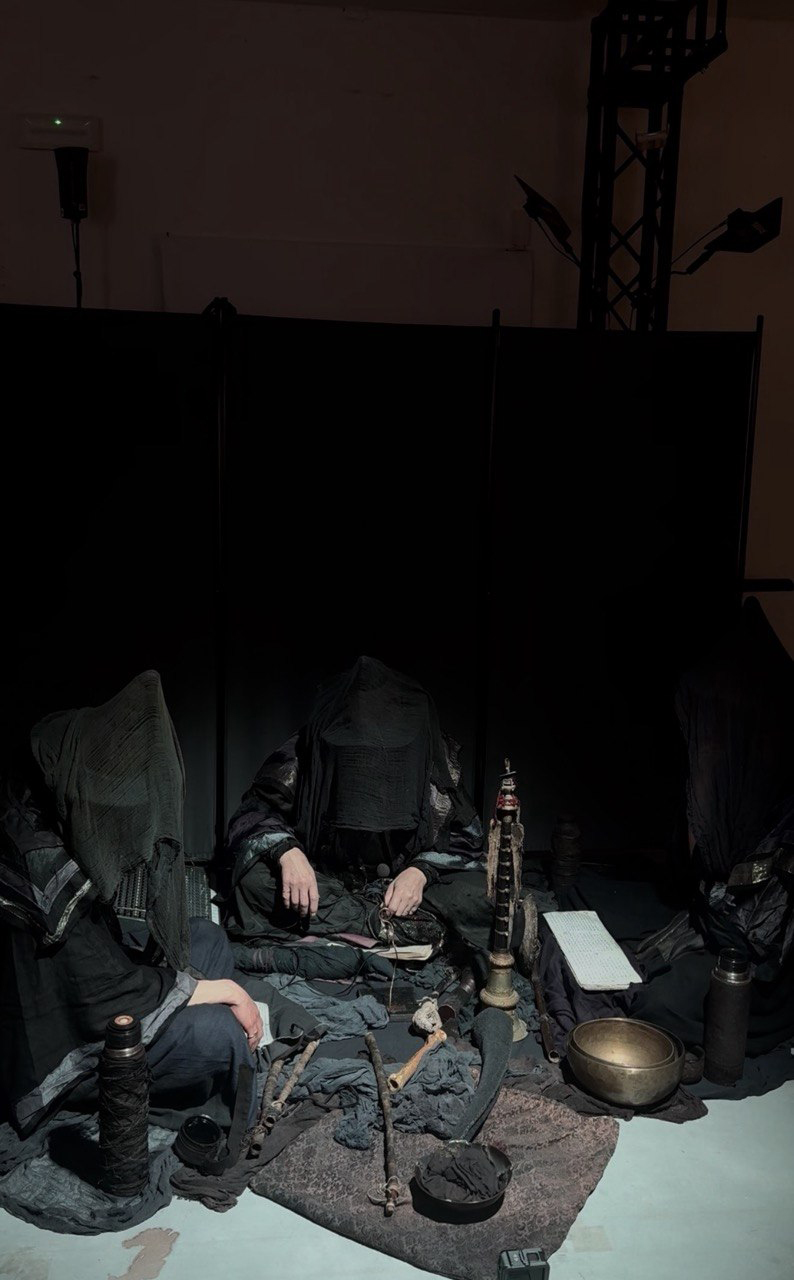
At the same time, the Russian project "The Tree is rooted in the sky" is a cycle of musical performances. Among the artists who will perform non-stop up to and including May 8, passing the baton to each other, are the folk ensemble Toloka, the Intrada vocal group, academic avant-gardists with a conservatory education Alexey Sysoev, Oleg Gudachev and Lukas Sukharev, Alexei Retinsky, a native of Crimea and a graduate of the Tchaikovsky Music Academy of Ukraine, other sound artists and composers, as well as a number of performers from other countries — Mexico, Brazil, Mali, Argentina, Italy.
— All our musical performances bring together artists from various corners: small towns and villages. This is a decentralized peripheral story that shows us a real culture that is born on the streets and in villages, and not one that is shaped by artificial commercial conditions," Anastasia Karneeva, commissioner of the Russian pavilion at the Venice Biennale, emphasized in an interview with Izvestia.
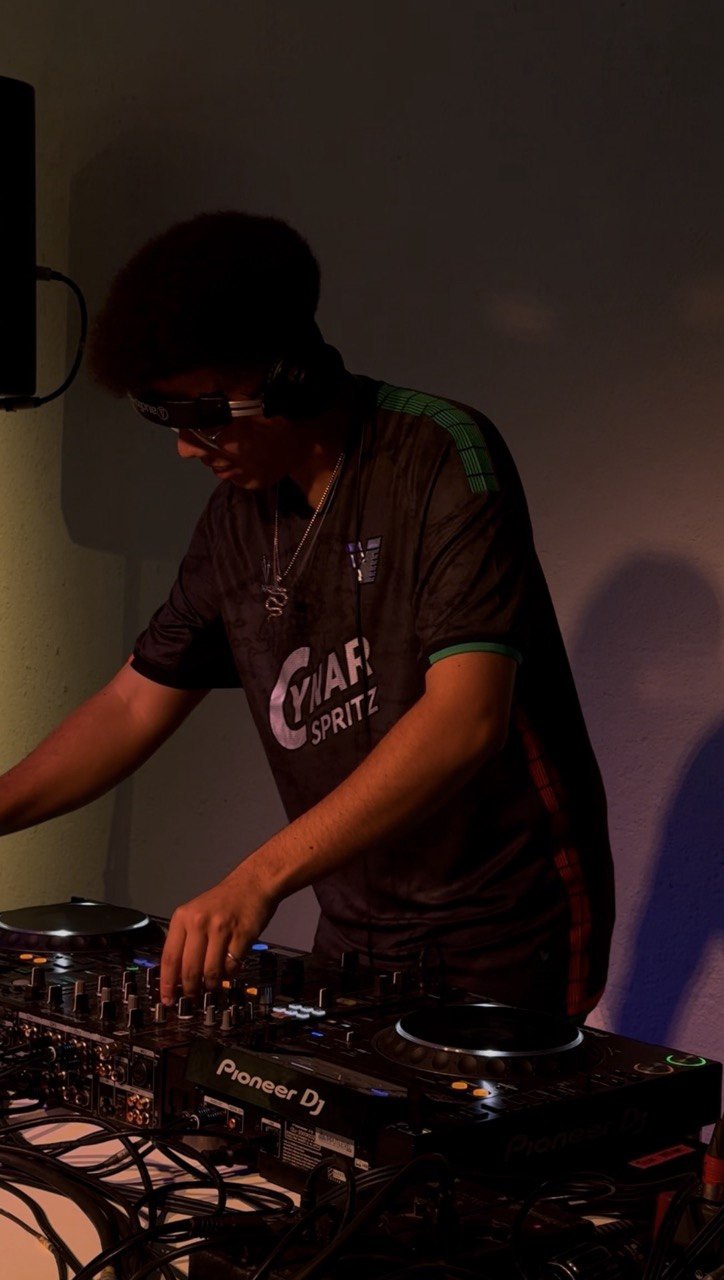
It turned out to be a metaphor of multiculturalism, a hymn to the unifying power of art and creative dialogue between different nations (both from different states and within Russia — it's not for nothing that natives of Tuva, Yakutia, Komi are among the participants of the performances). Another important idea is teamwork. One might even say conciliarity. As a rule, each country at the biennale places an artist (or several) and a curator in the spotlight. Russia is doing an emphatically group project, also abandoning the usual curatorship, transferring these functions to an entire institution — a music university.
"The project was conceived and implemented by young musicians, philosophers and poets from different countries, who consider it more important to present the project as the result of collective thinking rather than focusing on their own names. The project is coordinated by the Gnessin Russian Academy of Music," according to a press release.
Democracy against sanctions
Note that this is not the first time that the Venice Biennale shows musical performance instead of the more familiar paintings, installations, sculptures or video art. For example, in 2019, Lithuania turned its space into a stage for the screening of a specially composed opera "The Sun and the Sea (Marina)" and took the main award of the show, the Golden Lion, for this project. But in the case of our country, this approach is partly a forced decision. The fact is that the export of cultural property to unfriendly countries is prohibited in our country. And creating some works on the spot would probably be too problematic and unpredictable.
But most importantly, access to any works of art housed inside the pavilion would still be closed from May 9th. Ensuring its functioning for many months under the conditions of the sanctions regime is not an easy task. The video on the facade is another matter. So the chosen format can be considered a compromise option that allows you to maintain your presence and not put the work itself at risk.

Now the main intrigue is whether the audience will appreciate our ingenuity. For the first time this year, awards will be awarded not by a professional jury, but by ordinary visitors. And here, too, there was a "Russian trace". Initially, there was a jury, but then its members announced that they would not evaluate the pavilions of Russia and Israel. However, this position provoked such a scandal that the jury had to resign, and the organizers of the biennale had to change the very scheme of awarding prizes.
Instead of the "Golden" and "Silver" lions, visitors' "lions" will be awarded — any viewer who has visited both the Gardens and the Arsenal will be able to vote for the best pavilion and the best participant in the main project. Russia will compete for awards on an equal basis with other countries. And although our country is in less favorable conditions, since it is unlikely that a video on the facade of a closed building can be as impressive as works inside a beautifully designed exhibition, the fact itself is important: there are no formal restrictions. The ice broke. After all, where, if not in the warm waters of Venice, was this supposed to happen?
Переведено сервисом «Яндекс Переводчик»
