- Статьи
- Culture
- They will honor you with their voices: Basta, Timati, Kharlamov read their favorite poems about the war

They will honor you with their voices: Basta, Timati, Kharlamov read their favorite poems about the war

Konstantin Simonov, David Samoilov, Alexey Surkov, Alexander Tvardovsky, Olga Bergholts — these and dozens of other poets wrote about the horrors of war right from the front line. They were read in the trenches, copied by hand, and learned by heart. Today, their immortal lines, the most important evidence of the country's history, are read by artists of different genres and ages as part of the Live Voices project. Basta, Timati, Regina Todorenko, Karina Cross and dozens of other popular singers, comedians and bloggers read their favorite war poems in memory of the great feat. Details can be found in the Izvestia article.
The voice of the front
Two days after the start of the war, on June 24, 1941, the lyrics of the song "Holy War" appeared on the front page of the Izvestia newspaper, directly under the portrait of Joseph Stalin. It was written by the poet Vasily Lebedev-Kumach. Then, in record time, composer Alexander Alexandrov wrote music for it. There was no time to print the sheet music in the printing house, so he chalked the score on the blackboard, and the performers copied it by hand in a notebook.
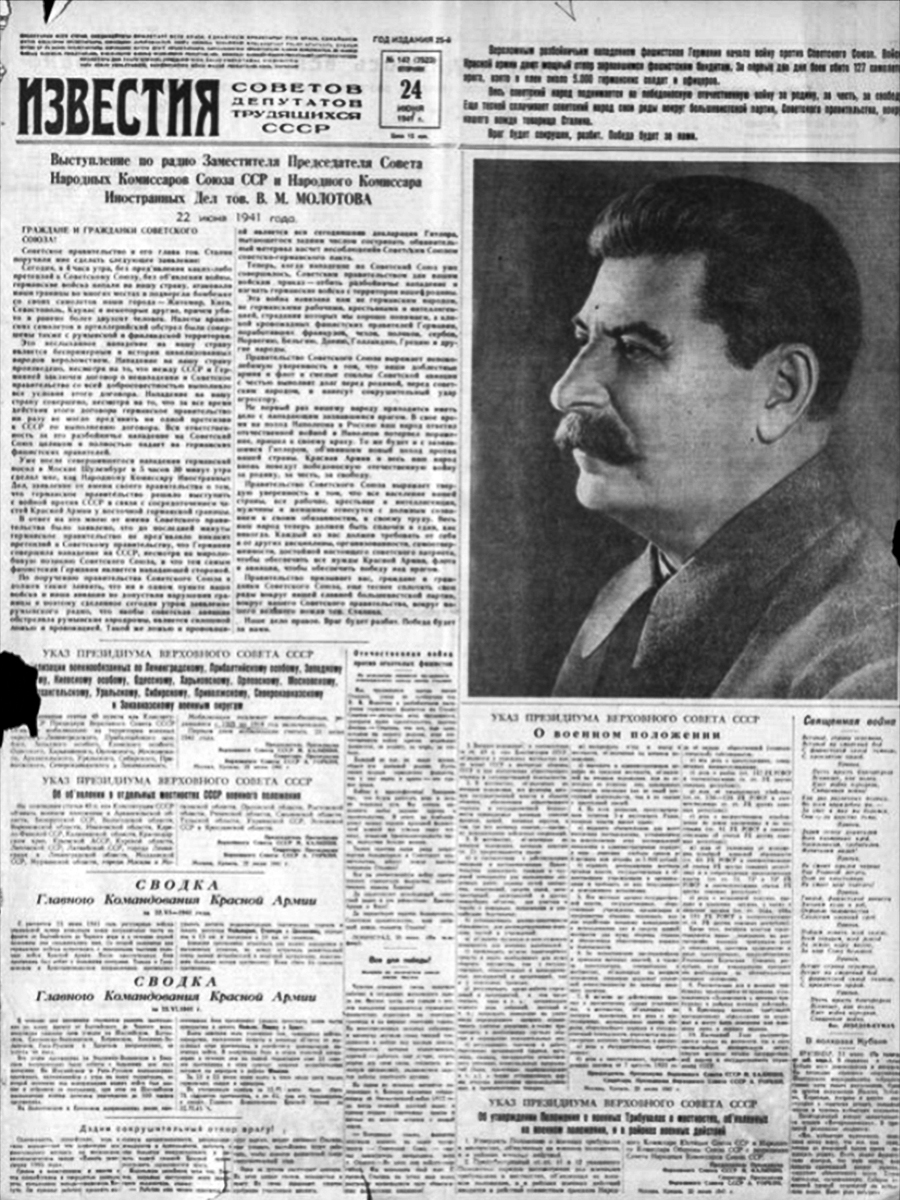
The lines "Get up, the country is huge. Stand up to the death" became the anthem of those years. They contained pain, fear, hope, and the stubborn human urge to "live."
Today, decades later, the memory of the Great Patriotic War is losing its sharpness, especially for those who know about it only from textbooks. Therefore, on the eve of Victory Day, VK created the Living Voices project to return the works of frontline poets to their true sound, and to memory — its moral force.
The project consists of five issues, one for each year of the war, each with 10 readers. There is nothing superfluous on the set. In the center is a heart—shaped stone block. It was created by creative producer Sergey Kolotilin together with director Ivan Makhrov. According to the authors, the stone seems to bind the pain of millions, but light breaks through from within.

Vadim Galygin
On the set, actor and showman Vadim Galygin reads the poem "Don't Forget" by Alexei Romanov, the defender of the Brest Fortress.
— I am a Belarusian and I treat my homeland with special trepidation. Everyone should visit the fortress at least once. This place is really impressive: you constantly feel someone's eyes on you. It is inconceivable to the mind how this piece of land was able to resist the fascist onslaught for so long," Galygin told Izvestia.
In peacetime, Alexei Romanov worked as a schoolteacher in Stalingrad. He met the war in the barracks of the Brest Fortress, went through fierce battles, was shell-shocked and was captured in the spring of 1942, from where he managed to escape.

The echo of war in modern times
Most of the project participants are young people: stand—up artists, bloggers, and artists. They are used to smiling from the screens, but here they speak differently — restrained, heavily, sometimes breaking into a scream and not hiding their tears.

Karina Cross
Among them is video blogger Karina Cross. Millions watch her videos, but in front of the camera she reads Robert Rozhdestvensky's poignant "Ballad of Anti-Aircraft Gunners" and Nahum Korzhavin's merciless poem "The Children of Auschwitz":
Men tortured children.
Wise. Purposely. Skillfully.
They were doing a mundane thing,
They worked and tortured the children.
The war affected every family. Karina's great-grandfather was saved from being shot by an unknown woman: she called him by name, as if he were her family. The bluff worked. He survived.

Maxim Lagashkin
The project also involves an acting couple — Maxim Lagashkin and Ekaterina Stulova. Lagashkin reads "The Word about Russia" by Mikhail Isakovsky, addressing his sons. His grandfather, Pyotr Nikitovich Laptev, went through the entire war. Every year on May 9, he put on a jacket with medals and met with fellow soldiers. But he didn't talk about the war.
— Grandfather immediately became gloomy and repeated: "You don't need this." They put themselves in front of us and wanted to protect us from that horror. But we must remember," Lagashkin told Izvestia.
Actress Polina Denisova is 22 years old. She's a rising movie star now. The girl chose Yulia Drunina's poem "Soldiers' everyday life", written by the poetess at the age of 17, when she worked as a medical instructor on the front line.

Polina Denisova
The war burst into peaceful life with a roar and a roar, deafening millions for a long time. Fleeing bullets, starvation, and tearing life from the clawed paws of death with their teeth, people clung to any piece of the world, to a fragment of life, to their favorite toy. Veronika Tushnova's poem "The Doll" is about this, which is read by actress and TV presenter Regina Todorenko:
A lot of things have faded from memory today,
But there is a trifle, a trifle:
A girl's lost doll
on iron crossed tracks.

Her great-grandfather, Joseph Guryev, went to war in 1940. His daughter never saw her father alive, only in old, worn-out photographs.
— As a mother of three children, I feel this especially keenly. We want our children to live in peace. And so that we don't forget who we owe it to," she told Izvestia.

Timothy
Timati read Konstantin Simonov's poem "Homeland", Garik Kharlamov — "Letter to his Mother" by Eduard Asadov, Dmitry Chebotarev — "Before the Attack" by Semyon Gudzenko.
Vasily Vakulenko reads his favorite poems about the war — "My Generation" by Sergei Gudzenko. 10 years ago, he set these famous lines to music and recorded a song. And even earlier they were performed by Vladimir Vysotsky.
— It is difficult to compete with such peaks. I am not a professional reader. And I can't pronounce it the way I'd like to. The way Vladimir Semenovich did it. But I tried," the singer confessed.

Vasily Vakulenko
In the early days of the war, nine of his great-grandfathers died. In total, more than 20 people fought in the family, both men and women. Vakulenko reads another poem, "Morning of Victory" by Alexei Surkov:
My heart was beating against my ribs, raggedly, fast.
Silence... Silence... Not in a dream, but in reality.
And the infantryman said, "Get clean!" Basta! —
And I noticed a snowdrop in the moat.
These lines were published on May 10, 1945 in Literaturnaya Gazeta, but the realization of the long-awaited victory did not come immediately.
"No one is forgotten, nothing is forgotten," wrote Olga Bergholts, the muse of besieged Leningrad. And as long as their voices are alive, broken, and real, memory has a future.
Переведено сервисом «Яндекс Переводчик»
