Pass for the sun: scientists have tripled the battery life for the desert and space
- Статьи
- Science and technology
- Pass for the sun: scientists have tripled the battery life for the desert and space


Russian engineers have tripled the service life of perovskite solar cells at high temperatures. The secret of the development is special organic molecules that stabilize the material from the inside. Thanks to the new technology, their effective operation at 80 degrees has increased from 260 to 700 hours and above. Solar panels with elevated operating temperatures can be used in hot areas, for example in deserts, on high ground in the mountains and in space, experts told Izvestia. However, scientists need to ensure the sustainability of the results in the practical implementation of the development.
Solar panels at high temperatures
At MISIS University, together with colleagues from the Institute of Synthetic Polymer Materials of the Russian Academy of Sciences, they increased the resistance of perovskite solar cells to heat by introducing special organic molecules into the material that stabilize its structure. The effective operating time of the devices at a high temperature of 80 degrees has increased from 260 to 700 hours and above. This is an important step towards creating more affordable and durable next-generation solar panels.
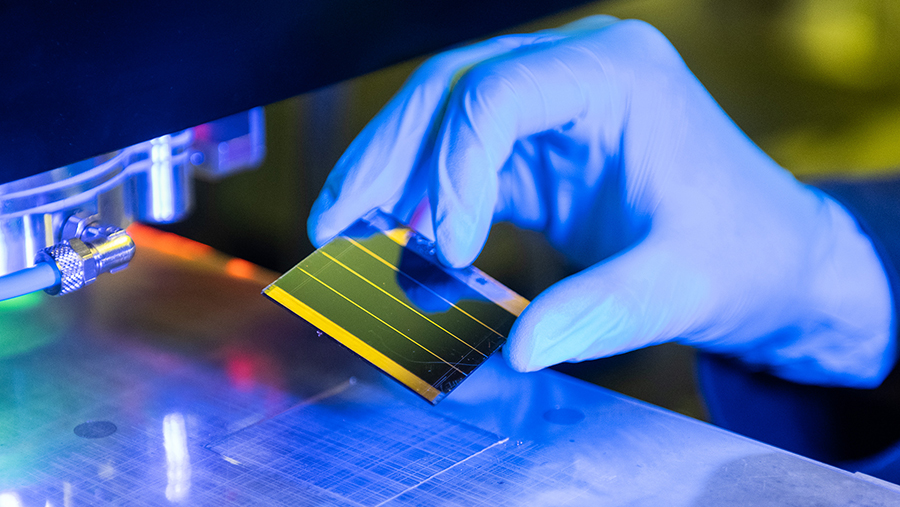
— Researchers have increased the resistance of perovskite to heat by adding triphenylamine-pyridine molecules to the structure of the material: thanks to this, the effective operating time of the devices has increased almost threefold. The proposed method can become one of the key ones for the subsequent scaling of solar panels," Alevtina Chernikova, Rector of NUST MISIS, told Izvestia.
Perovskite refers to calcium titanate, a mineral found in the Urals in the middle of the 19th century. It was named after Lev Perovsky, the founder of the Russian Geographical Society. The features of this mineral are determined by its crystal structure: a cube, where the corners have a positive charge and the faces have a negative charge. Nowadays, the term "perovskites" refers to a wide class of inorganic and organic compounds having the same crystal structure.
Today, perovskite solar cells are significantly superior to their silicon counterparts in terms of efficiency in cloudy weather or under artificial lighting. However, the widespread adoption of such panels is still limited, as thin films are rapidly destroyed under the influence of negative environmental factors.
One of the urgent tasks of materials scientists is to increase the service life of perovskite modules at high temperatures, which significantly accelerates the corrosion of metal contacts and the formation of structural defects, the scientists said. Existing stabilization methods often work only in mild conditions close to room temperature, but they are not effective enough at standard operating temperatures of 80-100 degrees for solar panels.
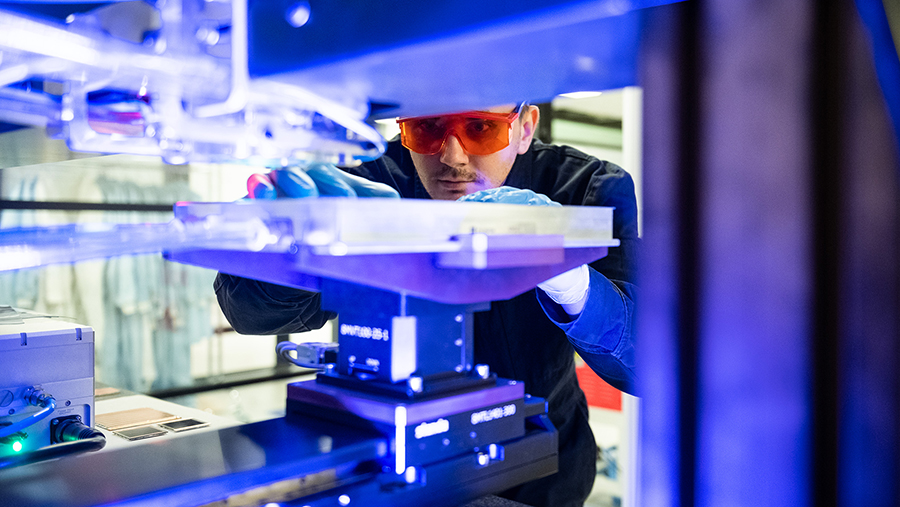
To solve this problem, experts have proposed an effective way to protect the perovskite module from destruction during heating.
— The triphenylamine-pyridine molecules we added are arranged in such a way that one part of them gives up electrons, and the other attracts them. Due to this, they interact well with perovskite and create small electric fields inside the material, which change the energy levels at the crystal boundaries. This reduces energy losses and increases the output voltage to 1.14 V," said Ekaterina Ilyicheva, an engineer at the NUST Advanced Solar Energy Laboratory.

Batteries for space and deserts
The new molecules block the movement of ions inside the material, which is one of the main factors in the destruction or decay of perovskites over time.
— Thermal degradation remained the main barrier to the commercialization of perovskite solar cells. Our strategy not only maintains high efficiency, but also radically increases the stability of devices to real—world operating conditions," explained Lev Luchnikov, an engineer at the scientific project of the NUST Advanced Solar Energy Laboratory.
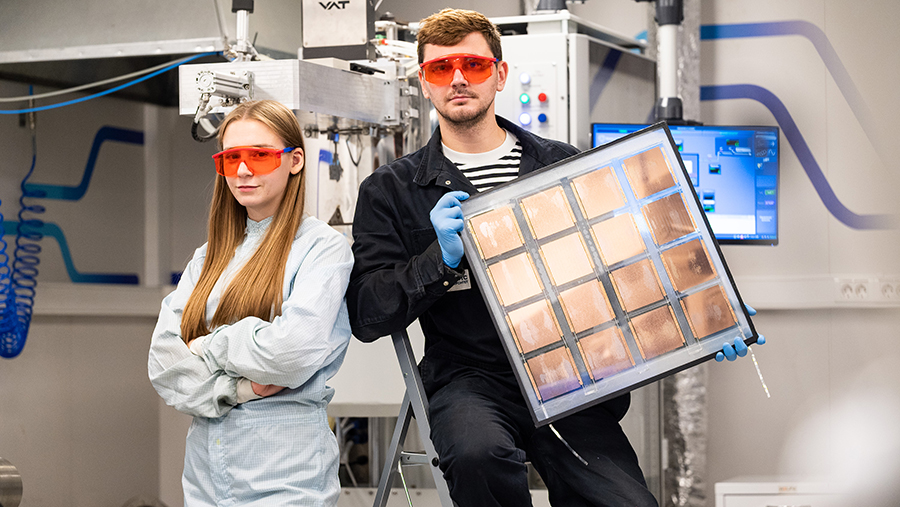
The described perovskite composition is quite promising for long-term operation, says Alexandra Furasova, senior researcher at the Laboratory of Hybrid Nanophotonics and Optoelectronics at the ITMO Faculty of Physics.
— Such solar cells can be most useful for converting solar energy into electricity in clear weather. It is important to maintain the stability of the properties of perovskites, because this material, which absorbs light well, is also able to heat up quickly," she noted.
Increasing the uptime of perovskite solar panels is one of the most sought—after topics for scientific and technological developments, confirmed Evgeny Alexandrov, Director of the NTI Center for Digital Materials Science: New Materials and Substances at Bauman Moscow State Technical University. Compared to silicon materials, perovskite materials provide greater efficiency in converting light into electricity. In addition, they are much cheaper and easier to manufacture.
According to him, solar panels with elevated operating temperatures can be used in hot areas, for example in deserts, on high ground (in mountains) and in space.
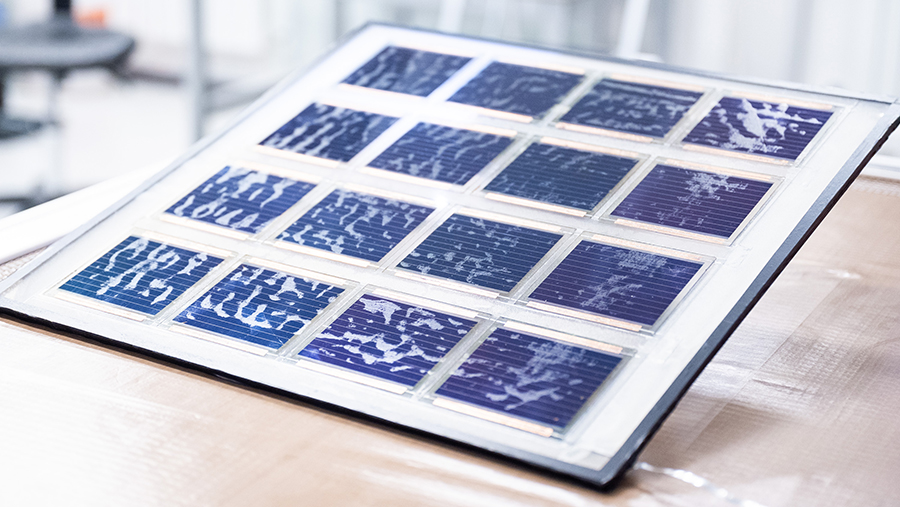
— The problem is that they are significantly less stable: they degrade rapidly under the influence of sunlight. The main way to extend the service life of perovskite modules is to apply an additional stabilizing layer, which makes the development of defects energetically less profitable," he told Izvestia.
The work was carried out within the framework of the strategic technological project of NUST MISIS "Energy of Materials" under the program "Priority 2030", and also supported by a grant from the Russian Science Foundation. The results are published in the scientific journal Solar RRL.
Переведено сервисом «Яндекс Переводчик»
