- Статьи
- Science and technology
- Sherds and bones: AI helped restore the composition of medieval Russian ceramics

Sherds and bones: AI helped restore the composition of medieval Russian ceramics

Scientists have developed a method for reliably determining the origin of medieval ceramics using AI and neutron analysis. Recognition accuracy is up to 88%. The new technology opens up opportunities for reconstructing trade routes and cultural ties of the Middle Ages based on objective data rather than hypotheses. Now, even for a small piece of tableware, experts will be able to determine the place and time of manufacture of the vessel, whether it is Moscow or Bolgar, even if its appearance is characteristic of several cultures at once. For more information about the unique study, see the Izvestia article.
A study of Russian medieval ceramics
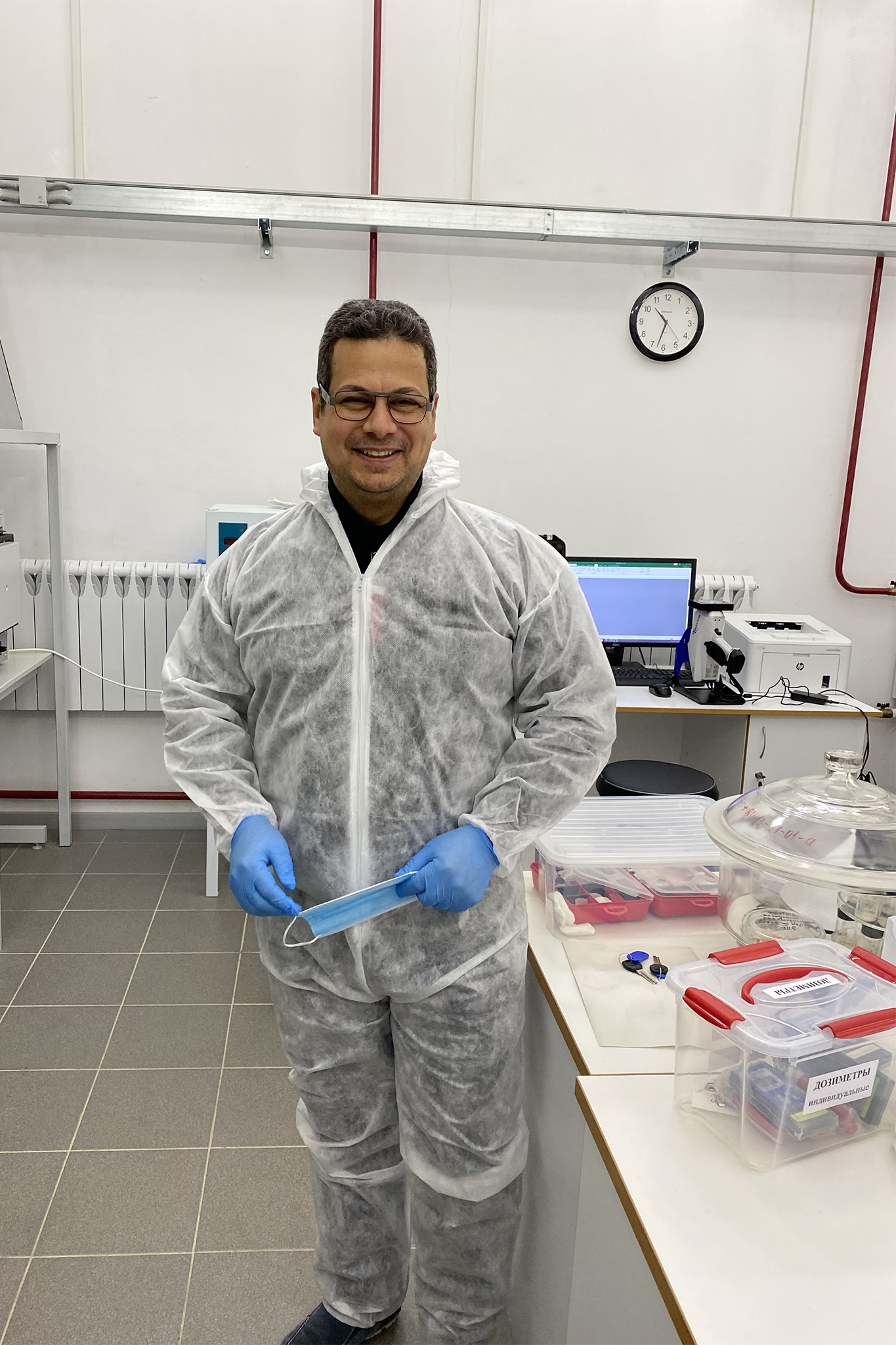
Scientists from the I.M. Frank Laboratory of Neutron Physics at JINR, together with colleagues from the Institute of Archaeology of the Russian Academy of Sciences (IA RAS) and the Egyptian Atomic Energy Agency (EAEA), applied the method of neutron activation analysis and machine learning algorithms to establish the exact origin and calculate the content of chemical elements in Russian medieval ceramics. It is rightfully considered one of the most informative types of archaeological finds, experts told Izvestia.

The composition of clay and impurities preserves a unique geochemical "trace" of the place of extraction of raw materials, and also reflects the technological features of ancient pottery. The precise definition of the place of production of objects allows us to reconstruct trade routes, study the processes of cultural exchange and the specifics of the organization of crafts in the Middle Ages.

Until now, rigorous quantitative studies of the origin of Russian ceramics from this period have rarely been conducted. Such research was hampered by the limited sample size of available materials and the lack of reference databases. To solve this problem, experts analyzed 149 fragments of ceramics from the 13th–17th centuries. Among the objects studied were samples of pottery from the Moscow Kremlin, Tver and the Saltpeter Settlement, handicraft ceramics from Bolgar (Bulgar) and Bilyar, the largest centers of medieval Volga Bulgaria, as well as artifacts from other regions. In particular, the researchers worked with fragments of Byzantine amphorae and ceramic products from the ancient state of Khorezm, located in Central Asia.
The elemental composition of the samples was determined using instrumental neutron activation analysis (INAA) at the IBR-2 pulse reactor, as well as at other facilities using X-ray fluorescence analysis (XFA). The combination of these methods made it possible to detect concentrations of 29 chemical elements in each sample with high accuracy.
A distinctive feature of the research was the use of supervised machine learning algorithms. They were used to classify ceramic fragments with an uncertain place of origin based on their geochemical composition. When tested on an independent control sample, the recognition accuracy reached 85-88%, which confirms the stability of the proposed approach. Also, thanks to these algorithms, it was possible to replenish the Bolgar ceramics databases with new verified samples.
— We plan to expand the data set by including additional ceramic groups and archaeological sites. This will help to significantly complement the geochemical atlas of medieval Russian material culture," said Vael Badavi, a leading researcher at the JINR Scientific Research Institute. — This work demonstrates the enormous interdisciplinary possibilities that open up through the use of techniques combining nuclear physics, geochemistry and the humanities.
Perspectives of AI in archaeology
An important result of the work was the calculation of geochemical background values for 25 elements in Bulgarian ceramics. In addition, scientists have found that chromium, antimony, manganese, arsenic, and nickel are reliable geochemical markers that separate Bulgarian ceramics from products from other regions. These elements best reflect the specifics of the geological composition of local sources of clay raw materials and the characteristic traditions of medieval pottery workshops.
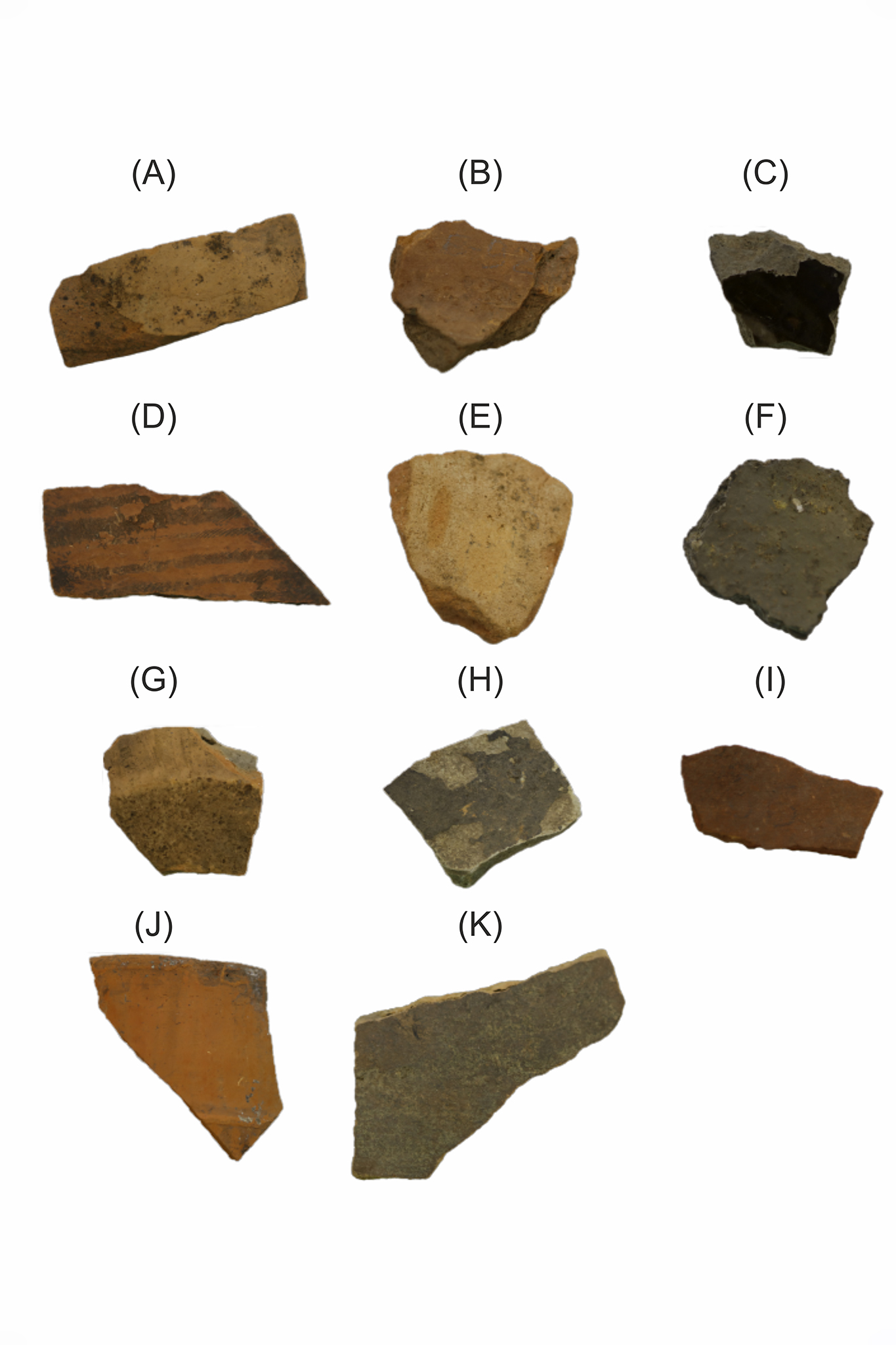
Ceramics are a frequent find of archaeologists, and in many cases differences in the appearance of ceramic dishes serve as the basis for distinguishing cultures or communities, Polina Cenotrusova, senior researcher at the Laboratory of Archaeology of Yenisei Siberia, associate professor at the Department of History of Russia, World and Regional Civilizations at Siberian Federal University, told Izvestia. But often such decisions are made subjectively, and new natural science methods will increase the objectivity of research. This is especially important for ceramics of the developed and late Middle Ages, when many ceramic forms and technologies became unified and it became difficult to determine the exact origin of vessels only by morphological (external) signs.
— The proposed method allows us to solve this issue, — she shared. — In world practice, there are several successful examples of teaching AI to recognize different types of artifacts by their appearance. Here, the researchers went the other way: they used AI to analyze quantitative indicators for different chemical elements. The algorithm minimizes the time and effort required for routine operations.
This study is noteworthy because for the first time in Russia, two powerful tools were simultaneously applied to solving a strictly archaeological problem: nuclear physics neutron activation analysis and machine learning algorithms, said Yaroslav Seliverstov, a leading expert in the field of AI at University 2035.

— This combination makes it possible to transfer the attribution of artifacts from the category of subjective assessments to the plane of reproducible quantitative methods. In fact, a "geochemical passport" is being created for each shard: neutron analysis provides a highly accurate elemental profile, and artificial intelligence recognizes patterns invisible to the eye," he said.
In the future, this will help archaeologists to reliably determine where exactly the found fragment was made — in Moscow, Tver or Byzantium. Even if his appearance is typical of several cultures. This means that detailed maps of trade relations and migration of craft traditions in Medieval Russia will appear, based on objective data rather than hypotheses, the expert emphasized.

Natural science methods allow us to obtain hidden information that was not available to us. Previously, for example, experts compared morphological differences, but now they take into account the composition of impurities, manufacturing technology, the origin of clay and many other information. In particular, ceramic raw materials can serve as an ethnomarker, since their composition is often unique for a particular territory and people and depends on the location of clay sources," Dmitry Vasiliev, head of the Lower Volga Region Archeology School at the V.N. Tatishchev Astrakhan State University, told Izvestia.

According to him, the direction remains promising, but research is at an early stage. Just as it took almost half a century to create a dendrochronological scale for Northern Russia, it may take decades to create a reliable database of comparable ceramic data. Similar studies are already underway for precious metals, glass, and other materials.
The scientist added that neural networks can significantly speed up this process, acting as an effective tool for processing large amounts of information. They solve tasks that would take years to complete manually in a matter of hours. At the same time, artificial intelligence models are prone to generating unreliable conclusions with a lack of data, so their use requires mandatory human control.
Переведено сервисом «Яндекс Переводчик»
