
Pacific Fleet Day: history and traditions of the holiday

Pacific Fleet Day (Pacific Fleet Day), or the Day of the Pacific Fleet of the Russian Navy, is celebrated annually on May 21. In 2026, the holiday falls on a Thursday. This day commemorates those who defended and continue to defend the country's borders in the Sea of Okhotsk, Kamchatka, Sakhalin and the Kuril Islands. For more information about the creation of the Pacific Fleet and the traditions of the holiday, see the Izvestia article.
The history of the Pacific Fleet
The history of the Pacific Fleet begins in the 18th century, but the first sea voyages of Russian sailors in the Pacific Ocean were recorded back in the 17th century. Then the ships of travelers and pioneers sailed into the Sea of Okhotsk. By the end of the century, Russian sailors had made several more voyages across the Pacific Ocean.
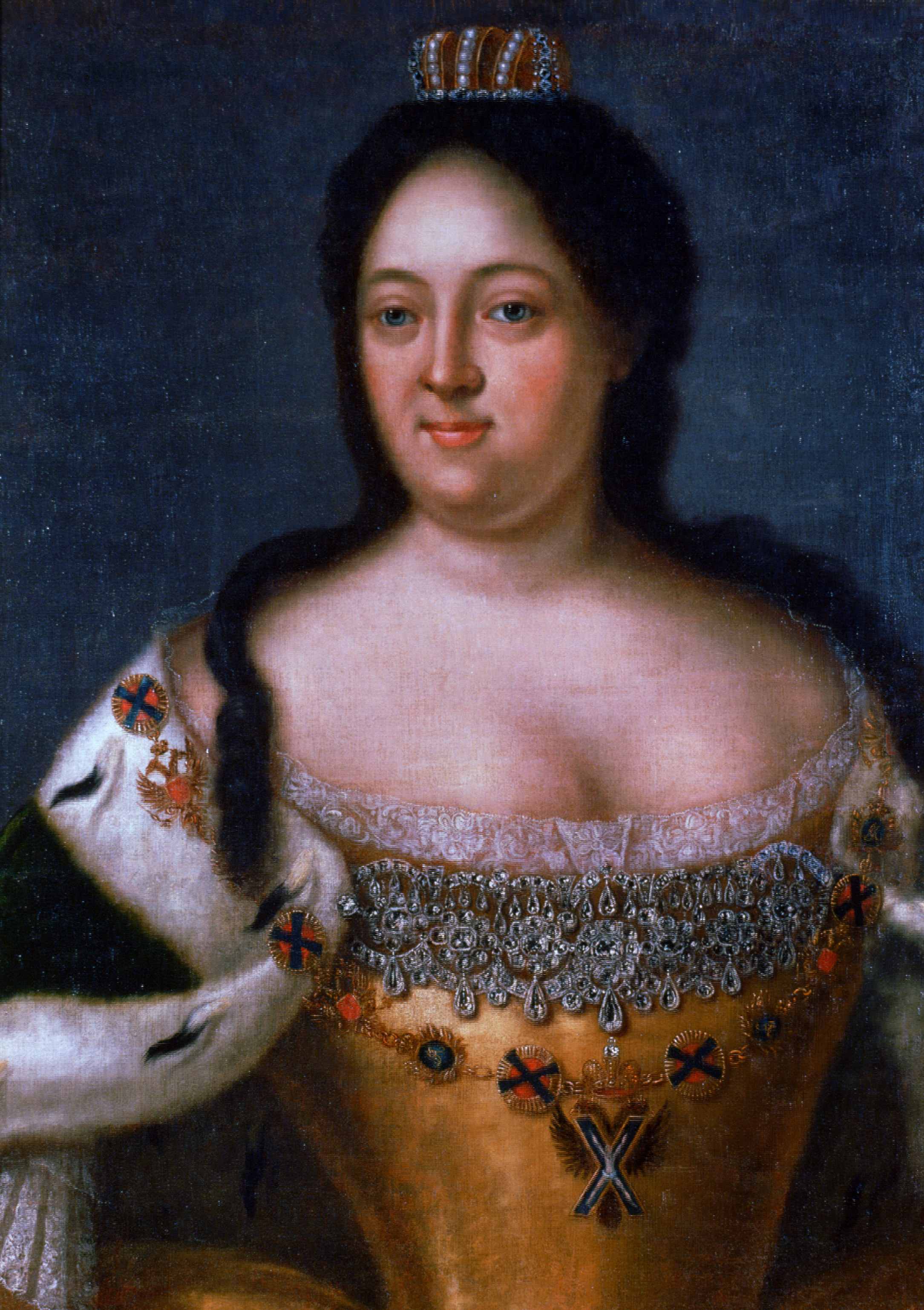
An important stage in the creation of the fleet was the establishment on May 21, 1731, by decree of Empress Anna Ioannovna, of the military port in Okhotsk and the Okhotsk Military Flotilla, the first permanent Russian naval unit in the Far East. The port was created to achieve strategic objectives: protecting the country's territory, protecting trade routes and industries, as well as upholding the interests of the Russian Empire in the Far East. The flotilla's duties included patrol duty and protection of territories discovered by Russian navigators in the area.
Since 1849, the Okhotsk Military Flotilla has been based in Petropavlovsk Harbor, located in Petropavlovsk-Kamchatsky. It was at this time that the Naval Forces of the Russian Empire in the Pacific Ocean for the first time took part in combat operations during the defense of Petropavlovsk during the Crimean War. In 1855, the main base of the flotilla was in Nikolaevsk (now Nikolaevsk-on-Amur). In 1856, she was renamed the Siberian Military Flotilla. A few years later, in 1860, the sailors founded the military city of Vladivostok, which had a protected harbor. In 1898— the flotilla also leased another base from China, Port Arthur (now Liushun in China).

Pacific Fleet during the defense of Petropavlovsk-Kamchatsky during the Crimean War
The first large-scale battle of the Okhotsk Flotilla took place during the defense of Petropavlovsk-Kamchatsky during the conflict with Britain and France in the Crimean War in 1954. The main reason for the attack on the city is considered to be the struggle of the powers for supremacy in the sea and, in particular, in the Pacific Ocean. This was especially what the British Empire was striving for. On the morning of August 18, the Anglo-French squadron entered Avacha Bay. After a firefight with coastal batteries, the ships anchored outside the range of Russian artillery.

The Russian battery on the shore of Avacha Bay. Monument to the fallen during the repulse of the landing of the Anglo-French squadron in 1854.
The British flotilla included the frigates "President", "Peak" and the wheeled sailing steamship "Virago". France deployed the Fort frigates, the Eurydice corvette and the Obligado brig-aviso (high-speed ship). There were also Russian vessels in the bay — the frigate Aurora and the transport Dvina. According to the original plan, the opponents intended to enter the harbor and destroy them. After that, a landing force was supposed to land in the city, which, with the support of ships, planned to capture Petropavlovsk.
Anglo-French forces tried to storm the city twice. The final battle lasted more than two hours and ended with the complete defeat of the opponents. Despite the noticeable numerical superiority of the Anglo-French forces, the Russian troops demonstrated determination and courage during the battle, forcing the attackers to retreat.
Pacific Fleet during the Great Patriotic War
The modern Pacific Fleet was formed in 1935. In August 1939, the Northern Pacific Military Flotilla was formed as part of the fleet, the main base of which was located in Sovetskaya Harbor. The duties of the flotilla included protecting the Far Eastern borders of the USSR and countering possible aggression from Japan.

Pacific Fleet ships attack Japanese naval bases in North Korea, 1945
By the beginning of World War II, the Pacific Fleet consisted of two brigades of surface ships, a brigade of torpedo boats, four brigades of submarines, as well as nine aviation regiments and 11 squadrons. By June 1941, the coastal artillery of the fleet had become the world's largest coastal defense line, consisting of hundreds of coastal batteries and concrete pillboxes (long-term firing points), which were located along the entire Far Eastern coast of the country. Its total length was more than 11 thousand km.
During the Second World War, part of the fleet's forces and assets were transferred to the Northern Fleet. More than 147,000 Pacific sailors took part in the battles as part of marine rifle brigades and other units. Naval rifle brigades participated in the battles for Moscow, Stalingrad, the Caucasus, and also provided defense for Sevastopol, Leningrad, and the Arctic. By August 1945, the fleet consisted of 380 warships. In the same year, the fleet's troops took part in the Soviet-Japanese War, including the Manchurian, South Sakhalin and Kuril operations. During this war, the Pacific Fleet also assisted the troops of the 1st Far Eastern Front in liberating the DPRK by attacking Japanese naval bases and ports along the Korean coast.

Liberation of the Korean Peninsula from Japanese colonial occupation by Soviet Army troops during World War II, 1945
More than 30,000 sailors and officers of the Pacific Fleet were awarded orders and medals for their military services, 43 of them received the title Hero of the Soviet Union. Also, 19 ships were awarded honorary titles, and 16 more were awarded orders.

The Pacific Fleet during and after the collapse of the USSR
In September 1945, the Northern Pacific Military Flotilla was disbanded, and two years later, in January 1947, it was reorganized and divided into two independent fleets — the 5th Navy and the 7th Navy. Since the 1950s, there has been an accelerated development of the fleet's submarine forces, and in 1961, the first nuclear submarine (SSB) "K-45" of project 659T under the command of Captain Viktor Belashev joined the flotilla. The vessel possessed P-5 cruise missiles, which could be used against both land and sea targets.
By Decree of the Presidium of the Supreme Soviet of the USSR dated May 7, 1965, the Pacific Fleet was awarded the Order of the Red Banner for outstanding services to the Motherland, mass heroism, fortitude and courage shown by personnel in defense of the Fatherland and in commemoration of the 20th anniversary of the victory of the Soviet people in the Great Patriotic War. In the period from 1979 to 1992, the fleet was transferred to the subordination of the Main Command of the Far East Troops.

After the collapse of the USSR, the Pacific Fleet turned out to be the most remote from the operational command centers of the Navy, which greatly worsened its position. In a short time, the most combat–ready units were withdrawn from the structure, among which were the heavy aircraft-carrying cruisers of project 1143 "Krechet" - "Minsk" and "Novorossiysk", the heavy nuclear missile cruiser of project 1144 "Orlan", "Admiral Lazarev" (former "Frunze"), all large anti-submarine ships of project 1134B "Berkut" and the large nuclear-powered Ural reconnaissance ship. The underwater component of the fleet was also in a critical position. The situation returned to normal only by the end of the 2000s, when warships and auxiliary fleet vessels began to be built for the Pacific Fleet again.
Pacific Fleet now
The Pacific Fleet is part of the Russian Navy and the Armed Forces of the Russian Federation. It ensures the country's military security in the Asia-Pacific region and belongs to the strategic nuclear forces. The headquarters is located in Vladivostok, the flagship is the Guards missile cruiser project 1164 Varyag. The current commander is Admiral Viktor Liina.

The Varyag missile Cruiser of the Pacific Fleet of the Russian Navy
The main tasks of the fleet include: protecting the economic zone and areas of production activity, suppressing illegal production activities, ensuring the safety of navigation and carrying out government foreign policy actions in economically important areas of the Pacific Ocean. To achieve its goals, it includes strategic missile submarines, multi-purpose nuclear and diesel submarines, surface ships for operations in the ocean and near-sea zones, naval anti-submarine and fighter aircraft, ground forces, units of land and coastal forces.
Pacific Fleet Day: holiday traditions
In honor of the creation of the Okhotsk Military Port and the military flotilla, a separate holiday was established — Pacific Fleet Day. The celebration was established by the order of the Commander-in-Chief of the Russian Navy, Admiral Felix Gromov, dated July 15, 1996, "On the introduction of annual holidays and professional days in the specialty." The main celebrations are held in Vladivostok, as that is where the main fleet base is located. Every year on May 21, solemn events are held on the ships — the raising of St. Andrew's flags, the awarding of the best sailors and the formation of personnel.

One of the traditions is also associated with the holiday — racing on yawls (on boats with oars). Sailors take part in them, and the winners receive the Pacific Fleet Commander's Cup. It is believed that everyone who serves in the Pacific Fleet should be able to handle such a vessel. In addition, a solemn rally is being held on this day at the memorial complex of Military glory of the Pacific Fleet in Vladivostok. Flowers are laid at the Eternal Flame, and a service is being held in a nearby chapel.
Переведено сервисом «Яндекс Переводчик»
