- Статьи
- Society
- Whiskers, paws, height: veterinary services in Russia have risen in price by a third in a year

Whiskers, paws, height: veterinary services in Russia have risen in price by a third in a year

The average cost of admission to a veterinarian and vaccination of animals has increased by a third over the year, Izvestia has learned. In January – March 2026, the average doctor's appointment was 857 rubles, and vaccination was 2022 rubles. Against the background of rising prices, the average check in clinics reached 3,913 rubles, while the number of referrals decreased by 1%. Market participants attribute the increase in the cost of services to an increase in purchase prices for drugs and equipment, the introduction of mandatory labeling for medicines and a shortage of vaccines after many large pharmaceutical companies left the Russian market in 2022. According to RNC Pharma, annual inflation in the pet vaccination segment has exceeded 50%. Izvestia investigated what is happening with the veterinary market in the country.
How much have prices for veterinary services increased?
According to the results of January – March, the average cost of a veterinarian's appointment was 857 rubles, which is 34% more than in the same period a year earlier, Izvestia calculated based on Rosstat data. Since the beginning of 2026, the service has increased in price by 5%. The cost of a single pet vaccination also increased by a third and reached 2,022 rubles, and has increased by 3% since the beginning of the year, according to the department's materials. According to Businessstat estimates, from 2021 to 2025, this service increased in price by 88% to 1,583 rubles.

The average receipt in veterinary clinics in January – March amounted to 3913 rubles, which is 15% higher than a year earlier, calculated by the analytical center "Check Index" of the company "Platform OFD". At the same time, the number of purchases decreased by 1% over the same period. They clarified that the bulk of calls to veterinary clinics are made by large cities. In April 2026, there were about 2.4 thousand veterinary clinics in Russian cities with a population of one million, which is 6% less than in the same month a year earlier, geoservice 2GIS estimated.

Olga Mikheeva, chief veterinarian at Vet Union clinics (part of Invitro), notes that the price increase in her network is "spot-on." It manifests itself in segments where prices depend on the cost of consumables, reagents, and equipment maintenance, such as in laboratory diagnostics.

The mandatory labeling of veterinary medicines also played a role, which involves additional equipment, an increase in staff and their training, said Tatiana Kolchanova, General Director of the Union of Pet Business Enterprises. In addition, the introduction of prescription medications has increased the burden on doctors.: now the recipe takes longer to complete and is issued in triplicate. This increases both the admission time per patient and the staff costs of the institutions. An additional factor of pressure on clinics remains the procurement practices of suppliers, who during the period of active vaccination may impose expensive drugs that are not always in demand in the future, she added.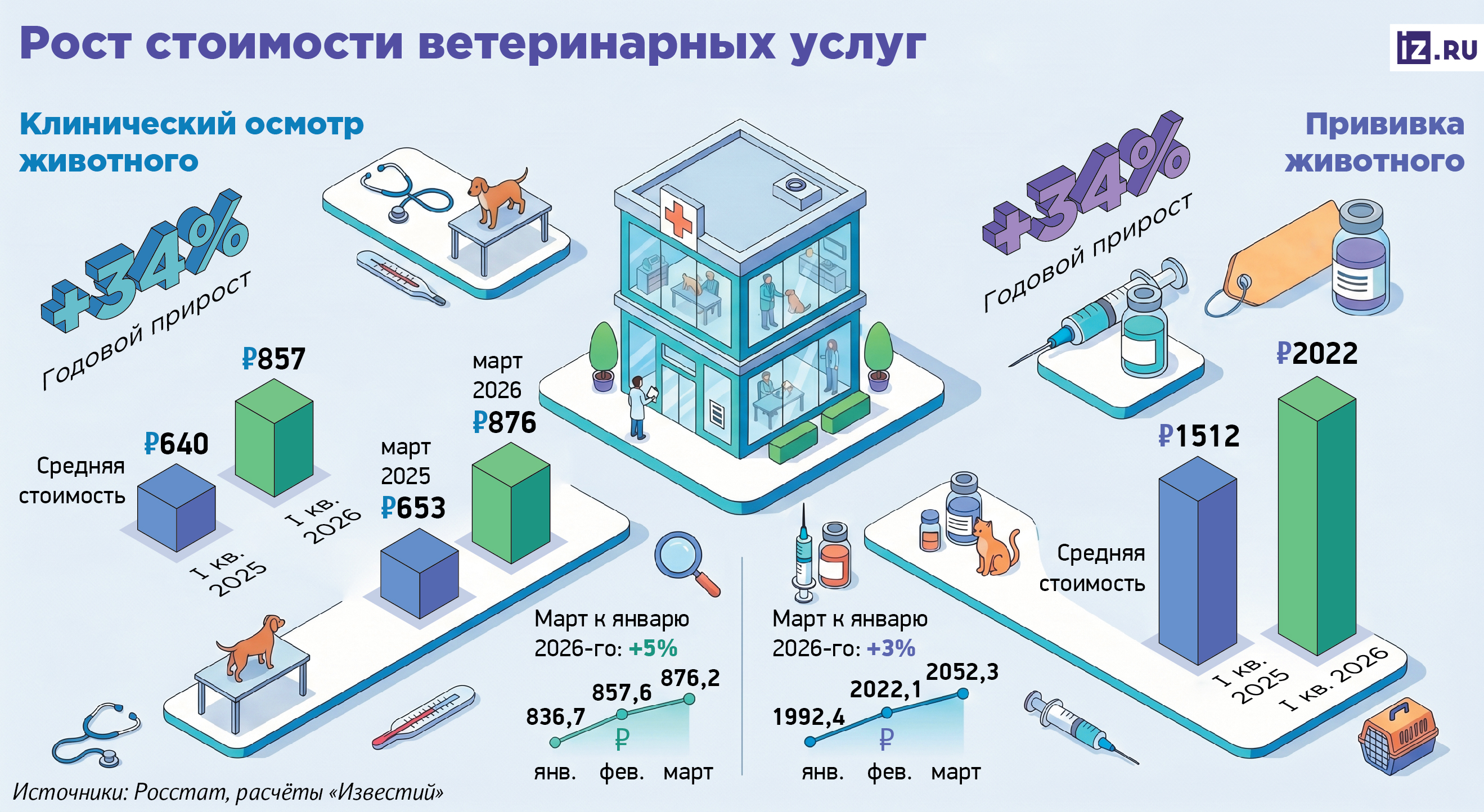
Clinics are increasing the cost of services due to rising costs for staff, rent, equipment, as well as the general rise in the cost of medicines and supplies, agrees Sergey Sereda, president of the Association of Practicing Veterinarians.
Why are veterinary clinic services becoming more expensive
The increase in prices for veterinary services is due, among other things, to an increase in the cost of certain drugs, says Nikolay Bespalov, Director of Development at RNC Pharma. According to him, the average retail cost of a vial of vaccine for pets in 2022 was 303 rubles, and by the end of 2025 it had increased to 518 rubles - that is, by 1.7 times in three years. In January – February 2026, the price reached 615 rubles (+19% year-on-year), the analytical company estimated.

The expert notes that vaccines for animals remain one of the most problematic categories of veterinary drugs. According to RNC Pharma, in 2025, the inflation rate in this category was 53.2%. It has been maintained at a "high level" since 2023 amid the withdrawal of large foreign pharmaceutical manufacturers from the local market, the expert explains. Despite the increase in production from Russian companies, they have not yet been able to fully cover the need for vaccines, which further increases price pressure on this category of drugs, he added.
Veterinary services have been exempt from VAT since 2025, but the cost of veterinary clinic services has been affected by an increase in other costs, including electricity, Nikolai Bespalov noted. According to Businessstat, the average annual cost of keeping a pet has increased by 1.9 times since 2021, which makes the high cost of veterinary services a barrier for some pet owners.

A significant proportion of drugs and equipment still depend on imports, said a doctor at a major Moscow veterinary clinic. According to him, the cost of vaccination by imported means can reach 3-3.5 thousand rubles, domestic — 2-2.5 thousand. At the same time, dependence on imported medicines has decreased over the past two or three years, but it still persists, Olga Mikheeva agrees.

The Vet Union network does not exclude a further increase in prices for veterinary services. They may rise in price by at least 5-7% more, Sergey Sereda predicts.
According to data at the end of 2025, there were about 79 million pets in Russia (53.4 million cats and 26.1 million dogs), which is 3.3% more than in 2024, said Ilya Bereznyuk, managing partner of Agro and Food Communications. According to the National Association of the Pet Industry, more than 60% of households in the country keep pets.
Переведено сервисом «Яндекс Переводчик»
