Take on the breast: The first highly realistic breast simulator to help train surgeons
- Статьи
- Science and technology
- Take on the breast: The first highly realistic breast simulator to help train surgeons


Russian scientists have created a unique training simulator that simulates the mammary gland with maximum accuracy. The material of the phantom organ reproduces the acoustic and mechanical properties of fatty and glandular tissues with a high degree of reliability. The development is designed to train future oncological surgeons and improve the skills of practicing physicians. It will allow you to practice a full range of diagnostic and therapeutic manipulations — from palpation to biopsy under ultrasound control. However, experts note that such phantoms are not able to fully reproduce vascular reactions, bleeding, pain response of the patient and complex clinical scenarios. In this regard, they are considered as an auxiliary tool in the training of doctors.
Breast Phantom
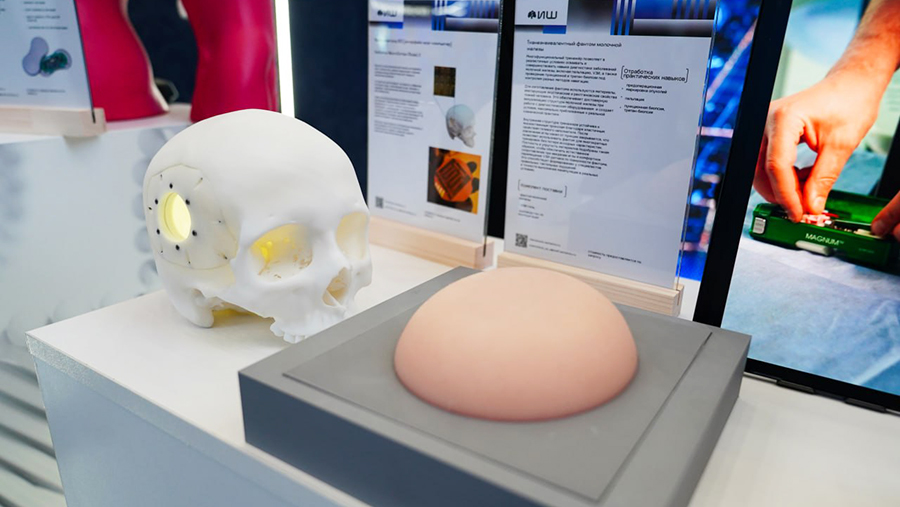
An innovative simulator for doctors, a tissue—equivalent breast phantom, has been created at the Advanced Engineering School of Sechenov University. It will help future oncological surgeons and already practicing specialists to master the full range of diagnostic manipulations — from palpation to fine needle aspiration and puncture biopsy under ultrasound control.
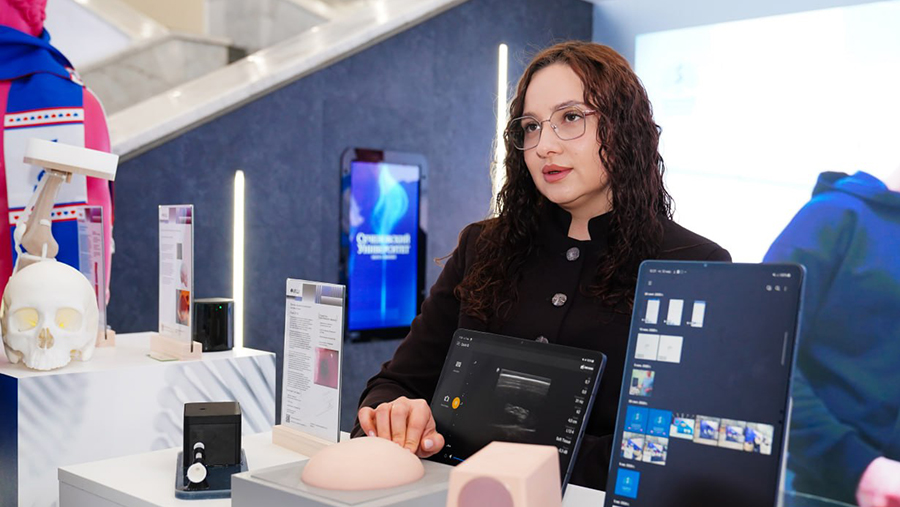
The uniqueness of the development lies in the composite materials of their own production, the authors of the project told Izvestia. They mimic the acoustic and mechanical properties of the fatty and glandular tissues of the breast as reliably as possible. As Dmitry Telyshev, the scientific director of the Advanced Engineering School, explained, thanks to this, an absolutely realistic picture is achieved when working with both ultrasound and X-ray equipment. Microscopic inclusions are placed inside the phantom, imitating neoplasms, on which future doctors will practice targeted biopsy.
Another important advantage of the simulator is its "survivability", that is, its high resistance to repeated punctures. The elastic filler independently "tightens" the channels left by the puncture needles. Thanks to its self-healing structure, the phantom retains its properties even after dozens of intensive training sessions.
Maxim Saliba, Associate Professor of the Department of Faculty Surgery No. 1 of the First Moscow State Medical University, noted that high-quality training of specialists in the field of interventional diagnostics requires repeated repetitions. However, the opportunities for students and residents to study in real clinical practice are limited.
— Creating a realistic phantom allows you to repeatedly practice manual skills in safe conditions as close as possible to real ones. This is an invaluable experience without risk to the patient," he added.

The perspective of technology in medical education
The development of the breast phantom has become a logical continuation of the scientific and technological direction of the university's development. Earlier, the university created the technology of "nature-like" tissues and launched small-scale production of urological phantoms. The new breast model expands the range of simulators. The developers are confident that the introduction of such simulators will contribute not only to improving the training of doctors, but also to the development of a practice-oriented approach in Russian medical education in general.
Breast cancer is the most common oncological disease among women, Igor Bardovsky, director of the Federal Accreditation Center of SamSMU of the Ministry of Health of the Russian Federation, PhD, associate professor, market expert at NTI Helsnet, told Izvestia. Breast examination is included in the standards for doctors of all specialties. Therefore, training in the diagnosis of this pathology is extremely important for medical education.
— Simulators with a wide range of pathology simulation — from the possibility of palpation to ultrasound and biopsy of breast tumors — are currently needed to train medical specialists from the level of students and residents to practicing oncologists. In addition, such simulators are included in the list of necessary equipment for the accreditation of specialists," the scientist said.
The use of such simulators in surgical training is one of the most promising and already virtually mandatory elements of modern training, Albert Rizvanov, head of the Personalized Medicine Center of Excellence at Kazan (Volga Region) Federal University, corresponding member of the Academy of Sciences of the Republic of Tatarstan, told Izvestia. In interventional oncology, where not only the theoretical basis is important, but also the "feeling of the tissue", the accuracy of needle positioning and work under visual control (for example, ultrasound), the possibility of repeated procedures without risk to the patient is of critical importance.
— It is the tissue-equivalent phantoms that reproduce the acoustic and mechanical properties of tissues that make it possible to bring learning closer to real conditions.: Motor memory is being formed, the number of errors in the early stages of clinical practice is decreasing, and the doctor's confidence is increasing. It is especially important that such systems can be standardized — this makes learning more reproducible and allows for an objective assessment of skills," the scientist appreciated the development.
However, such solutions have limitations, Albert Rizvanov noted. Even the most advanced phantoms do not fully reproduce the biological variability of tissues, vascular reactions, bleeding, pain response of the patient and complex clinical scenarios. In addition, there is a risk of "retraining" on idealized conditions, which sometimes reduces the adaptability of the doctor in real practice. The economic aspect is also important: high-quality phantoms and simulation centers require investments, and their effectiveness depends on proper integration into the educational program, and not just the availability of equipment, he stressed.
The work is carried out within the framework of the Advanced Simulation Technology Factory project with the support of the Priority 2020 program (Youth and Children National project).
Переведено сервисом «Яндекс Переводчик»
