Peat Subject: Russia can double fuel exports


Russia may double peat exports, mainly to China. To increase supplies abroad, it is planned to create a single operator based on RusHydro — this measure is being discussed in the Cabinet of Ministers, Izvestia learned. The initiative is aimed at consolidating export flows, which today are formed by many small and disparate market participants. On the other hand, the measure may lead to monopolization of the industry, which in the future will reduce competition and affect prices, experts say.
What changes can the Russian peat market expect?
The authorities are considering the creation of a single peat export operator based on RusHydro. This is stated in the minutes of the meeting between First Deputy Prime Minister Denis Manturov and Deputy Prime Minister Alexander Novak, which was reviewed by Izvestia.
Peat is a renewable fossil, a valuable fertilizer and energy source, formed from marsh mosses. It is used in the energy sector — as a fuel for the production of electricity and heat at power plants and as a heat source for industrial and residential facilities; in agriculture — as a fertilizer and substrate; in construction — in the production of heat and sound insulation peat slabs; in chemistry and medicine — as a raw material for the production of activated carbon, resins, wax, as well as in the production of medicines and veterinary products; in ecology — in the production of filters at sewage treatment plants, as well as in the study of the history of climate and natural disasters (volcanic eruptions and tsunamis are dated from peat layers).
— The idea of creating a single peat sales operator is indeed being discussed at the level of federal executive authorities as part of a broader agenda to unlock the export potential of economic sectors. However, for now we are talking about working out possible consolidation mechanisms, and not about a decision," Yuri Stankevich, deputy chairman of the State Duma Committee on Energy, explained to Izvestia.
The potential appointment of a large state-owned company such as RusHydro is possible in terms of managerial and logistical competencies, as well as experience working with export markets. At the same time, the peat industry differs significantly in structure and scale from the energy sector, so a balanced assessment of the economic feasibility of such a measure is required, the deputy noted.
RusHydro told Izvestia that the company is "working on this direction, taking into account the good export potential of peat against the background of the interest of foreign counterparties and will be able to become an operator." They added that this "will give the country additional volumes of foreign exchange earnings, and the company a resource for the development of hydropower." In addition, this area is of strategic importance for the revival of the virtually lost peat industry in Russia, the organization added.
The Ministry of Industry and Trade recommended Izvestia to contact the Ministry of Energy and the Ministry of Natural Resources. The Ministry of Energy said that the issue is under interdepartmental study with the participation of interested federal executive authorities and industry representatives.
The editorial board sent inquiries to the offices of Denis Manturov and Alexander Novak, as well as peat producers and suppliers.
In 2024, the global peat market amounted to $4.32 billion, and by 2035 it could reach $5.64 billion, the Alto Consulting Group estimated. The state balance of minerals of Russia for 2025 takes into account 30.61 billion tons of peat reserves concentrated in 21.4 thousand deposits, the Ministry of Natural Resources and Environment told Izvestia.
— Peat exports from the Russian Federation amount to about 1.5 billion rubles per year. However, now the export stream is being formed by a multitude of small and disparate players. Business consolidation can simplify foreign trade procedures and logistics, as well as increase transparency of flows. As a result, Russia's exports could potentially double in the coming year after the establishment of the operator," said Dmitry Tortev, a member of the expert council of the State Duma Committee for the Protection of Competition.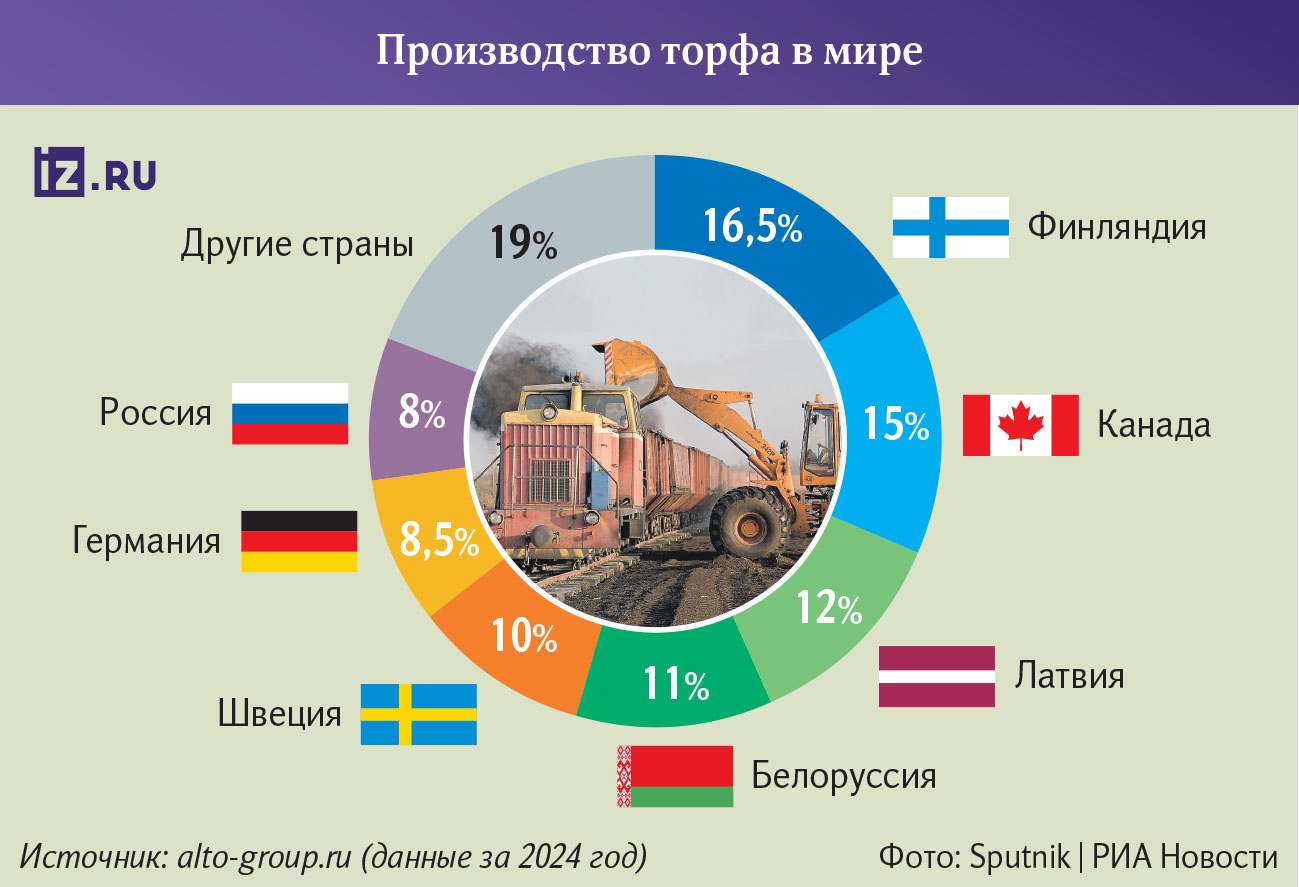
According to him, such dynamics is possible with positive external economic factors. The main export destinations of peat were European countries, as well as China and South Korea. In recent years, supplies have shifted towards Asia. In particular, exports to China may be increased, Dmitry Tortev believes.
Doubling exports to 3 billion rubles per year is achievable with the expansion of sales markets and the development of deep processing (substrates, agro-industrial products, fuel briquettes), however, this will require not only organizational consolidation, but also investments in processing and logistics, believes Yuri Stankevich.
Can this measure lead to monopolization of the market
The creation of a single export operator carries not only advantages, but also risks, says Yuri Stankevich.
"In the absence of transparent rules for access to exports, there is a risk of forming an actual monopoly on foreign supplies, limiting competition between manufacturers, pressure on purchase prices within Russia, and reducing the investment activity of independent players," the parliamentarian noted.
RusHydro can be considered as a potential operator of peat exports due to its presence in the Far East, where significant deposits of this mineral are concentrated, Dmitry Baranov, a leading expert at Finam Management Management Company, told Izvestia.
At the same time, RusHydro has no direct expertise in peat extraction, processing or export, as it is an energy company specializing in hydro and thermal energy, he added.
The initiative to create a single peat export operator from the Russian Federation has not yet been submitted to the FAS for consideration, the Antimonopoly service told Izvestia. Upon admission, it will be reviewed in due course, they added.
The creation of a single export operator can become a tool for structuring the industry, but for this method to be effective, it is necessary to ensure transparency of decisions and non-discriminatory access to trade for all market participants, including small players, concluded Dmitry Gusev, Deputy Chairman of the Supervisory Board of the Reliable Partner Association of Consumers and Suppliers of Energy Resources.
Переведено сервисом «Яндекс Переводчик»
