They don't show the spout: scientists can't catch muskrats for the country's first special nursery
- Статьи
- Science and technology
- They don't show the spout: scientists can't catch muskrats for the country's first special nursery


Over the past five years, Russian zoologists have been unable to detect and capture muskrats for subsequent breeding in captivity. A specialized nursery has already been established in the Moscow Region to preserve this rare species, but the number of animals in nature has decreased to a critical few thousand individuals. According to experts, the previous methods of searching and trapping stopped working: the remaining animals changed their habitats and became much more cautious. At the same time, new effective technologies for their detection have not yet been developed. The Ministry of Natural Resources and Environment informed Izvestia that the task of preserving muskrats is under state control. Currently, a set of measures is being developed to account for and protect the species with the participation of the scientific community.
In search of the muskrat
Russian zoologists have faced a serious problem in restoring the population of the Russian muskrat. According to experts, in order to preserve the species, it is necessary, in particular, to establish its artificial breeding. A special nursery has already been created in the Moscow region for this purpose, but over the past five years scientists have not been able to find animals to inhabit it — the enclosures remain empty.
According to the researchers, due to unfavorable factors, the number of muskrats in the wild has decreased to a critical level — about 5-6 thousand individuals. The decrease in population density and the change of habitats have significantly complicated the search and trapping of animals. Traditional methods have practically stopped working in these conditions, and new effective approaches have not yet been developed.
— One of the main areas of conservation work is the creation of a reserve stock in captivity, because with such a low number and such a high rate of decline, the danger of a real extinction of the animal is very high. There is a positive experience of its maintenance, but there is no breeding yet. To solve this problem, a modern specialized nursery was created at the N.K. Koltsov Institute of Developmental Biology of the Russian Academy of Sciences in Kashirsky district with funds from a presidential grant and with the help of wonderful volunteers, but so far we cannot catch muskrats for breeding in it," Alexey, General Director of the Wildlife Conservation Center, told Izvestia Zimenko.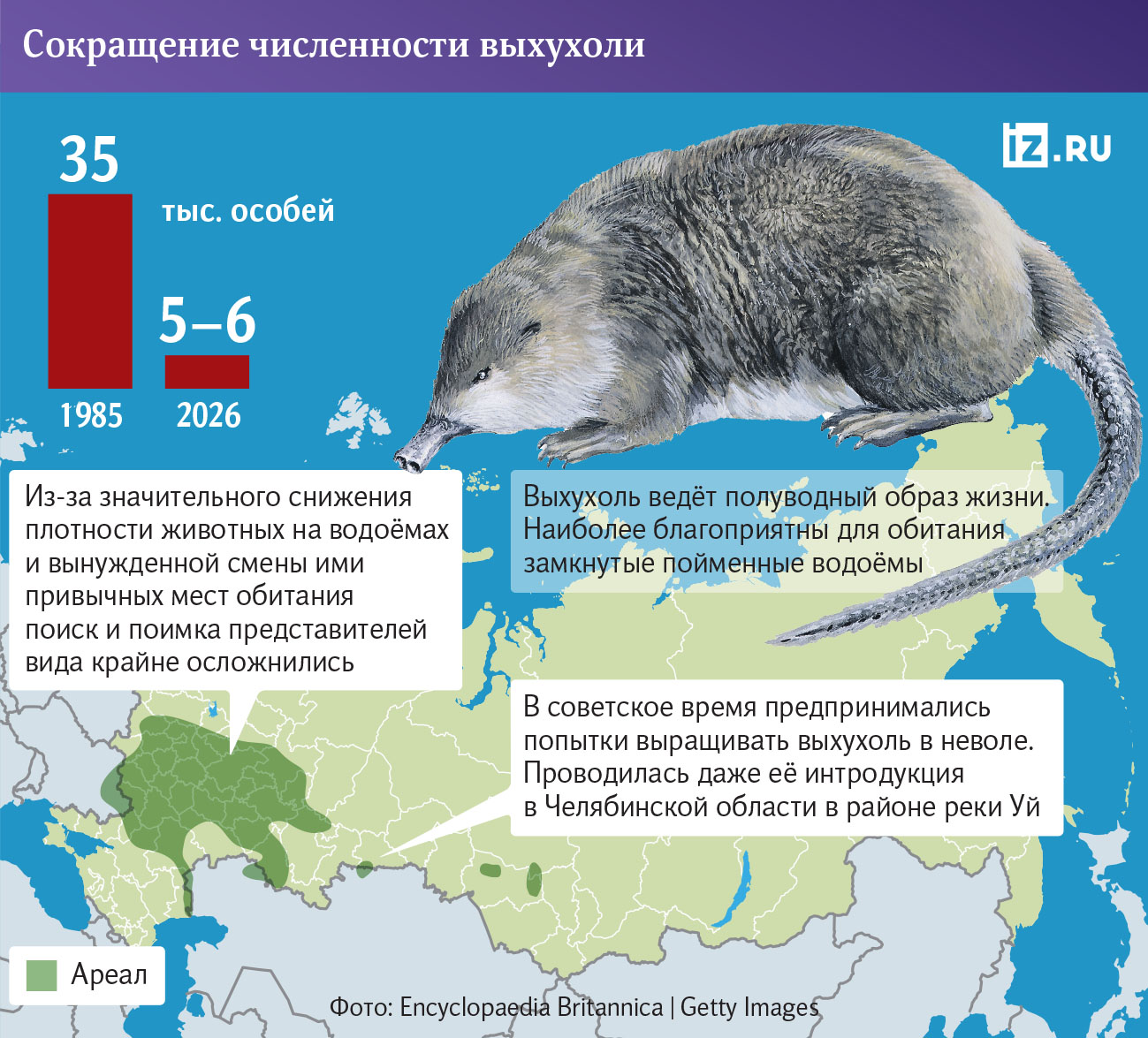
The nursery is designed to practice animal breeding methods in captivity. According to the idea of ecologists, in case of successful implementation of the project, it is possible to create a network of such centers throughout Central Russia to increase the populations of the species.
Previously, the muskrat mainly lived in shallow ancient reservoirs, but now, due to their shallowing, freezing or drying out, often caused by climate changes and human detail, the animal moves to deeper lakes, ancient lakes and rivers. In the usual conditions, traditional traps were used to capture insectivores, but they are not suitable for deep work, as the animal can suffocate in them. Now experts are looking for new approaches.
— Technologies for finding and trapping muskrats have always been not very effective. But when there were a lot of animals, it didn't matter. Now, first you need to find a way to detect them. It is assumed that genetic methods of water analysis in the most likely habitats will help solve the problem. But further research is needed to put them into practice. Also, in some ways, it may be useful to search using camera traps to determine the mode of visiting burrows by animals and searching by smell," said Alexey Zimenko.

Methods of searching and trapping muskrats
Experts tried to use modern equipment for the search. For example, using geophysical methods, they tried to look for voids in the shores where there might be burrows, but this proved ineffective.
In addition to the lack of technology, the work of environmentalists is also complicated by administrative difficulties. To catch muskrats, you need to get permission from Rosprirodnadzor, which takes a long time. And the optimal period for this work is short — from September to November. A permit is issued for a specific place where animals may not be found, and if they are found in a neighboring area, you will need to go through all the approvals again.
In addition, there are also very few specialists capable of performing these tasks. According to environmentalists, at least two pairs of muskrats will be enough for them to start.
— At the end of 2025, the Ministry of Natural Resources and Environment adopted a 10-year conservation strategy. All interested specialists are currently working on an action plan for its implementation. We hope for its approval soon and the start of substantive work. It will include a variety of events, from regulatory to scientific and educational. It is assumed that the government and business partners will start financing them somehow," the expert said.
According to zoologist Mikhail Berezhny, who took part in muskrat search expeditions, the peculiarities of the animal living in burrows on the shores of reservoirs with access to water complicate its search.
— We used classic traps to search for muskrats, but now they don't work. Animals are wary of everything new in their environment. Animals were caught en masse more than 50 years ago. There are very few specialists and experience. We have tried various technical means to increase efficiency, such as infrared photography, but they do not work. We have to manually feel the bottom in search of holes," he said.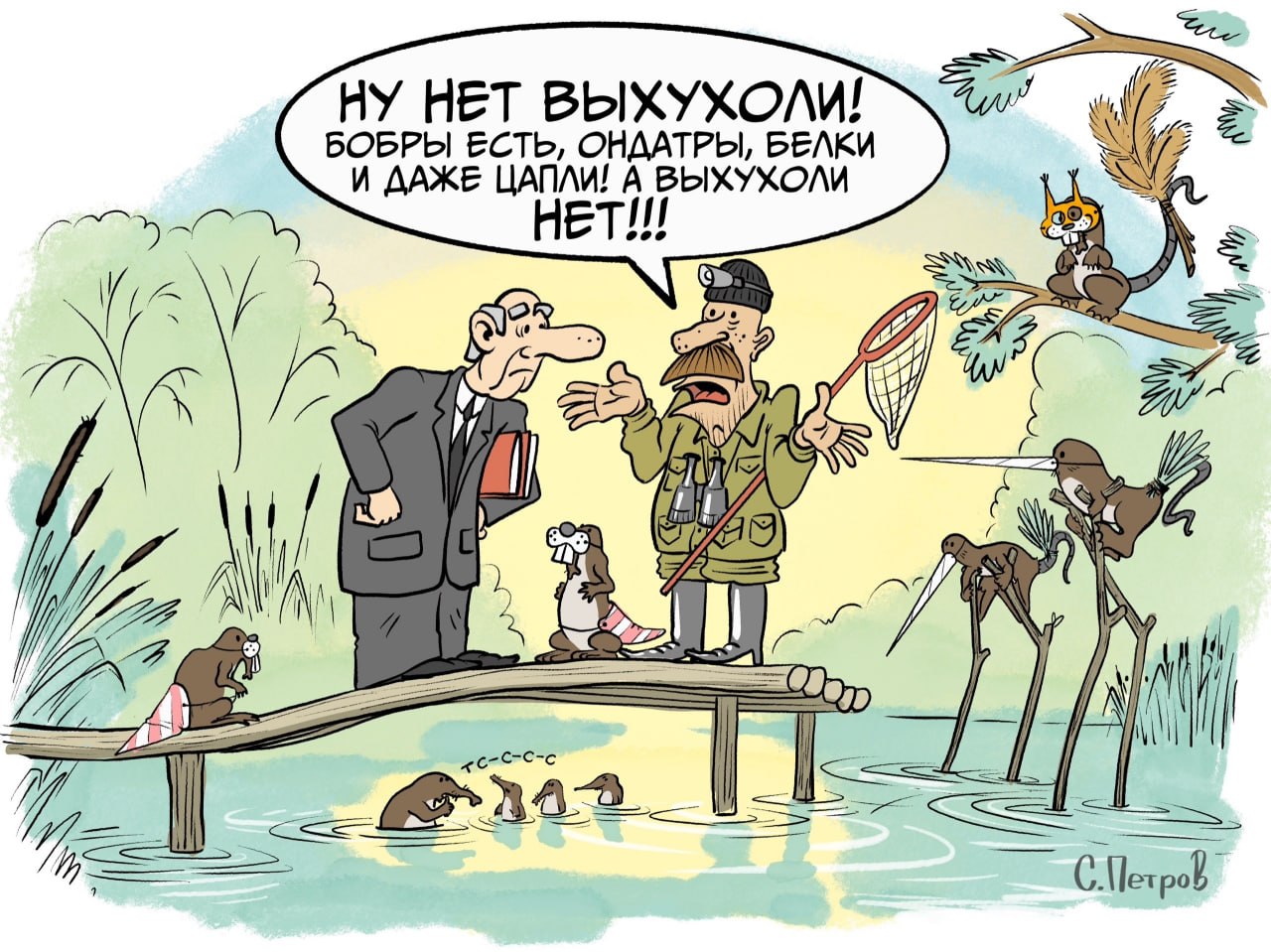
Scientists also tried to put camera traps in the water, using echo sounders, endoscopes and quadrocopters, but all this turned out to be useless. According to the expert, in Soviet times, attempts were made to raise muskrats in captivity. Even its introduction was carried out in the Chelyabinsk region in the area of the Uy River. It is quite possible that a population has been preserved there and it makes sense to send an expedition there, the expert is sure.
— It is necessary to continue the search for muskrats for breeding in captivity, even despite the setbacks. That's the last thing we can do. It will be more difficult to raise their numbers in the wild, as they are declining mainly due to climate change. Experience shows that there is only one way to restore a population that is on the verge of extinction. The situation is similar with bison and condors, which are being restored with the help of individuals from zoos. First of all, human resources are needed to save muskrats," Mikhail Berezhnoy said.
As the Russian Ministry of Natural Resources and Environment told Izvestia, the task now is to preserve and restore the population of the Russian muskrat within its historical range, and the state is paying great attention to this today. An animal is one of the priority types of the national project "Ecological well—being". At the end of 2025, the Ministry approved a strategy for the conservation of the Russian muskrat until 2036.
"The implementation of the strategy involves a set of measures to preserve habitats and protect the species, and it is planned to improve the regulatory framework. The Russian muskrat is protected in specially protected natural areas, but a number of key habitats are located outside of them. In addition, there are difficulties in detecting an animal in order to keep records: residential burrows are located on the shores of a reservoir, and the entrance to them is always hidden under water. The Russian muskrat practically does not breed in captivity," the press service of the Ministry of Natural Resources and Environment reported.
An action plan for the strategy is currently being developed, which will be approved during the year. Scientists are involved in the preparation of comprehensive measures. A section of experts on the conservation and restoration of the Russian muskrat has been created specifically for this purpose at the specialized working group of the Ministry of Natural Resources and Environment. Among other things, experts are preparing methodological recommendations on the organization and monitoring of this species and assessment of the condition of its habitats, the department added.
Переведено сервисом «Яндекс Переводчик»
