In a single gap: Trump communicates with Europeans almost three times less often than Biden
- Статьи
- World
- In a single gap: Trump communicates with Europeans almost three times less often than Biden


Donald Trump is increasing pressure on European allies and is increasingly talking about the need to review US commitments to NATO. He found it ridiculous to spend trillions of dollars on protection from Russia. The cooling in transatlantic relations is also confirmed by the number of contacts between the parties. According to Izvestia's calculations, from January 2025 to April 2026, Trump held only 16 meetings and negotiations with European leaders, which is several times less than Joe Biden's contacts during the same period. The diplomatic vacuum is forcing Europe to look for alternatives in the East. Read about what cooperation between Brussels and Beijing can lead to in the Izvestia article.
Trump threatens Europe with declining support
The crisis in the Middle East has exposed serious differences between Europe and Washington. At first, the allies did not want to join the attacks against Iran, and then refused to take part in unblocking the Strait of Hormuz. Under these circumstances, Donald Trump has made it clear that he is ready to reconsider the United States' approach to protecting European allies.
— We have spent trillions of dollars on NATO to help them defend themselves from Russia. If you think about it, we are defending ourselves from Russia. I've long thought it's a bit ridiculous, but we've spent trillions of dollars on it. I think this issue will be seriously considered," he said.
The statements were not made out of thin air. The media has already reported that Trump discussed with his advisers the option of withdrawing part of the American troops from Europe. Details of these conversations were not given, but the very fact of such discussions showed the depth of the crisis in transatlantic relations.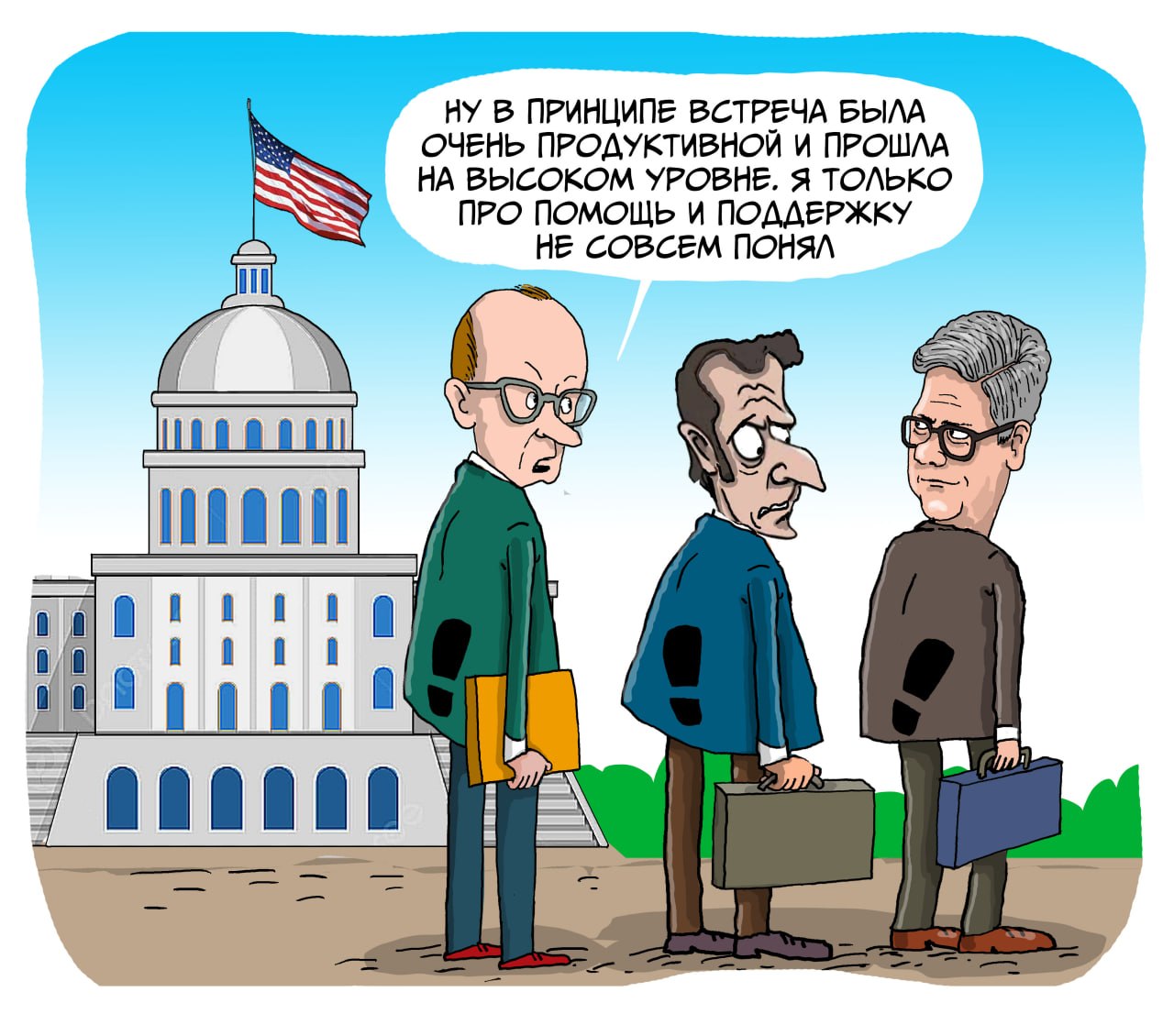
Currently, more than 80,000 American military personnel are stationed in Europe, of which over 30,000 are in Germany. Large contingents are also located in Italy, Spain and the UK. An additional confirmation of the internal crisis in the alliance was the words of NATO Secretary General Mark Rutte, who admitted that some European countries "did not pass the test" in the context of the Iranian crisis.
However, the current disputes over Iran are only the most vivid manifestation of a broader trend. The divergence of positions between the United States and Europe is already systemic. According to calculations by Izvestia using AI based on official White House publications, between January 20, 2025 and April 13, 2026, Donald Trump had only 16 contacts with the leaders of the EU and the UK, while Joe Biden had at least 44 over a similar period of time.
Although the EU and NATO are, of course, different structures, in the current situation, a significant part of their members are largely perceived as a united "front". Most of the leading EU countries are simultaneously members of the North Atlantic Alliance, so the cooling of relations with the United States for Europe affects both the military and the political and economic spheres.

Will the United States withdraw from NATO
Formally, Trump will not withdraw from NATO, says Egor Toropov, an American researcher at the National Research University Higher School of Economics. However, in fact, it is already reducing the level of cooperation with European countries.
"In recent years, they have strengthened their geopolitical subjectivity and noticeably increased military spending, and this process has accelerated in many ways even under pressure from Donald Trump in his first term as president," the expert noted.
In Europe, this shift has been noticed for a long time. Back in March, the head of EU diplomacy, Kaya Kallas, admitted that Brussels was used to considering the "unpredictability" of the United States as a constant factor. At the Munich Security Conference, the head of the European Commission, Ursula von der Leyen, stated that "some lines have already been crossed so that they cannot be crossed back." The EU increasingly recognizes that the previous model of relations with the United States is becoming a thing of the past.
As Boris Martynov, professor of the Department of International Relations and Foreign Policy of Russia at MGIMO, noted in a conversation with Izvestia, Trump, apparently, is confident in the complete dependence of Europeans on the United States and considers NATO to be an unviable structure without American participation.
— Trump says and said: what is NATO without the United States? So, a paper construction. That is, he is absolutely sure that he can and will command them, and nothing will change here," the expert emphasized.
Discussions about a more independent role for the continent have even intensified in the EU, but it is too early to talk about creating a unified European army as the future "backbone of NATO." In January, Mark Rutte explicitly rejected this idea, although in February he admitted that the alliance would eventually become more eurocentric, but still while maintaining a strong American presence.
For Russia, disagreements within NATO open up additional opportunities in the context of the continuation of the special operation. Disruption in cooperation between Ukraine's key allies cannot but benefit Moscow, but in the long run it also has its costs. The crisis is pushing European countries to strengthen their own defenses faster and rely less on Washington.
This explains the sharp increase in military spending. European NATO allies and Canada increased defense spending by almost 20% in real terms in 2025. Thus, all members of the alliance reached at least 2% of GDP, and total expenditures reached 2.77%. However, the United States still provides about 60% of the bloc's total defense spending, which means that Europe is not yet able to quickly replace American support. But it has a much wider space for economic maneuver.

Europeans turn to China
Brussels is naturally trying to reduce its dependence on Washington by diversifying its contacts. On January 27, the EU completed negotiations on a free trade agreement with India, and on March 24 on a trade agreement with Australia; both documents must now undergo legal revision and approval procedures. Brussels sees the deals as part of a broader effort to reduce dependence on external power centers and restructure supply chains.
And recent trends in this direction go directly against the US foreign policy. European countries, as well as other Western countries, including Canada and Australia, are actively increasing economic cooperation with China, Toropov stressed.
For example, on April 13, Spanish Prime Minister Pedro Sanchez went there, who resists Trump's pressure the loudest. At Tsinghua University in Beijing, he said that China should play a more prominent role in global affairs, and Europe should "redouble its efforts" now that the United States is withdrawing from leadership positions "in many areas." This is Sanchez's fourth trip to China in four years. Madrid explicitly emphasized that geopolitics would be at the center of the agenda, and the press already considers Spain itself as one of the main European supporters of a more pragmatic approach to China.
British Prime Minister Keir Starmer also visited Beijing in January. The media noted that London sought to improve relations with China and at the same time reduce dependence on the "increasingly unpredictable" United States. German Chancellor Friedrich Merz followed, trying to restart contacts with Beijing amid the cooling of Brussels' ties with Washington. Finally, a delegation of the European Parliament visited the principal geopolitical opponent of the United States — and for the first time in eight years. Formally, they discussed issues of digital trade and market access, but both Beijing and Brussels saw the visit as a cautious attempt to stabilize relations amid growing uncertainty in relations with the United States.
Over time, economic cooperation may develop into closer political ties, and in the future into separate forms of military—technical cooperation, although this is clearly not a matter for the next year, Toropov concluded.
Переведено сервисом «Яндекс Переводчик»
